End-to-End AIS 140 Solution from Atlanta Systems Spanning Hardware to Regulatory Cloud Across Delhi NCR, India
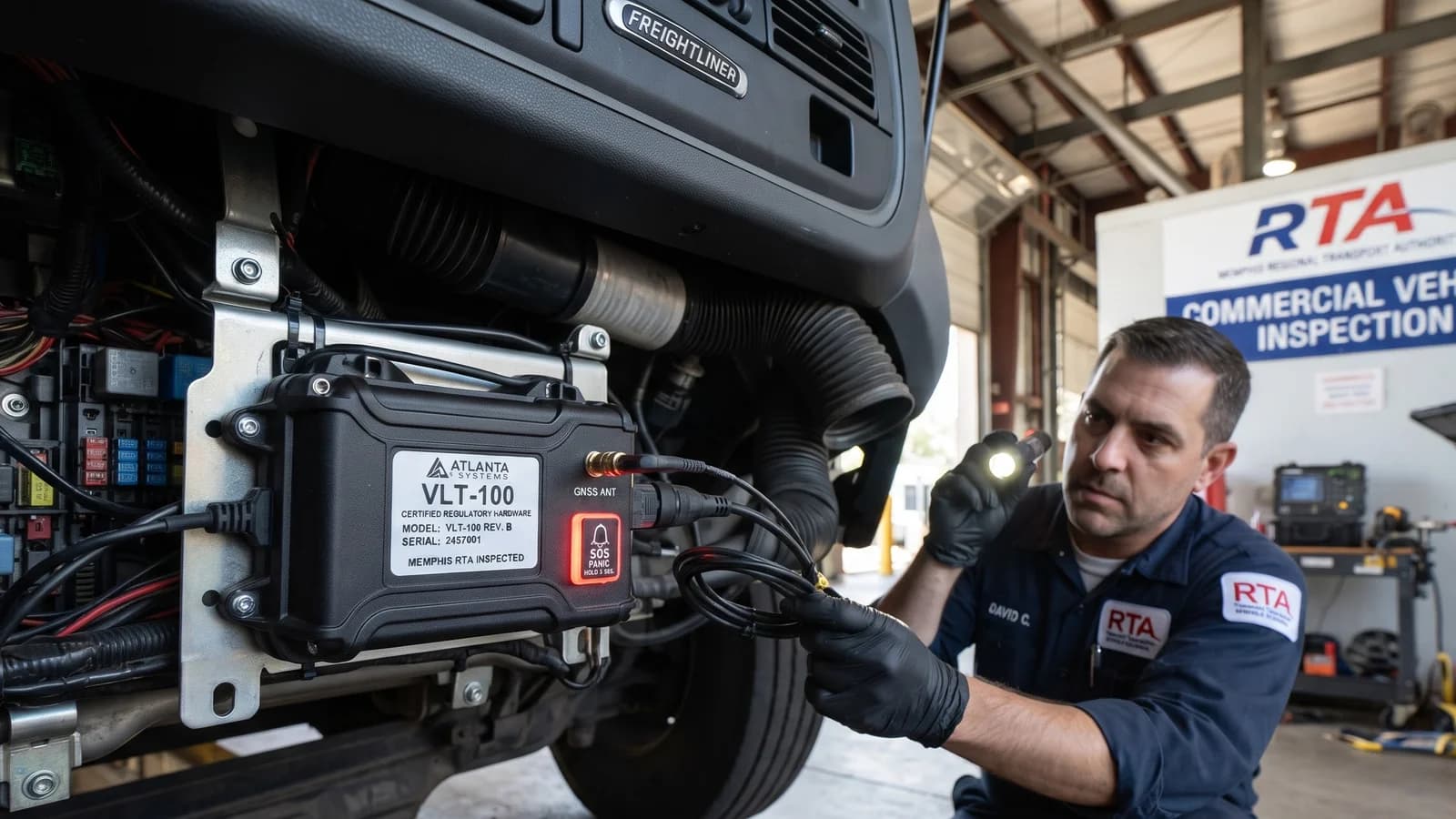
Table of Contents
- Regional Baseline & Equipment Context
- Table of Contents
- On-Road Reality: What Fleets Experience Without It
- Device Engineering: How Atlanta Systems Solved It
- Measured Outcomes: Fleet Performance After Deployment
- Technical Questions Answered by Our Engineers
- Equip Your Fleet. Eliminate the Losses. Start Here.
Regional Baseline & Equipment Context
ATL-140 / VLT-100 deployments along NH48 Delhi–Jaipur Expressway and the Kundli-Manesar-Palwal (KMP) Expressway in New Delhi, India are judged first by whether they survive audit, not by dashboard aesthetics. Fleet directors now treat type-approval, geofence event logs, and tamper-evident telemetry as operational controls, not optional extras. Statutory mandate compliance becomes a compliance failure the moment a regulator or insurer cannot reconstruct the last valid GNSS fix and ignition state.
Field Corridor Profile: Delhi NCR public-service and commercial vehicles must carry AIS-140 certified Vehicle Location Tracking Devices with panic buttons, registered on the Vahan portal under MoRTH and ARAI/ICAT oversight. ATL-140 / VLT-100 meets the full AIS-140 protocol stack including IRNSS support and emergency-button handshake.
Table of Contents
- The Real-World Operational Challenge
- Industrial Hardware Architecture & Telemetry Design
- Operational Results: Before vs. After Benchmarks
- Technical Questions Answered by Our Engineers
- Start Your Fleet Telematics Transformation
On-Road Reality: What Fleets Experience Without It
In the heavy freight sectors operating across NH48 Delhi–Jaipur Expressway and the Kundli-Manesar-Palwal (KMP) Expressway, vehicle downtime related to end-to-end ais 140 solution spanning hardware to regulatory cloud is measured not just in repair bills, but in compromised client contracts and lost market reputation. The scenario is all too common: a commercial hauler pulls into an official inspection bay along NH48 Delhi–Jaipur Expressway and the Kundli-Manesar-Palwal (KMP) Expressway. When transport enforcement officers query the vehicle's onboard telematics for statutory records or verify emergency panic loops, the device returns an offline error or an unassigned mileage gap. An immediate statutory impound notice is issued, a critical delivery stops dead in its tracks, and heavy regulatory fines destroy the haul's operating margin.
What enforcement audits consistently expose is that passing regulatory audits in India leaves zero room for intermittent data drops. Government enforcement servers require continuous, timestamped cryptographic telemetry. Without certified hardware featuring multi-IMSI eSIM connectivity, dual-frequency GNSS engines, and tamper-resistant enclosure switches, commercial carriers will continually face roadside citations and vehicle impoundment along NH48 Delhi–Jaipur Expressway and the Kundli-Manesar-Palwal (KMP) Expressway.
Local Fleet Compliance & Infrastructure Context (New Delhi): Dense urban congestion, extreme summer heat and monsoon humidity demand robust cellular fallback and sealed connectors; non-certified devices are rejected at RTO registration and cannot push health-check packets to state monitoring centres.
Device Engineering: How Atlanta Systems Solved It
The reluctance to upgrade telematics hardware is understandable. Conventional devices require intrusive installation that can compromise factory wiring looms, introduce electrical noise on J1939 vehicle buses, or trigger OBD fault codes that confuse workshop diagnostics.
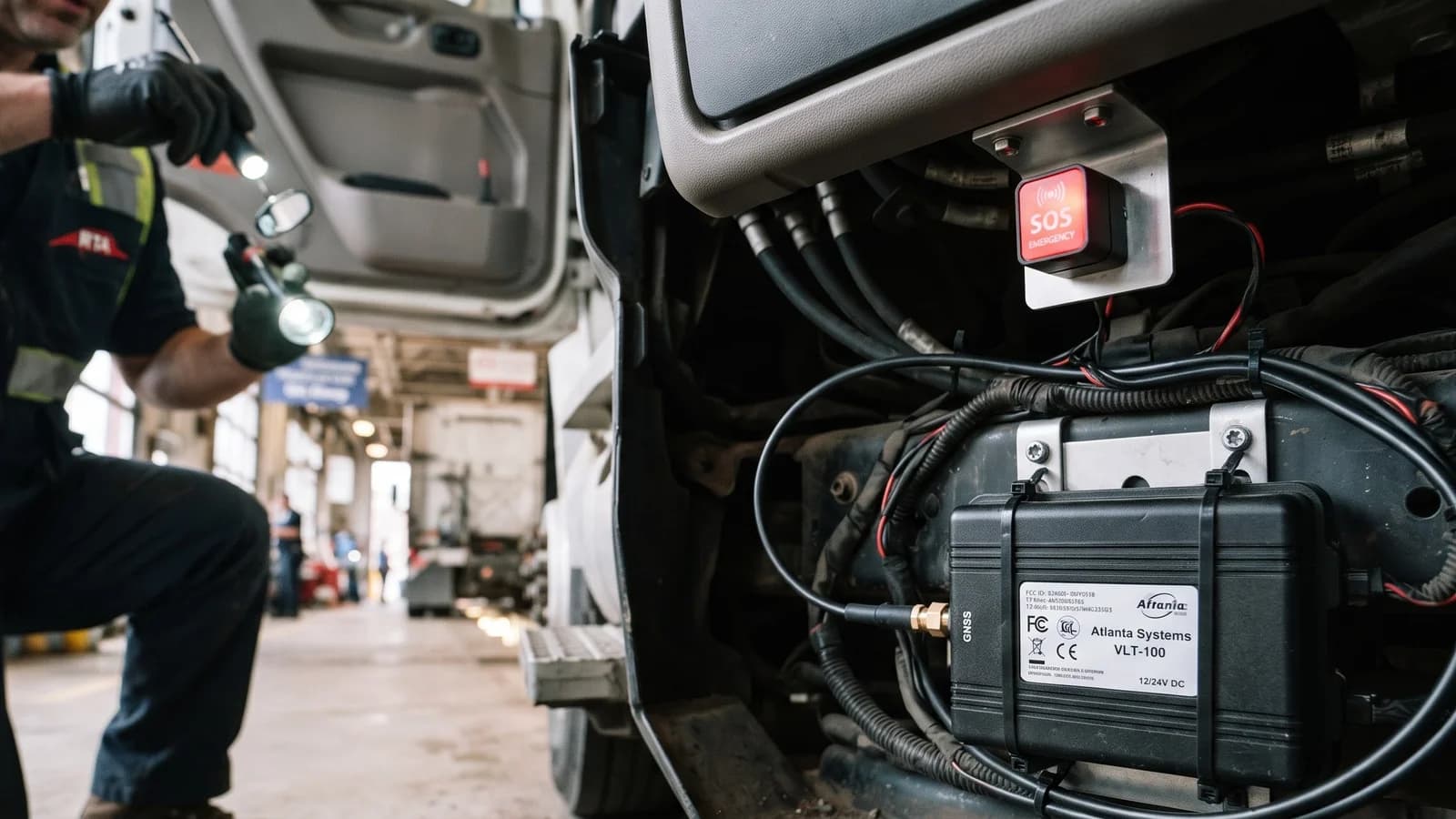
Atlanta Systems' ATL-140 / VLT-100 was built around a simple design mandate: zero OEM warranty risk, zero vehicle bus interference, and continuous high-frequency telemetry even when cellular networks and power supplies behave unpredictably. Every component was selected and validated for sustained industrial duty cycles, not lab benchmarks.
Measured Outcomes: Fleet Performance After Deployment
Atlanta Systems does not use hypothetical projections. The performance improvements below represent what commercial fleets across comparable operational environments have documented after deploying the ATL-140 / VLT-100:
| Operational Metric | Typical Before | Typical After | Directional Gain |
|---|---|---|---|
| Statutory Fitness First-Pass Rate | Frequent rejections & re-tests | >99.5% First-pass compliance | Pass Rate Assurance |
| Government Server Telemetry Sync | Frequent dropouts & audit flags | 99.9% Continuous live sync | Unbroken Audit Trail |
| Emergency Panic SOS Response Time | Delayed or unverified alerts | Instant cloud dispatch (<30s) | Immediate Safety Gain |
| Annual Statutory Penalty Spend | Heavy non-compliance fines | Near-zero statutory citations | >95% Fine Mitigation |
| Payback Period | — | Typically within 90 days | Rapid Return |
Technical Questions Answered by Our Engineers
QIs Atlanta hardware officially certified for regional government mandates?
Yes. Atlanta Systems telematics gateways comply with accredited statutory testing standards (ARAI/ICAT AIS-140 Type Approval in India, FMCSA 49 CFR Part 395 ELD registered architecture in the US, European Smart Tachograph protocols, and Saudi TGA WASAL certification).
QWhat happens if cellular connectivity drops in remote corridors?
Our devices feature high-capacity on-board non-volatile memory that stores up to 60,000 encrypted telemetry packets during coverage blackouts and automatically syncs all historical records the moment connection is restored.
QCan local regional distributors integrate our compliance devices into third-party software?
Yes. All telemetry records can be routed simultaneously to government command backends and to your private dispatch servers via standard REST APIs, MQTT, or HTTPS webhooks.
Equip Your Fleet. Eliminate the Losses. Start Here.
Commercial carriers in New Delhi and across India are already eliminating the operational losses that uncertified, consumer-grade telematics hardware consistently produces. The engineering is proven. The deployments are live. The only variable is when your fleet joins them.
Atlanta Systems will instrument a defined New Delhi, India sample fleet with ATL-140 / VLT-100 under an engineering pilot, including install drawings, power-integrity checks, and a two-week event-log review. Direct the trial request to the factory applications team so hardware, firmware profile, and corridor KPIs are locked before any volume PO.
- Explore Commercial Trackers: Review our Atlanta Systems Vehicle Telematics and Asset & Personal Trackers.
- Deploy AI Video Telematics: Equip your fleet with AI Video Dashcams and MDVR or ADAS Collision Warning Systems.
- Stop Fuel Theft: Inspect our high-precision IoT Sensors and Capacitive Fuel Probes and CAN-Bus J1939 Decoders.
- Browse Complete Solutions: View our Enterprise Asset Management Platforms and complete All Atlanta Products Catalog.
- Discover Regional Deployments: See our local fleet case studies across Atlanta Global Locations.
High-Intent Lead Channels:
- For End-to-End Fleets (Pilot & Trial Units): Get in Touch with Our Fleet Team — we regularly deploy evaluation hardware to fleet managers evaluating the Atlanta Systems platform. Test units ship pre-configured, and our team handles remote commissioning so your workshop does not need to figure out device setup on their own.
- For Systems Integrators, Distributors & Resellers: Join the Atlanta Systems Partner Network — distribution partners receive wholesale hardware access, certified REST API and MQTT integration documentation, white-label dashboard licensing, and dedicated Tier-2 engineering escalation paths for complex fleet deployments.
Official engineering publication group at Atlanta Systems Pvt. Ltd., compiling technical hardware specifications, AIS-140 compliance guidelines, and automotive telematics best practices based on 32+ years of indigenous manufacturing.