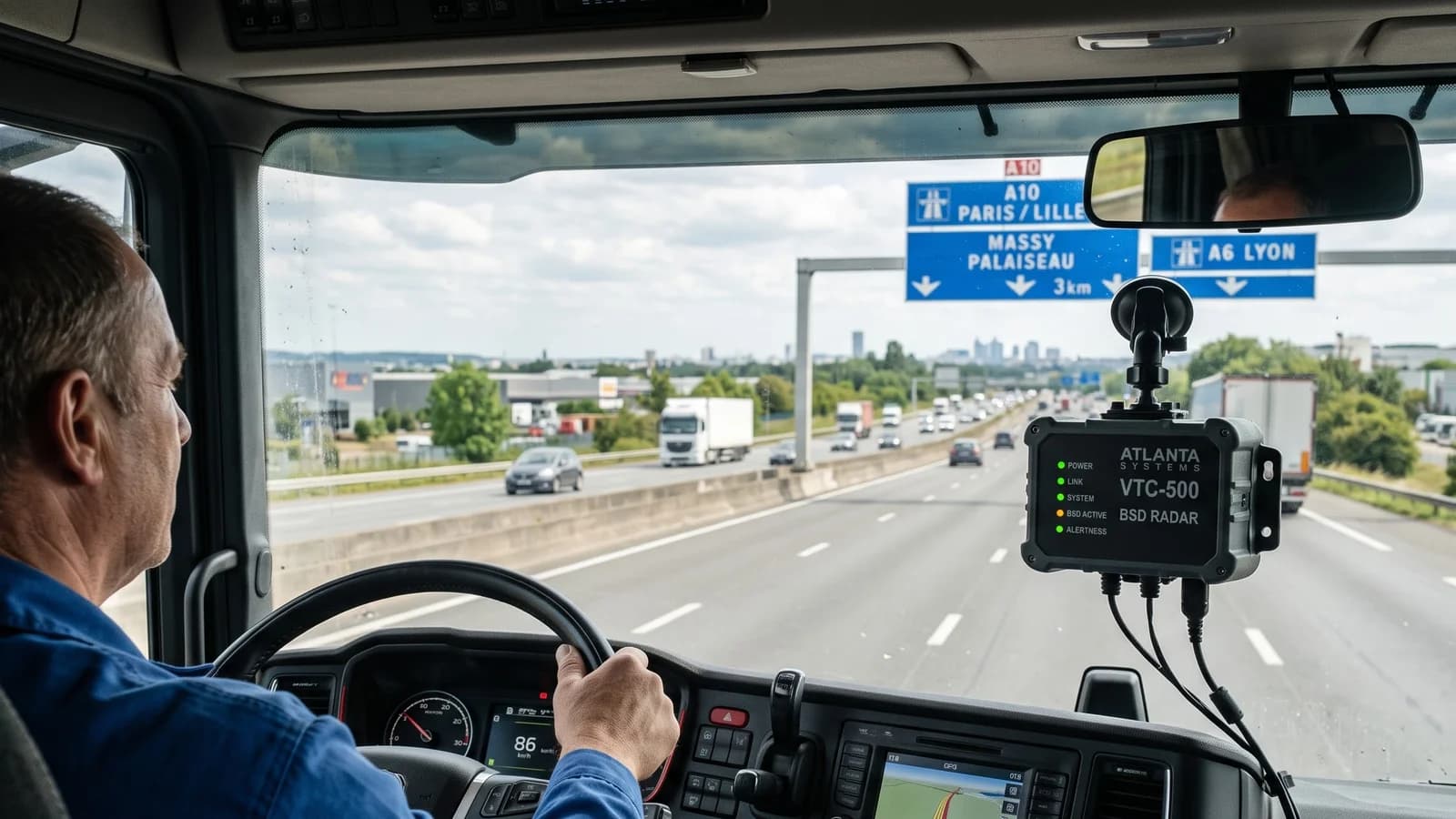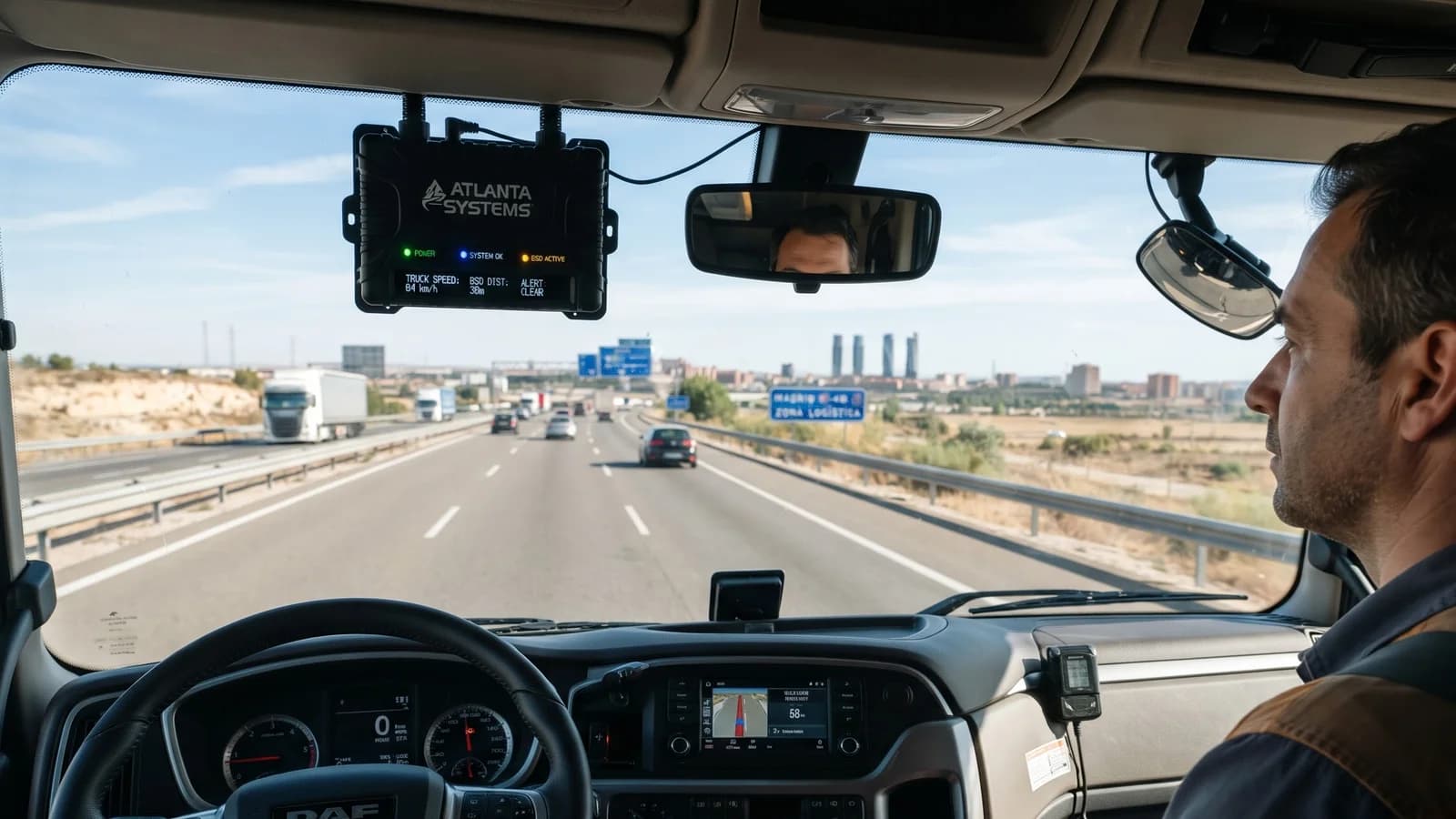
GSR 2024 ADAS Systems by Atlanta Systems Ready for Installation Across Spain
Table of Contents
Executive Summary
Navigating the intense commercial rhythm of Madrid M-40/M-50 orbital networks and the A-2 Zaragoza freight corridor leaves zero room for electronic errors, transforming VTC-500 BSD Radar System deployment into an indispensable safeguard for fleets in Madrid. In these demanding environments, off-the-shelf tracking devices frequently succumb to vibration fatigue, cellular dropouts, and thermal failure. This technical report examines how Atlanta Systems engineered the VTC-500 BSD Radar System to deliver robust edge telemetry and seamless integration, giving fleet executives in Madrid complete operational visibility and uninterrupted statutory compliance.
Regional Operational Profile: Madrid fleets operating internationally fall under EU smart-tachograph version 2 requirements and Spanish enforcement of Regulation (EU) 165/2014 as amended. VTC-500 BSD Radar System provides the supporting telematics layer for position, speed and event data alongside the mandatory tachograph.
Table of Contents
- On-Road Reality: What Fleets Experience Without It
- Device Engineering: How Atlanta Systems Solved It
- What Changes After Atlanta Systems Goes Live
- Direct from Engineering: Technical FAQs
- Start Your Fleet Telematics Transformation
Why Standard Hardware Keeps Failing on This Route
A single unexpected stoppage along Madrid M-40/M-50 orbital networks and the A-2 Zaragoza freight corridor can cascade across an entire logistics chain, especially when unexpected telemetry gaps or compliance dropouts trigger missed appointments and contractual delay penalties. The scenario is all too common: a commercial tractor hauling freight along Madrid M-40/M-50 orbital networks and the A-2 Zaragoza freight corridor navigates sudden stop-and-go congestion or a tight blind-spot merge. An undetected cyclist or merging vehicle triggers a near-miss, or a drowsy driver begins drifting from the lane. Without on-edge AI video alerts, the driver has no warning, and dispatch only learns of the hazard after an expensive collision claim or statutory inspection stop.
The underlying technical reality is that standard telematics cannot prevent accidents with delayed cloud processing. Processing high-resolution video streams across Madrid M-40/M-50 orbital networks and the A-2 Zaragoza freight corridor requires automotive-grade NPUs running local neural network models that detect lane departure, forward collisions, and driver distraction in less than 100 milliseconds, coupled with ruggedized IP67 camera housings that endure continuous thermal stress and windshield vibration.
Local Fleet Compliance & Infrastructure Context (Madrid): Extreme summer heat on the A-1 and A-2 corridors, combined with remote roadside DSRC checks, demand industrial temperature ratings and secure data buffering that consumer units cannot guarantee.
Inside the Hardware: Engineering Decisions That Matter
The conventional telematics installation story goes like this: four hours of harness work per vehicle, three spliced connectors that trigger warranty concerns, and a six-month battle with intermittent faults that the OEM blames on the aftermarket device. Atlanta Systems built the alternative.
With the VTC-500 BSD Radar System, Atlanta Systems resolved the core tension between deep telematics integration and operational safety. The device connects via hardened automotive-grade connectors, processes sensor data locally on an embedded edge compute module, and transmits encrypted telemetry packets to cloud endpoints without introducing electrical risk to the vehicle's factory harness.
Operational Results: Before vs. After Benchmarks
Atlanta Systems does not use hypothetical projections. The performance improvements below represent what commercial fleets across comparable operational environments have documented after deploying the VTC-500 BSD Radar System:
| Operational Metric | Typical Before | Typical After | Directional Gain |
|---|---|---|---|
| Preventable Fleet Collisions | Frequent minor & severe crashes | Over 70% crash reduction | Significant Safety Gain |
| False Liability Insurance Claims | Costly 50/50 dispute payouts | 100% Exonerated with HD video | Zero False Payouts |
| Driver Inattention & Fatigue Events | Undetected until near-misses | Real-time in-cab audio alerts | 85%+ Fatigue Reduction |
| Fleet Insurance Premiums | High, rising commercial rates | Substantial carrier rebates | Direct Cost Savings |
| Payback Period | — | Typically within 3 to 6 months | Rapid Return |
Engineer Q&A: Your Technical Questions Answered
QDoes the in-cab DMS camera record passenger audio or compromise driver privacy?
Our AI video processors process driver eye-tracking, yawning, and phone use strictly on-edge. Video uploads are event-triggered (e.g. harsh braking, forward collision warning, or severe fatigue), protecting driver privacy during standard driving.
QHow does the blind spot detection radar perform in heavy rain and fog?
Unlike optical cameras that get blinded by mud, spray, or darkness, our 77GHz millimeter-wave radar penetrates heavy fog, downpours, and pitch-black nights with 99.8% detection reliability.
QCan fleet managers live-stream video from the vehicles?
Yes. Fleet safety dispatchers can initiate dual-channel HD live streaming over 4G Cat-4 / Cat-6 LTE whenever an urgent SOS panic alert or collision event is triggered.
Ready to Eliminate the Operational Losses?
For fleet operators in Madrid managing compliance risk, fuel exposure, and driver safety across Spain's demanding freight corridors, the performance gap between consumer telematics and Atlanta Systems industrial hardware directly translates into margin — one way or another.
Atlanta Systems brings 32+ years of embedded hardware engineering — not reseller relationships, not white-label rebranding — to every fleet deployment. Our telematics devices are designed, manufactured, and certified in-house. One million connected commercial vehicles across 27 countries validate that approach. Your fleet is next.
- Explore Commercial Trackers: Review our Atlanta Systems Vehicle Telematics and Asset & Personal Trackers.
- Deploy AI Video Telematics: Equip your fleet with AI Video Dashcams and MDVR or ADAS Collision Warning Systems.
- Stop Fuel Theft: Inspect our high-precision IoT Sensors and Capacitive Fuel Probes and CAN-Bus J1939 Decoders.
- Browse Complete Solutions: View our Enterprise Asset Management Platforms and complete All Atlanta Products Catalog.
- Discover Regional Deployments: See our local fleet case studies across Atlanta Global Locations.
High-Intent Lead Channels:
- For End-to-End Fleets (Pilot & Trial Units): Contact Our Engineering Team to arrange a no-obligation pilot deployment. We will ship trial units to your fleet, support the installation, and provide full access to live telemetry data so you can validate performance before committing to a full rollout.
- For Systems Integrators, Distributors & Resellers: Join the Atlanta Systems Partner Network — distribution partners receive wholesale hardware access, certified REST API and MQTT integration documentation, white-label dashboard licensing, and dedicated Tier-2 engineering escalation paths for complex fleet deployments.
Official engineering publication group at Atlanta Systems Pvt. Ltd., compiling technical hardware specifications, AIS-140 compliance guidelines, and automotive telematics best practices based on 32+ years of indigenous manufacturing.