IFTA Mileage and Fuel Automation by Atlanta Systems for Fleets Running Memphis Across Illinois, USA
Table of Contents
Executive Summary
In the fast-paced commercial freight environment of United States, long-haul haulers running Chicago Corridor depend on ifta mileage and fuel automation for fleets running memphis to chicago corridors to stay connected, compliant, and ahead of schedule. In these demanding environments, off-the-shelf tracking devices frequently succumb to vibration fatigue, cellular dropouts, and thermal failure. This technical report examines how Atlanta Systems engineered the FL-400 Capacitive Probe / FL-700 Ultrasonic Sensor to deliver robust edge telemetry and seamless integration, giving fleet executives in Chicago complete operational visibility and uninterrupted statutory compliance.
Regional Operational Profile: Chicago-area carriers operating under FMCSA rules require certified ELDs for any driver subject to RODS, with Illinois weather adding extreme cold-start and salt-corrosion demands. FL-400 Capacitive Probe / FL-700 Ultrasonic Sensor maintains ECM synchronisation and data transfer capability through Midwestern temperature extremes.
Table of Contents
- On-Road Reality: What Fleets Experience Without It
- Inside the Hardware: Engineering Decisions That Matter
- Measured Outcomes: Fleet Performance After Deployment
- Direct from Engineering: Technical FAQs
- Equip Your Fleet. Eliminate the Losses. Start Here.
Field Reality: What Operators Actually Face
Dispatch controllers in Chicago know that once a commercial truck pulls past the city limits onto Chicago Corridor, reliable real-time telemetry for ifta mileage and fuel automation for fleets running memphis to chicago corridors is the only lifeline connecting the vehicle to headquarters. The scenario is all too common: a commercial tractor makes an overnight layover along Chicago Corridor. Hours later, the driver starts the engine only to find the fuel tank gauge resting on empty, with hundreds of liters of diesel siphoned under cover of darkness. In the dispatch room, legacy float sensors never registered the drop because the vehicle ignition was off, leaving the fleet with an unrecoverable fuel loss and an urgent delivery delayed.
The deeper operational reality is that factory float sensors and consumer fuel gauges were never engineered for fraud detection. Diesel expands and contracts with temperature swings along Chicago Corridor, while road vibration causes fuel to slosh violently against tank baffles. Preventing theft requires high-precision capacitive probes with 99.5% liquid accuracy, dynamic digital filtering algorithms, and independent internal battery backup that keeps security loops active even when the vehicle is parked with the ignition off.
Local Fleet Compliance & Infrastructure Context (Chicago): Sub-zero winter starts, road-salt exposure and frequent freeze–thaw cycles cause connector failures and battery drain on non-industrial units; cellular coverage gaps near Lake Michigan further stress dual-network designs.
Industrial Hardware Architecture & Telemetry Design
Fleet engineers frequently reject telematics upgrades not because the technology lacks value — but because retrofitting industrial-grade sensors onto existing vehicles traditionally meant hours of invasive wiring work, OEM warranty exposure, and CAN-bus interference risks.
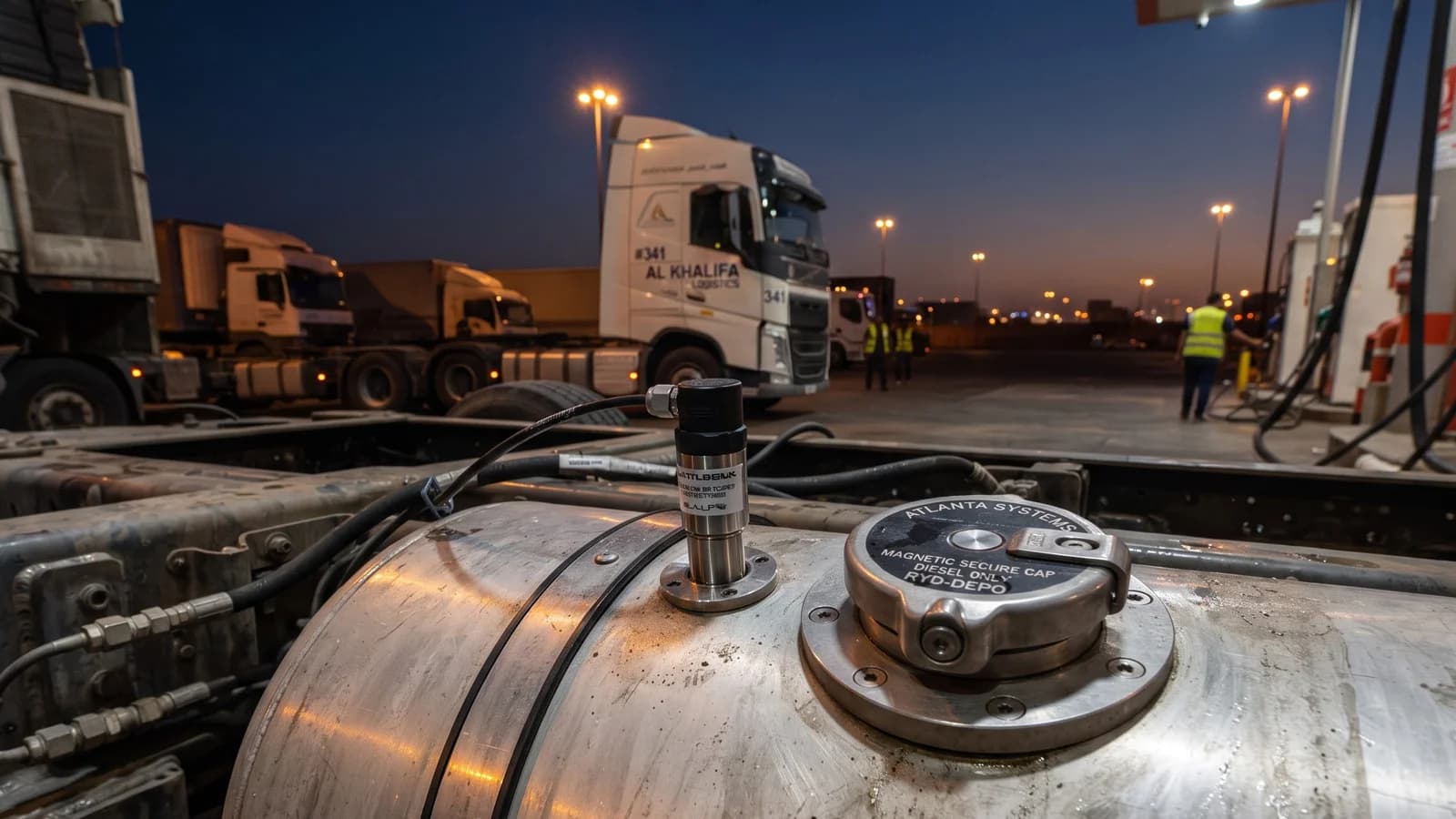
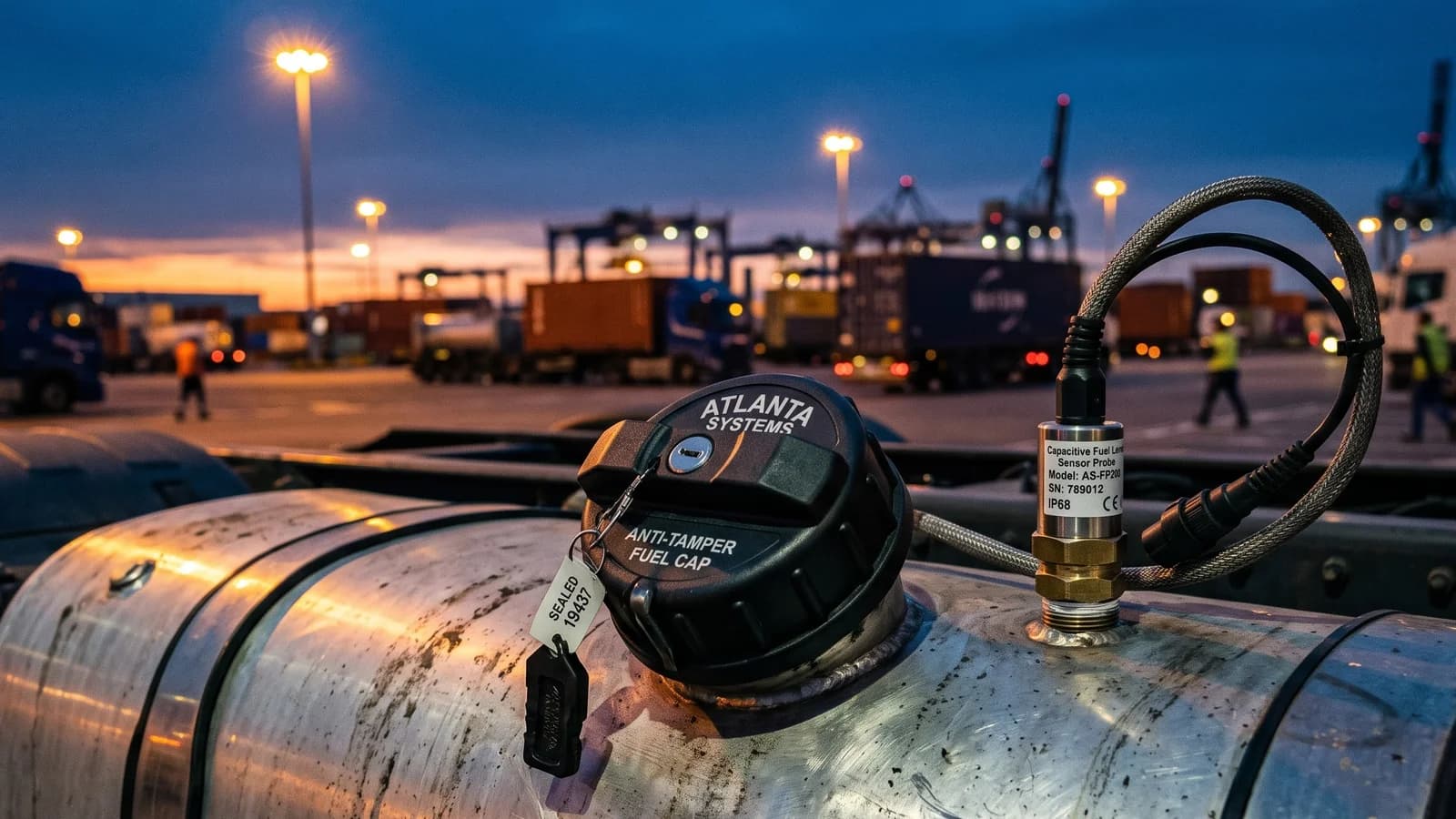
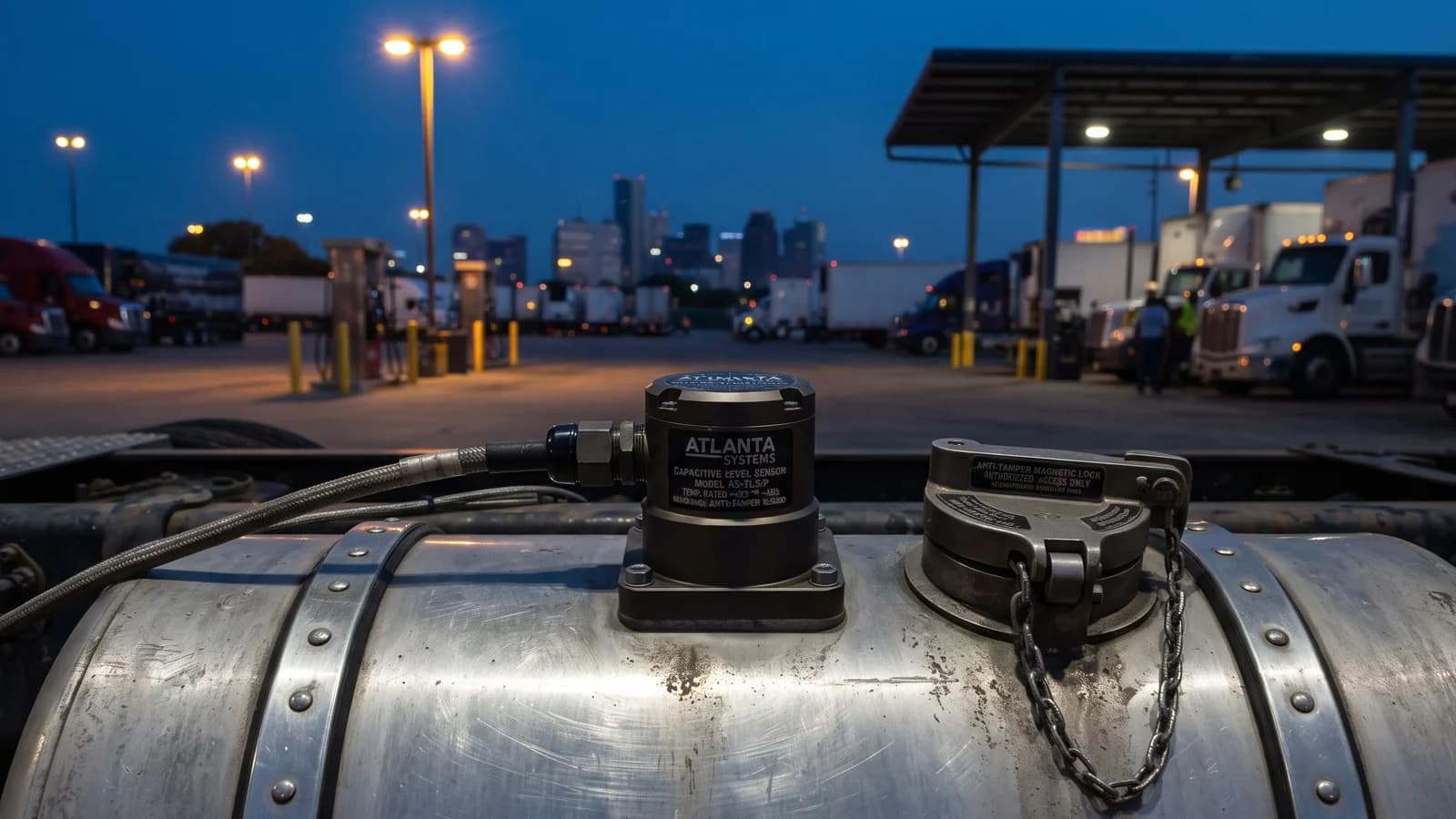
Atlanta Systems engineered the FL-400 Capacitive Probe / FL-700 Ultrasonic Sensor to solve this exact problem. Designed and manufactured in our ISO 9001 SMT electronics plants, the device delivers deep real-time telematics without compromising vehicle electrical integrity. Integrated sensors capture high-frequency metrics: engine parameters, velocity profiles, location fixes, and alarm loops are processed directly on-edge before secure transmission.
Real-World Performance Data Post-Deployment
The operational improvements that follow a properly executed telematics deployment are consistent and measurable. The following benchmark table reflects what commercial carriers typically report after deploying the FL-400 Capacitive Probe / FL-700 Ultrasonic Sensor:
| Operational Metric | Typical Before | Typical After | Directional Gain |
|---|---|---|---|
| Unaccounted Fuel Shrinkage / Theft | 8% – 15% monthly fuel loss | Under 1% total shrinkage | 90%+ Theft Elimination |
| Refueling Volume Reconciliation | Unverified paper fuel receipts | Millimeter digital match | 100% Audit Integrity |
| Unauthorized Siphoning Alerts | Undetected overnight drainage | Instant SMS / Cloud alert | Immediate Protection |
| Fleet Fuel Cost Savings | Baseline high fuel bills | Noticeably reduced fuel spend | Substantial Savings |
| Hardware Payback Period | — | Typically within 60 to 90 days | Immediate ROI |
Engineer Q&A: Your Technical Questions Answered
QWill road corrugations and fuel sloshing trigger false theft alarms?
No. Atlanta Systems capacitive probes and ultrasonic sensors utilize mathematical damping algorithms and built-in accelerometer feedback to filter out dynamic fuel sloshing during cornering and highway bumps.
QIs drilling required for installation?
We offer both high-precision immersion capacitive probes (which mount securely into standard tank sender flanges) and non-invasive external ultrasonic sensors that attach directly to the tank underside with zero drilling.
QCan the fuel telemetry connect to reefer auxiliary tanks and stationary generators?
Yes. The sensor output interfaces seamlessly with secondary fuel tanks, generator sets, and multi-compartment fuel tankers via RS232, RS485, or BLE 5.0 wireless links.
Start Your Fleet Telematics Transformation
The operational losses that Chicago fleet managers accept as unavoidable — regulatory fines, fuel siphoning, crash liability claims, and driver incidents — are not fixed costs. They are hardware and data problems. Atlanta Systems solves them with engineering validated across 1,000,000+ connected assets in United States and 26 other countries.
The Atlanta Systems difference is simple: 32 years of indigenous electronics manufacturing means every device is engineered, tested, and certified by the same team that supports your fleet after installation. Over 1,000,000 commercial vehicles on six continents have validated this approach. We are ready to add yours.
- Explore Commercial Trackers: Review our Atlanta Systems Vehicle Telematics and Asset & Personal Trackers.
- Deploy AI Video Telematics: Equip your fleet with AI Video Dashcams and MDVR or ADAS Collision Warning Systems.
- Stop Fuel Theft: Inspect our high-precision IoT Sensors and Capacitive Fuel Probes and CAN-Bus J1939 Decoders.
- Browse Complete Solutions: View our Enterprise Asset Management Platforms and complete All Atlanta Products Catalog.
- Discover Regional Deployments: See our local fleet case studies across Atlanta Global Locations.
High-Intent Lead Channels:
- For End-to-End Fleets (Pilot & Trial Units): Request sample test units for your vehicles. Contact Our Engineering Team Directly — we will ship test hardware to your workshop, walk your technicians through non-invasive installation, and demonstrate live telemetry on your own dispatch dashboard.
- For Systems Integrators, Distributors & Resellers: Partner with Atlanta Systems to distribute our hardware in your region. Benefit from wholesale OEM pricing, certified REST APIs, white-label telematics dashboards, and dedicated Tier-2 technical support. Explore our Partner & Reseller Program.
Official engineering publication group at Atlanta Systems Pvt. Ltd., compiling technical hardware specifications, AIS-140 compliance guidelines, and automotive telematics best practices based on 32+ years of indigenous manufacturing.