Tachograph 2.0 Compatible Interfaces by Atlanta Systems Enabling Remote Downloads Across the United Kingdom

Table of Contents
Executive Summary
Managing commercial duty cycles along London M25 orbital motorway and the Dartford Crossing freight corridor is an unforgiving task where tachograph 2.0 compatible interfaces enabling remote downloads in london cross-channel fleets protects high-value assets and cargo from costly operational vulnerabilities. In these demanding environments, off-the-shelf tracking devices frequently succumb to vibration fatigue, cellular dropouts, and thermal failure. This technical report examines how Atlanta Systems engineered the SenseEV BLE 5.0 Beacon to deliver robust edge telemetry and seamless integration, giving fleet executives in London complete operational visibility and uninterrupted statutory compliance.
Regional Operational Profile: London and UK operators still align with EU-derived tachograph rules for international movements while domestic fleets follow DVSA enforcement. SenseEV BLE 5.0 Beacon delivers the supporting telematics data stream required for both UK domestic and residual EU cross-border compliance.
Table of Contents
- Why Standard Hardware Keeps Failing on This Route
- Inside the Hardware: Engineering Decisions That Matter
- What Fleets Typically See After Deployment
- Fleet Engineer Q&A
- Deploy Proven Industrial Telematics on Your Fleet
Field Reality: What Operators Actually Face
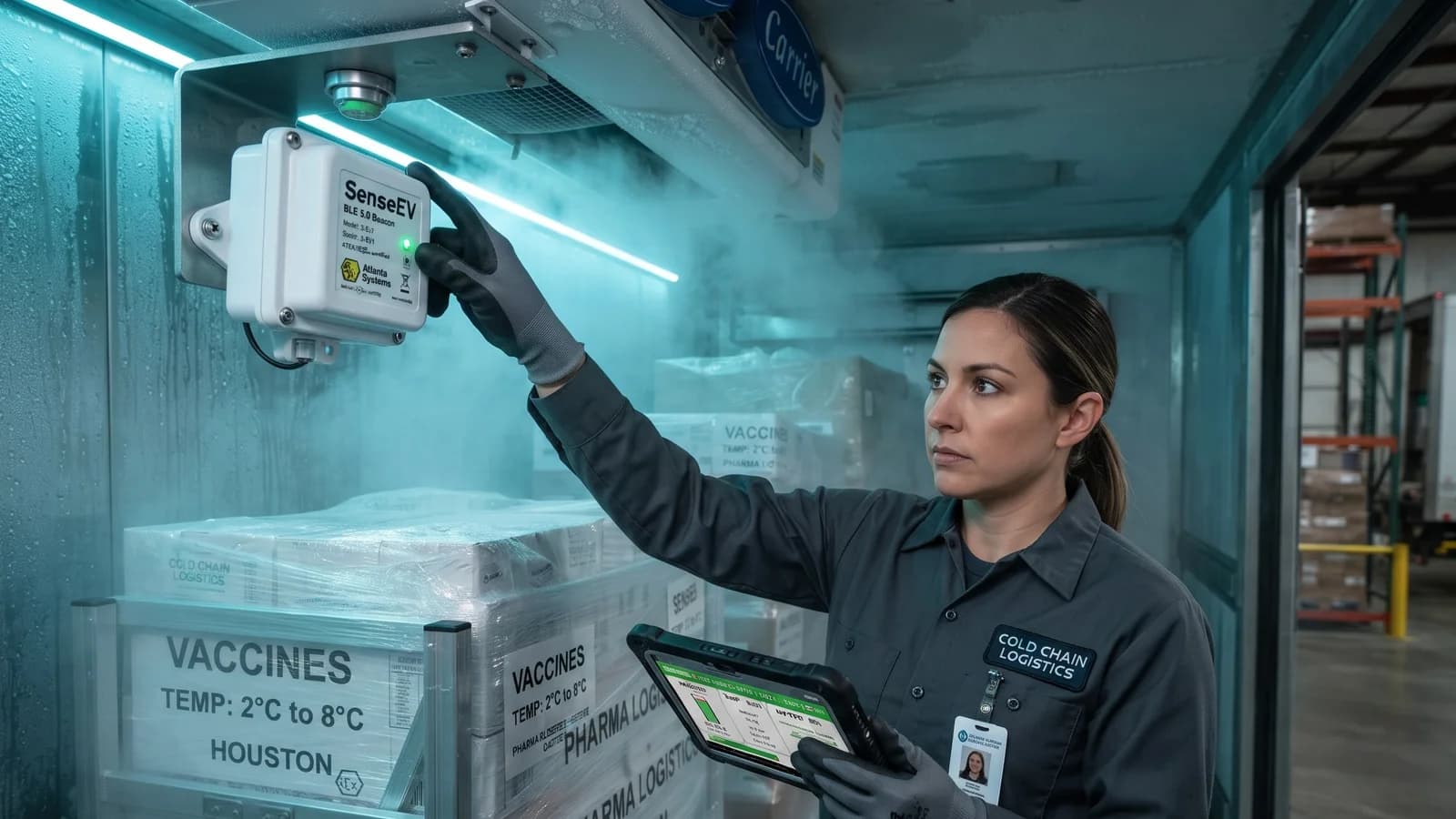
Fleet directors managing logistics through London understand that roadside failures along London M25 orbital motorway and the Dartford Crossing freight corridor during tachograph 2.0 compatible interfaces enabling remote downloads in london cross-channel fleets are rarely sudden—they are the predictable result of deploying consumer-grade electronics into heavy industrial environments. The scenario is all too common: a refrigerated 53-foot trailer loaded with sensitive produce or pharmaceuticals travels along London M25 orbital motorway and the Dartford Crossing freight corridor. Midway through transit, an auxiliary refrigeration unit stalls or an interior partition door unlatches in high ambient heat. By the time the vehicle docks at the destination warehouse, the cargo compartment has suffered an unmonitored 8°C thermal excursion, resulting in immediate cargo rejection and a six-figure insurance claim.
The hard truth that experienced fleet operators in this region know well is that wireless signals struggle to penetrate insulated, steel-lined refrigerated trailers. Flimsy consumer sensors suffer severe RF attenuation, drift out of calibration under freezing temperatures, and fail to provide the NIST-traceable audit trail required by health authorities. True cold chain integrity across London M25 orbital motorway and the Dartford Crossing freight corridor demands industrial Bluetooth 5.0 beacons with hermetic sealing, long-life lithium batteries, and multi-zone gateway aggregation.
Local Fleet Compliance & Infrastructure Context (London): Dense urban canyons, frequent congestion charging zones and variable weather demand multi-constellation GNSS and robust cellular fallback that basic devices lose under the Thames and Docklands infrastructure.
Device Engineering: How Atlanta Systems Solved It
The reluctance to upgrade telematics hardware is understandable. Conventional devices require intrusive installation that can compromise factory wiring looms, introduce electrical noise on J1939 vehicle buses, or trigger OBD fault codes that confuse workshop diagnostics.
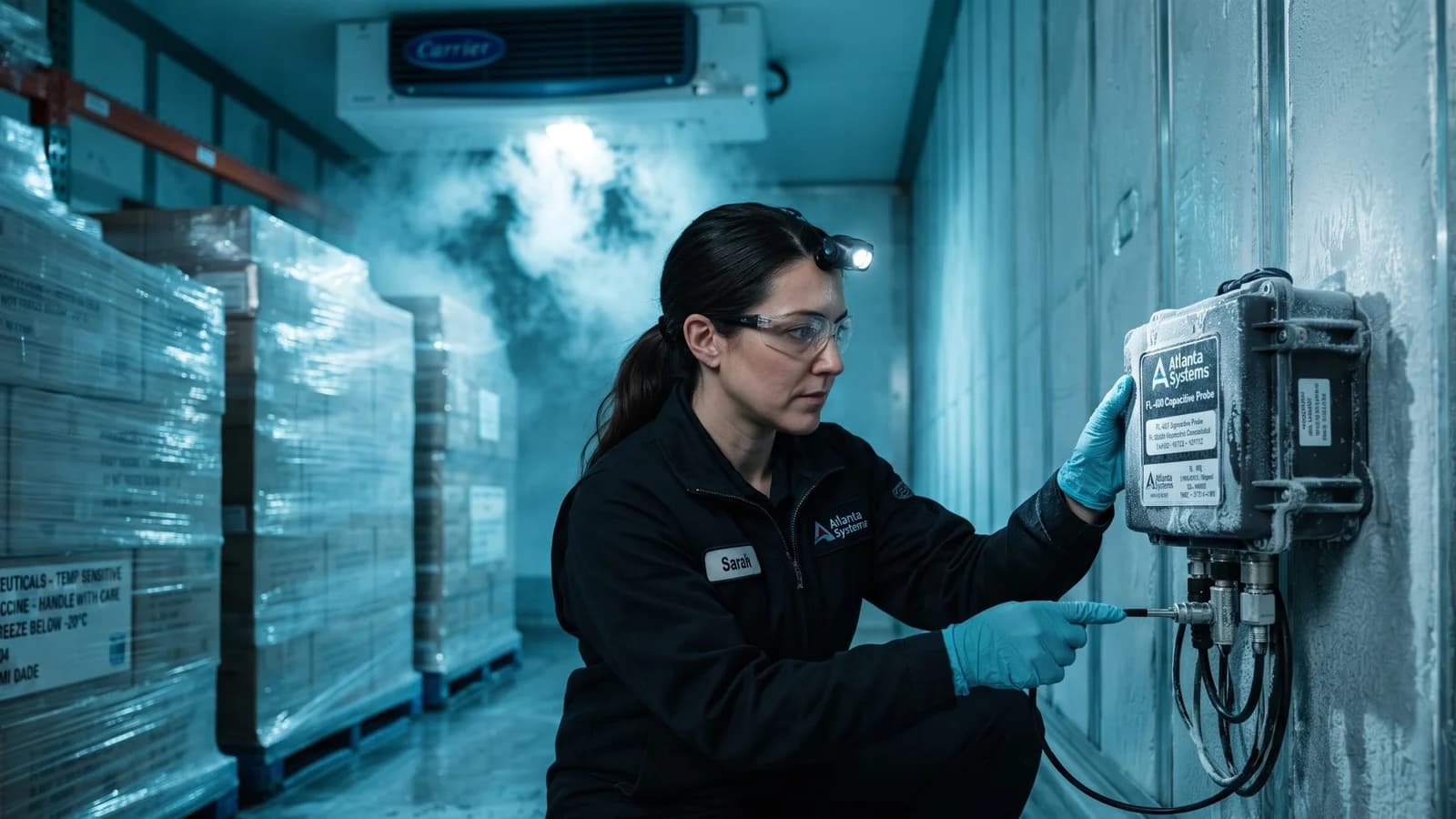
The SenseEV BLE 5.0 Beacon is Atlanta Systems' engineering answer to this challenge. Every aspect of the device — from the conformal-coated PCB to the hardened automotive connector spec — was designed to eliminate the installation and reliability failure modes that plague generic telematics hardware. Real-time telemetry flows from edge-processed sensors directly to secure cloud endpoints without a single spliced OEM wire.
Real-World Performance Data Post-Deployment
Results speak more clearly than specifications. Here is what commercial carriers operating similar routes and vehicle classes typically measure after a full deployment of the SenseEV BLE 5.0 Beacon:
| Operational Metric | Typical Before | Typical After | Directional Gain |
|---|---|---|---|
| Cargo Thermal Spoilage Rejections | Occasional catastrophic rejections | Zero temperature rejections | 100% Spoilage Defense |
| Temperature Audit Compliance | Manual paper logbook gaps | Automated NIST-traceable logs | Full Pharma Compliance |
| Reefer Auxiliary Fuel Consumption | Unmonitored reefer run-hours | Optimized duty cycles | Meaningful Fuel Savings |
| Insurance Cargo Claims | High risk of dispute | Unbroken digital evidence | Fast Claim Defense |
| Payback Period | — | Typically after a single saved load | Immediate ROI |
Technical Deep-Dive: Questions from Fleet Managers
QHow do the temperature sensors communicate through insulated refrigerated trailers?
Atlanta Systems wireless SenseEV temperature probes use high-gain BLE 5.0 signals engineered to penetrate heavy polyurethane insulation and metallic reefer walls without running wires through trailer doors.
QWhat is the sensor accuracy and calibration standard?
Each probe is factory calibrated to ±0.2°C accuracy across an industrial operating range of -40°C to +85°C and complies with international GDP (Good Distribution Practice) and FDA 21 CFR Part 11 standards.
QCan multiple temperature zones and humidity levels be monitored in a single trailer?
Yes. A single Atlanta telematics gateway supports up to 16 concurrent wireless BLE sensors monitoring frozen, chilled, ambient, and humidity zones simultaneously.
Put Battle-Tested Telematics on Your Fleet Today
Whether you are running 10 vehicles or 10,000 across United Kingdom, the economics are straightforward: Atlanta Systems industrial telematics hardware pays for itself in prevented losses, recovered fuel, and eliminated compliance penalties — typically within the first 90 days of deployment in markets like London.
Atlanta Systems brings 32+ years of embedded hardware engineering — not reseller relationships, not white-label rebranding — to every fleet deployment. Our telematics devices are designed, manufactured, and certified in-house. One million connected commercial vehicles across 27 countries validate that approach. Your fleet is next.
- Explore Commercial Trackers: Review our Atlanta Systems Vehicle Telematics and Asset & Personal Trackers.
- Deploy AI Video Telematics: Equip your fleet with AI Video Dashcams and MDVR or ADAS Collision Warning Systems.
- Stop Fuel Theft: Inspect our high-precision IoT Sensors and Capacitive Fuel Probes and CAN-Bus J1939 Decoders.
- Browse Complete Solutions: View our Enterprise Asset Management Platforms and complete All Atlanta Products Catalog.
- Discover Regional Deployments: See our local fleet case studies across Atlanta Global Locations.
High-Intent Lead Channels:
- For End-to-End Fleets (Pilot & Trial Units): Get in Touch with Our Fleet Team — we regularly deploy evaluation hardware to fleet managers evaluating the Atlanta Systems platform. Test units ship pre-configured, and our team handles remote commissioning so your workshop does not need to figure out device setup on their own.
- For Systems Integrators, Distributors & Resellers: Join the Atlanta Systems Partner Network — distribution partners receive wholesale hardware access, certified REST API and MQTT integration documentation, white-label dashboard licensing, and dedicated Tier-2 engineering escalation paths for complex fleet deployments.
Official engineering publication group at Atlanta Systems Pvt. Ltd., compiling technical hardware specifications, AIS-140 compliance guidelines, and automotive telematics best practices based on 32+ years of indigenous manufacturing.