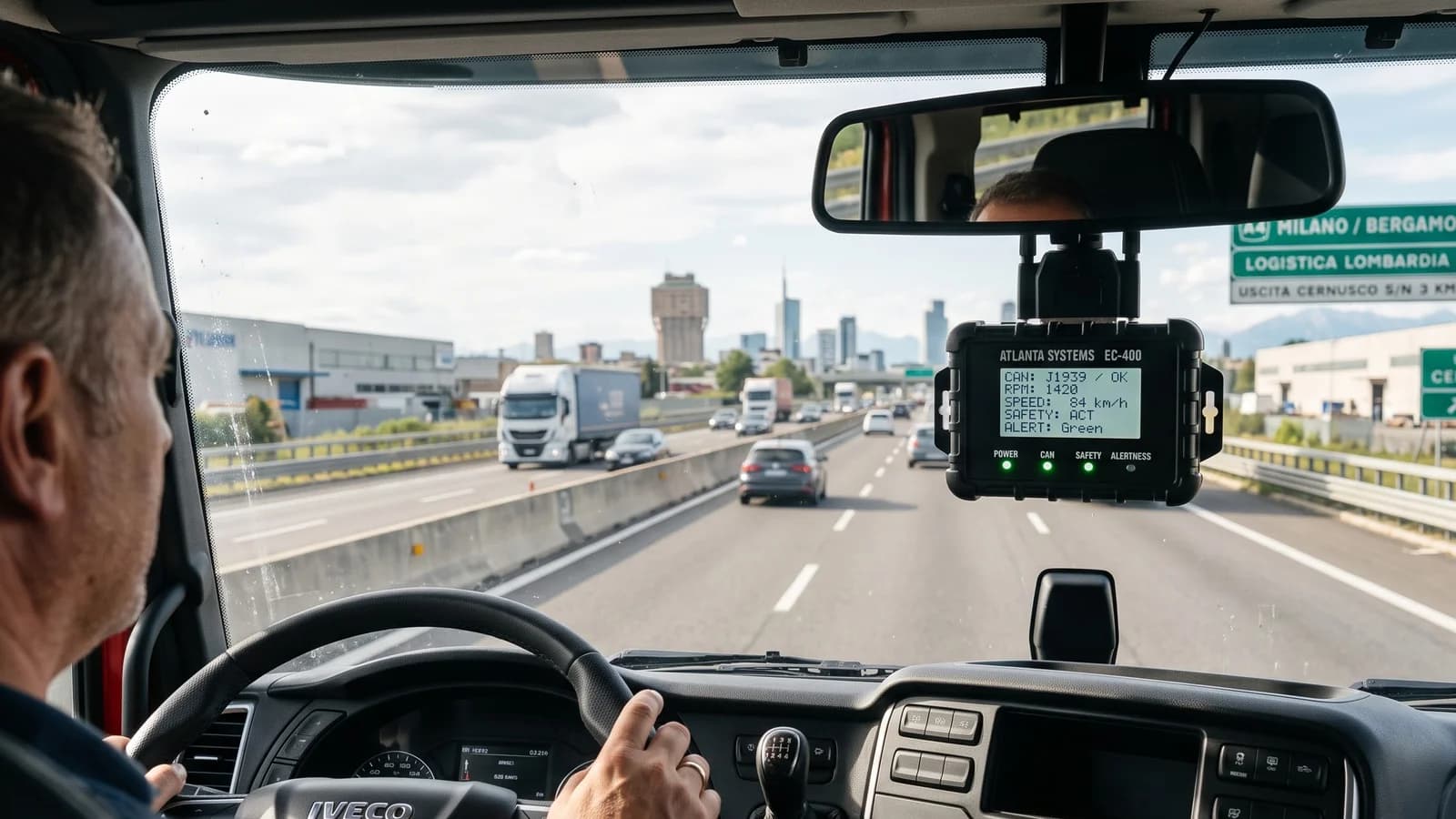
Tachograph 2.0 Interfaces by Atlanta Systems Enabling Secure Remote Downloads Across France
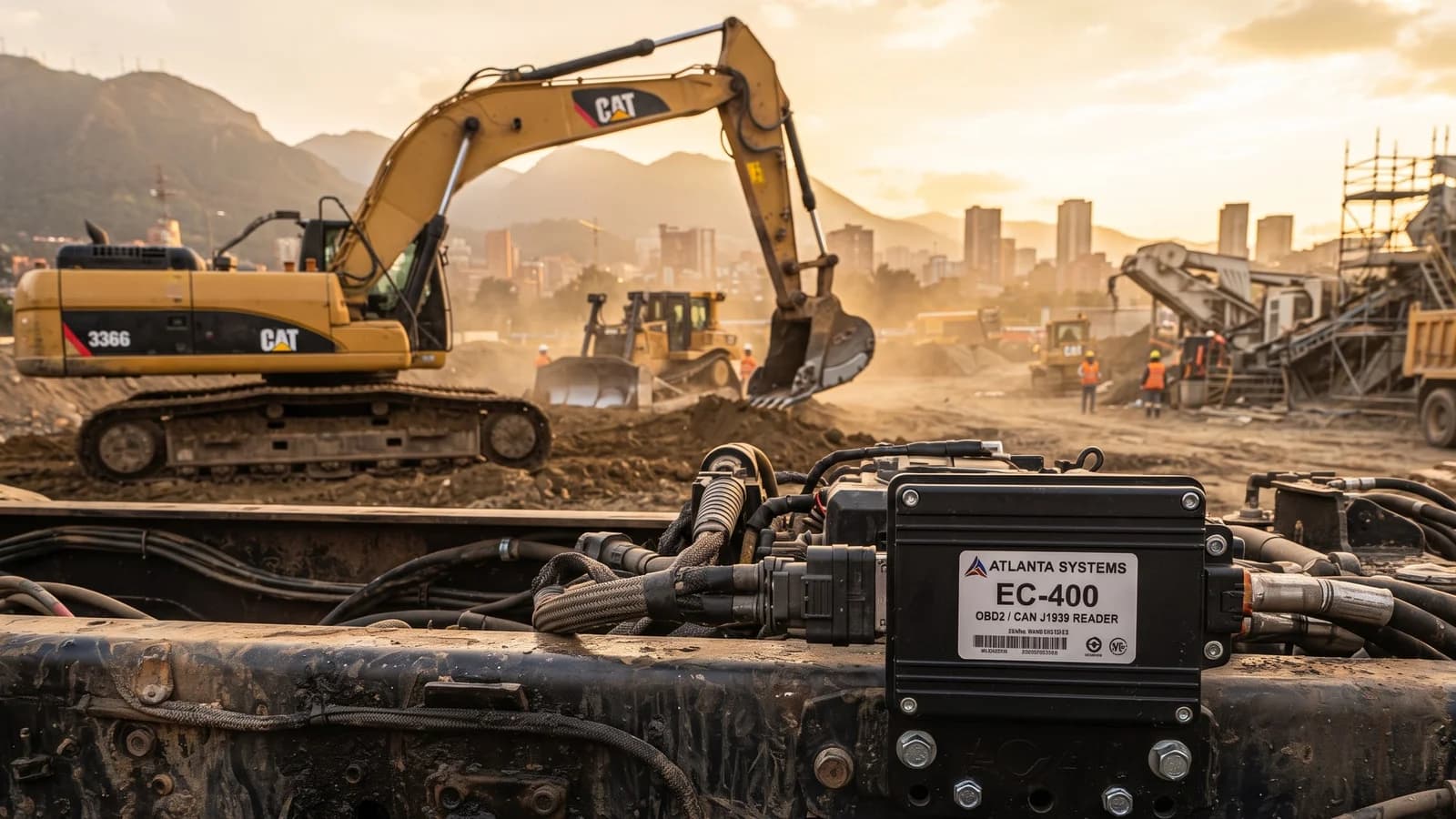
Table of Contents
Executive Summary
On the asphalt lanes of Paris Boulevard Périphérique and the A1 Autoroute du Nord logistics route, where commercial traffic moves round the clock across France, tachograph 2.0 interfaces enabling secure remote downloads in paris fleets provides the real-time foundation for intelligent fleet operations. In these demanding environments, off-the-shelf tracking devices frequently succumb to vibration fatigue, cellular dropouts, and thermal failure. This technical report examines how Atlanta Systems engineered the EC-400 OBD2 / CAN J1939 Reader to deliver robust edge telemetry and seamless integration, giving fleet executives in Paris complete operational visibility and uninterrupted statutory compliance.
Regional Operational Profile: Operating commercial logistics fleets in Paris requires telematics hardware engineered to satisfy regional transportation regulations, extreme electrical transients, and harsh operational environments. EC-400 OBD2 / CAN J1939 Reader delivers multi-constellation GNSS fixes, wide-voltage transient protection, and continuous cellular connectivity.
Table of Contents
- The Operational Problem This Hardware Solves
- Industrial Hardware Architecture & Telemetry Design
- What Fleets Typically See After Deployment
- Direct from Engineering: Technical FAQs
- Deploy Proven Industrial Telematics on Your Fleet
The Real-World Operational Challenge
The daily operational grind along Paris Boulevard Périphérique and the A1 Autoroute du Nord logistics route ruthlessly exposes every design compromise in a fleet’s telematics architecture, turning cheap hardware deployed for tachograph 2.0 interfaces enabling secure remote downloads in paris fleets into major financial liabilities. The scenario is all too common: a heavy transport unit hauling full payload up an incline along Paris Boulevard Périphérique and the A1 Autoroute du Nord logistics route suddenly stutters as the engine control module triggers an emergency derate. The vehicle crawls onto the shoulder with its dashboard glowing with check-engine lights. Because the tracking unit was unable to decode proprietary J1939 fault codes, fleet mechanics had zero advance notice of the escalating exhaust temperature or DPF soot accumulation until the truck was completely immobilized.
The hard truth that experienced fleet operators in this region know well is that modern heavy-duty diesel engines communicate over complex J1939 CAN-bus protocols that passenger car dongles cannot comprehend. Without an isolated, high-speed CAN transceiver reading SPN/FMI diagnostic trouble codes directly from the powertrain bus, fleet maintenance teams in Paris remain blind to early mechanical warnings, turning preventable maintenance items into catastrophic roadside blowouts.
Local Fleet Compliance & Infrastructure Context (Paris): Commercial fleets in Paris face severe operational risks from unmonitored engine idling, unauthorized route deviations, and telemetry loss in congested or remote transit corridors. Consumer-grade devices fail under sustained commercial duty cycles, creating compliance and liability gaps.
Inside the Hardware: Engineering Decisions That Matter
Fleet engineers frequently reject telematics upgrades not because the technology lacks value — but because retrofitting industrial-grade sensors onto existing vehicles traditionally meant hours of invasive wiring work, OEM warranty exposure, and CAN-bus interference risks.
The EC-400 OBD2 / CAN J1939 Reader is Atlanta Systems' engineering answer to this challenge. Every aspect of the device — from the conformal-coated PCB to the hardened automotive connector spec — was designed to eliminate the installation and reliability failure modes that plague generic telematics hardware. Real-time telemetry flows from edge-processed sensors directly to secure cloud endpoints without a single spliced OEM wire.
Operational Results: Before vs. After Benchmarks
Fleets that move from reactive roadside repairs to proactive telemetry monitoring consistently report measurable gains across core operational benchmarks. The table below represents the performance improvements commercial carriers typically experience after deploying the EC-400 OBD2 / CAN J1939 Reader:
| Operational Metric | Typical Before | Typical After | Directional Gain |
|---|---|---|---|
| Unplanned Roadside Engine Breakdowns | Frequent, reactive repairs | Occasional, caught early | Significant Reduction |
| Fleet Idling Fuel Burn | Elevated engine idle waste | Noticeably reduced | Meaningful Savings |
| Major Drivetrain Repair Spend | High, unplanned overhauls | Lower, scheduled repairs | Substantial Savings |
| Fleet Drivetrain Fuel Economy | Baseline efficiency | Measurably improved | Moderate Gain |
| Capital Investment Payback | — | Typically within months | Fast Return |
Engineer Q&A: Your Technical Questions Answered
QWill installing Atlanta telematics affect my vehicle manufacturer warranty?
No. Our systems use contactless magnetic induction clamps over the twisted CAN-High and CAN-Low wires. Because there is zero wire splicing or electrical contact made to the copper conductor, factory OEM warranties from Volvo, Scania, Mercedes-Benz, Freightliner, and Caterpillar remain fully valid.
QCan the device cause interference or inject packets on the vehicle CAN network?
No. The reader functions purely as a passive listener with zero transmitting circuitry connected to the vehicle bus. It is physically impossible for the hardware to inject rogue packets or interfere with electronic braking, steering, or transmission controls.
QDoes it support mixed fleets with light-duty vehicles?
Yes. The system automatically auto-detects baud rates and decodes commercial SAE J1939 and J1708 protocols as well as passenger and light-duty commercial OBD-II (ISO 15765-4 CAN) protocols.
Put Battle-Tested Telematics on Your Fleet Today
For fleet operators in Paris managing compliance risk, fuel exposure, and driver safety across France's demanding freight corridors, the performance gap between consumer telematics and Atlanta Systems industrial hardware directly translates into margin — one way or another.
With over three decades of indigenous hardware design and ISO 9001 manufacturing, Atlanta Systems has deployed industrial telematics across every major commercial vehicle corridor on six continents. More than 1,000,000 connected assets currently run on Atlanta hardware. Our engineering team is ready to do the same for your fleet.
- Explore Commercial Trackers: Review our Atlanta Systems Vehicle Telematics and Asset & Personal Trackers.
- Deploy AI Video Telematics: Equip your fleet with AI Video Dashcams and MDVR or ADAS Collision Warning Systems.
- Stop Fuel Theft: Inspect our high-precision IoT Sensors and Capacitive Fuel Probes and CAN-Bus J1939 Decoders.
- Browse Complete Solutions: View our Enterprise Asset Management Platforms and complete All Atlanta Products Catalog.
- Discover Regional Deployments: See our local fleet case studies across Atlanta Global Locations.
High-Intent Lead Channels:
- For End-to-End Fleets (Pilot & Trial Units): Contact Our Engineering Team to arrange a no-obligation pilot deployment. We will ship trial units to your fleet, support the installation, and provide full access to live telemetry data so you can validate performance before committing to a full rollout.
- For Systems Integrators, Distributors & Resellers: Partner with Atlanta Systems to distribute our hardware in your region. Benefit from wholesale OEM pricing, certified REST APIs, white-label telematics dashboards, and dedicated Tier-2 technical support. Explore our Partner & Reseller Program.
Official engineering publication group at Atlanta Systems Pvt. Ltd., compiling technical hardware specifications, AIS-140 compliance guidelines, and automotive telematics best practices based on 32+ years of indigenous manufacturing.