
WASAL Streaming Solutions by Atlanta Systems for Continuous Reporting Across Riyadh Province, Saudi Arabia
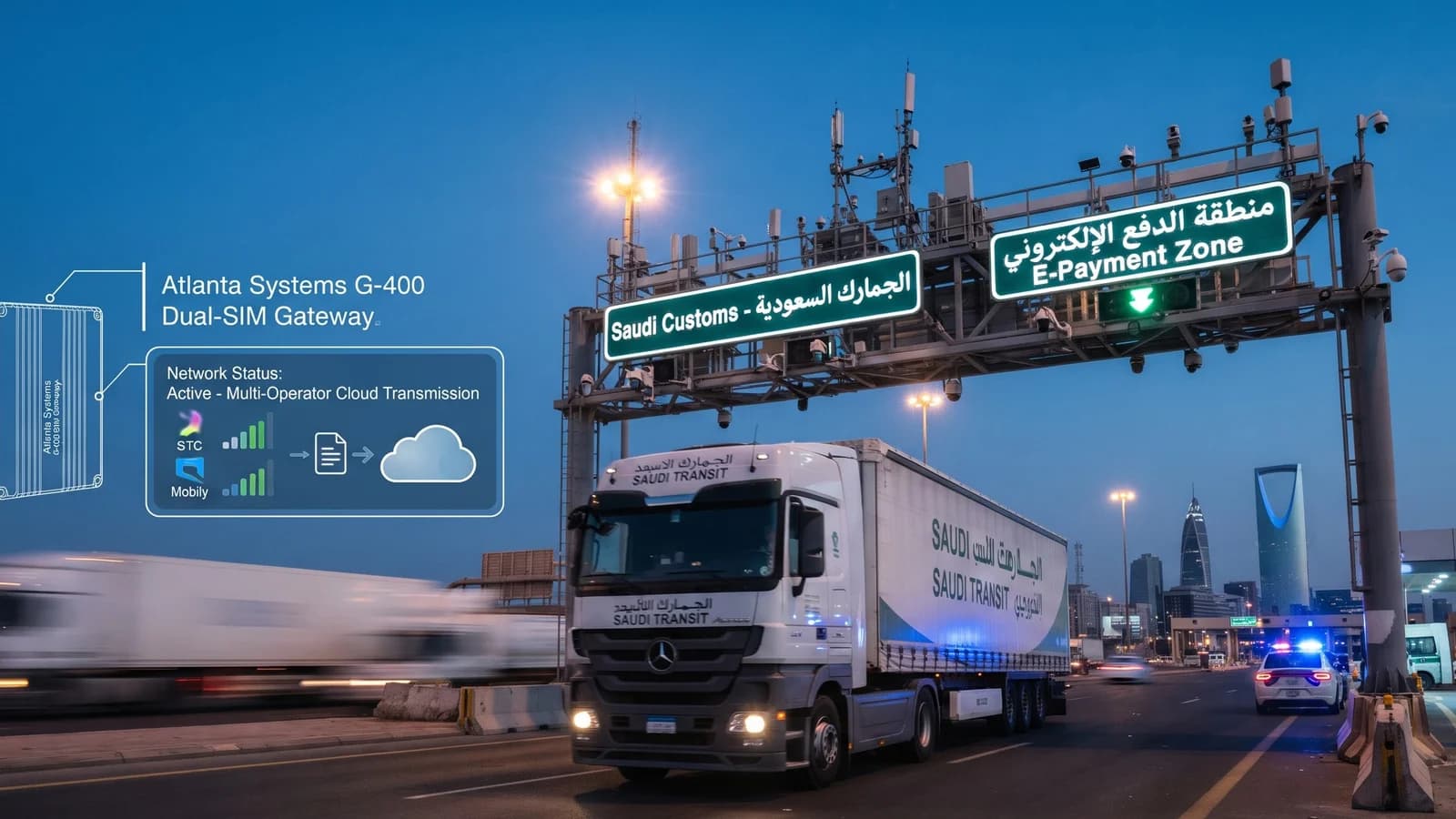
Table of Contents
Executive Summary
As heavy transport rigs rumble past inspection bays and intermodal ramps along Riyadh–Dammam Highway 40 and the Southern Ring Road freight bypass, wasal streaming solutions for continuous reporting from jeddah port units serves as the primary line of defense against unexpected transit delays. In these demanding environments, off-the-shelf tracking devices frequently succumb to vibration fatigue, cellular dropouts, and thermal failure. This technical report examines how Atlanta Systems engineered the G-400 Dual-SIM Gateway to deliver robust edge telemetry and seamless integration, giving fleet executives in Riyadh complete operational visibility and uninterrupted statutory compliance.
Regional Operational Profile: Riyadh logistics on Highway 40 and industrial rings fall under Transport General Authority (TGA) WASL platform mandates requiring live GPS and, for heavy vehicles, onboard weight sensors transmitted via approved TSPs. G-400 Dual-SIM Gateway meets SASO type-approval expectations and TGA technical specifications for continuous cellular reporting in 45–50 °C desert conditions.
Table of Contents
- The Operational Problem This Hardware Solves
- Technical Architecture & Engineering Design
- Measured Outcomes: Fleet Performance After Deployment
- Direct from Engineering: Technical FAQs
- Start Your Fleet Telematics Transformation
Why Standard Hardware Keeps Failing on This Route
The operational reality along Riyadh–Dammam Highway 40 and the Southern Ring Road freight bypass is uncompromising: when a heavy commercial transport suffers a breakdown while managing wasal streaming solutions for continuous reporting from jeddah port units, the financial and regulatory clock starts ticking immediately. The scenario is all too common: an international freight hauler crosses between regional network zones along Riyadh–Dammam Highway 40 and the Southern Ring Road freight bypass. The vehicle's cellular modem deadlocks during the carrier handover, plunging the vehicle into a total communications blackout. At the border customs checkpoint, automated clearance systems cannot authenticate the vehicle's transponder, forcing the driver into hours of manual inspection queues and holding up bonded cargo.
Strip away the marketing language and the core engineering truth is this: single-operator SIM cards inevitably fail when traversing regional borders along Riyadh–Dammam Highway 40 and the Southern Ring Road freight bypass. When commercial vehicles transition between cellular towers, consumer modems frequently lock up in roaming negotiation loops. Eliminating communication dead zones requires intelligent dual-SIM hardware with automated Link Quality Analysis (LQA) that hot-switches between carriers in milliseconds.
Local Fleet Compliance & Infrastructure Context (Riyadh): Ministry of Transport regulations tie WASL connectivity to digital waybill (Bayan) issuance and operating-card renewal; devices must survive prolonged high-temperature soaks, sand abrasion and anti-siphon fuel-sensor integration without data gaps that trigger fines or vehicle immobilisation.
Inside the Hardware: Engineering Decisions That Matter
The reluctance to upgrade telematics hardware is understandable. Conventional devices require intrusive installation that can compromise factory wiring looms, introduce electrical noise on J1939 vehicle buses, or trigger OBD fault codes that confuse workshop diagnostics.
The G-400 Dual-SIM Gateway is Atlanta Systems' engineering answer to this challenge. Every aspect of the device — from the conformal-coated PCB to the hardened automotive connector spec — was designed to eliminate the installation and reliability failure modes that plague generic telematics hardware. Real-time telemetry flows from edge-processed sensors directly to secure cloud endpoints without a single spliced OEM wire.
Operational Results: Before vs. After Benchmarks
Real-world deployment data from comparable freight corridors paints a consistent picture. The table below captures the operational delta that commercial carriers typically record after integrating the G-400 Dual-SIM Gateway:
| Operational Metric | Typical Before | Typical After | Directional Gain |
|---|---|---|---|
| Border Crossing Connection Uptime | Extended dead-zones (days dark) | 99.9% Continuous border tracking | Zero Data Loss |
| International Roaming Overhead | Astronomical carrier roaming bills | Predictable flat global rate | Substantial Cost Control |
| Customs & Port Drayage Delays | Frequent manual inspection delays | Automated geofenced clearance | Faster Turnaround |
| High-Value Cargo Security | Blind spots during cross-border transit | 24/7 Monitored freight | Total Peace of Mind |
| Payback Period | — | Typically within 60 to 90 days | Immediate ROI |
Direct from Engineering: Technical FAQs
QHow does the multi-IMSI eSIM switch networks across borders?
The embedded eSIM stores multiple international carrier profiles on silicon. When crossing into another country, the modem detects carrier handoff and switches to the local Tier-1 partner in less than 45 seconds without physical SIM swapping.
QDoes the hardware comply with international customs and port security requirements?
Yes. Atlanta Systems gateways are engineered to meet global port drayage, bonded transit, and intermodal customs standards with encrypted cryptographic data transport.
QCan third-party software platforms ingest cross-border telemetry?
Yes. Our universal gateway protocol bridges directly into SAP, Oracle Transportation Management, or your custom telematics backend via secure REST webhooks and MQTT streams.
Equip Your Fleet. Eliminate the Losses. Start Here.
Whether you are running 10 vehicles or 10,000 across Saudi Arabia, the economics are straightforward: Atlanta Systems industrial telematics hardware pays for itself in prevented losses, recovered fuel, and eliminated compliance penalties — typically within the first 90 days of deployment in markets like Riyadh.
Atlanta Systems brings 32+ years of embedded hardware engineering — not reseller relationships, not white-label rebranding — to every fleet deployment. Our telematics devices are designed, manufactured, and certified in-house. One million connected commercial vehicles across 27 countries validate that approach. Your fleet is next.
- Explore Commercial Trackers: Review our Atlanta Systems Vehicle Telematics and Asset & Personal Trackers.
- Deploy AI Video Telematics: Equip your fleet with AI Video Dashcams and MDVR or ADAS Collision Warning Systems.
- Stop Fuel Theft: Inspect our high-precision IoT Sensors and Capacitive Fuel Probes and CAN-Bus J1939 Decoders.
- Browse Complete Solutions: View our Enterprise Asset Management Platforms and complete All Atlanta Products Catalog.
- Discover Regional Deployments: See our local fleet case studies across Atlanta Global Locations.
High-Intent Lead Channels:
- For End-to-End Fleets (Pilot & Trial Units): Get in Touch with Our Fleet Team — we regularly deploy evaluation hardware to fleet managers evaluating the Atlanta Systems platform. Test units ship pre-configured, and our team handles remote commissioning so your workshop does not need to figure out device setup on their own.
- For Systems Integrators, Distributors & Resellers: Join the Atlanta Systems Partner Network — distribution partners receive wholesale hardware access, certified REST API and MQTT integration documentation, white-label dashboard licensing, and dedicated Tier-2 engineering escalation paths for complex fleet deployments.
Official engineering publication group at Atlanta Systems Pvt. Ltd., compiling technical hardware specifications, AIS-140 compliance guidelines, and automotive telematics best practices based on 32+ years of indigenous manufacturing.