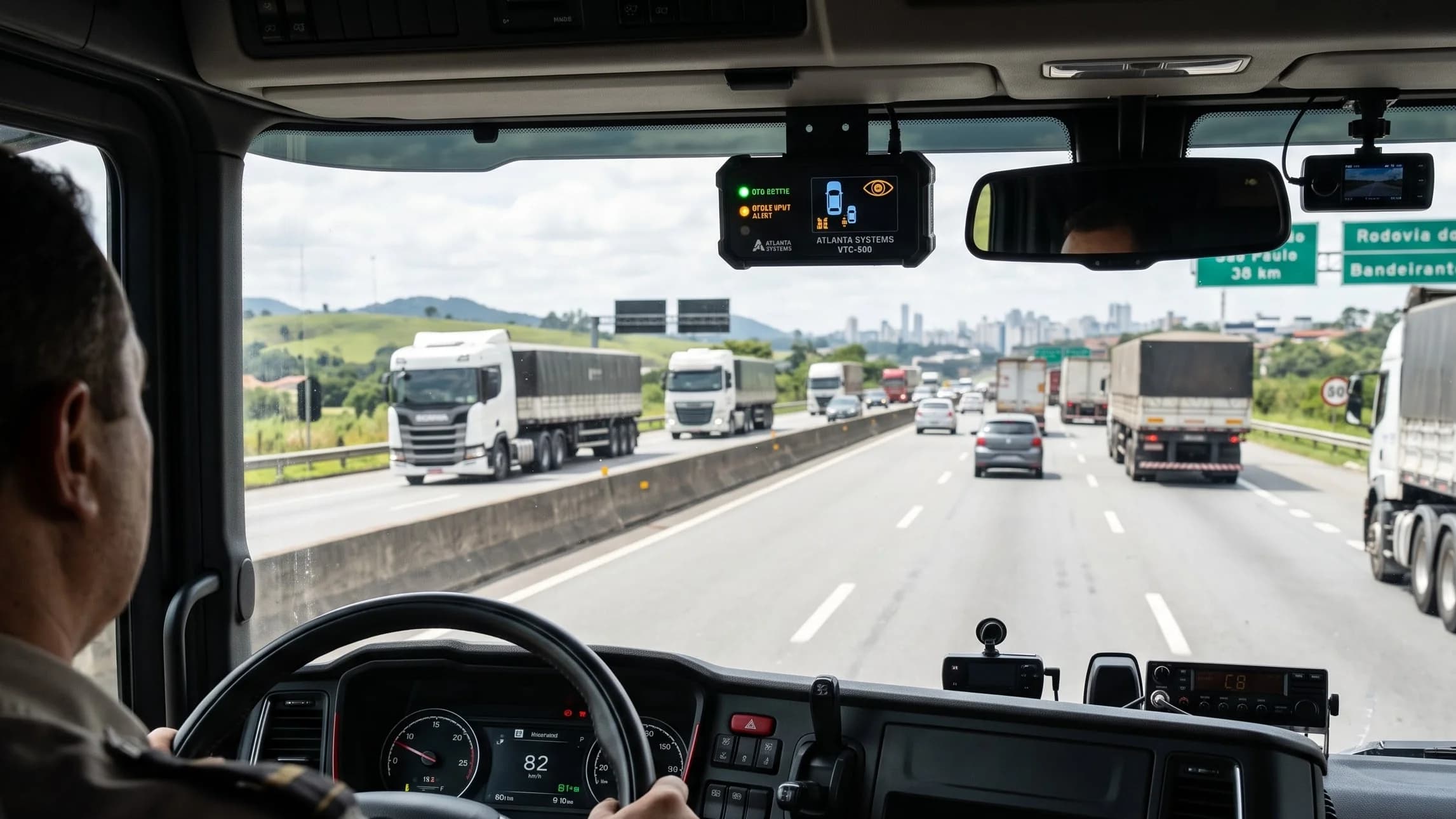
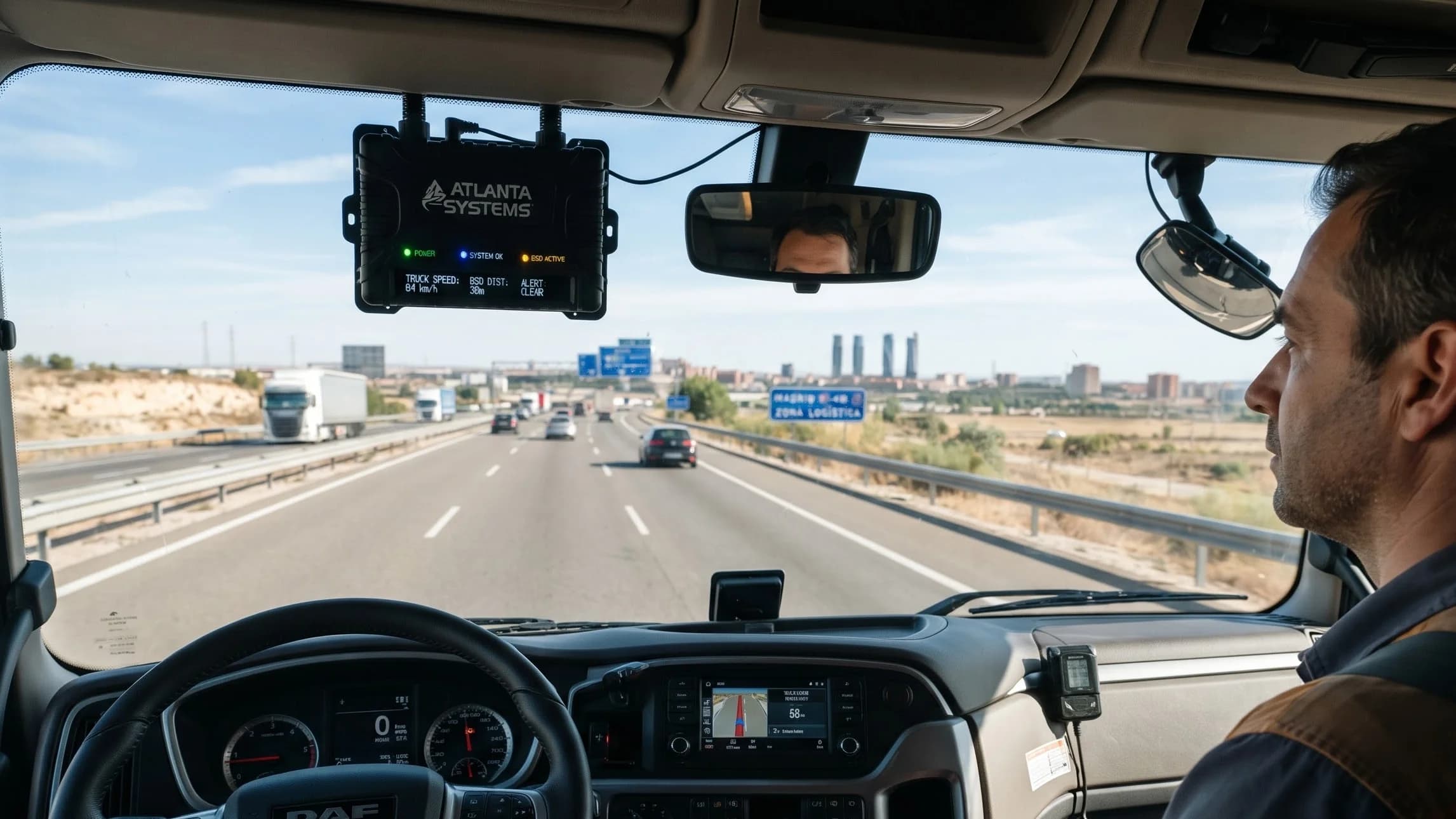
DMS Driver Fatigue Monitoring from Atlanta Systems for Long-Haul Drivers on Madrid's A-2 and A-3 Corridors
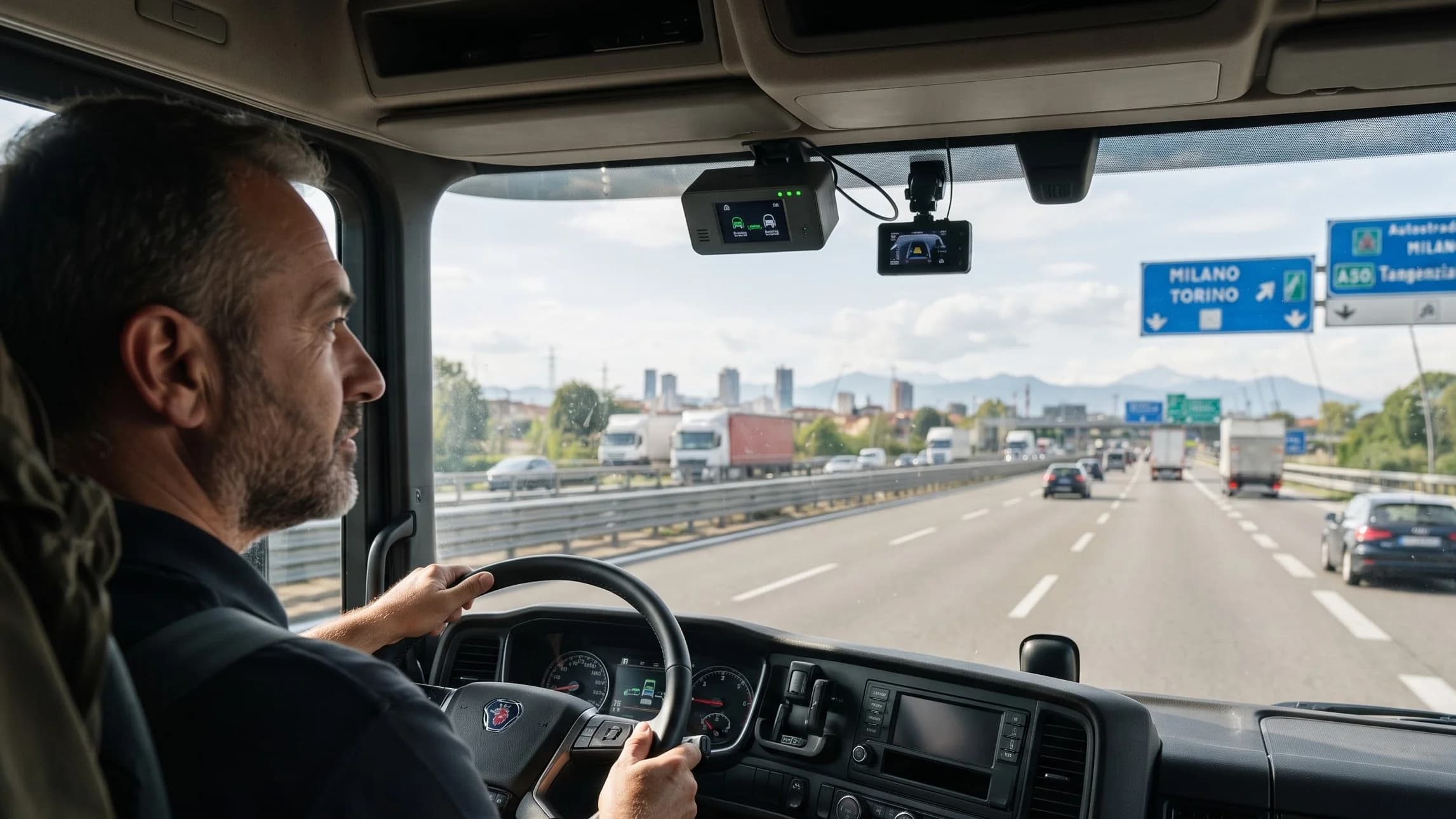
Table of Contents
- The Operational Context: Fatigue Dynamics on Iberian Freight Corridors
- Hardware Architecture: ATL-DSM-V1 & AVD-201 Video Telematics
- System Integration and Wiring Architecture
- Technical Specifications: ATL-DSM-V1 vs. Generic Dashcams
- Field Implementation Results: Madrid Logistics Operator
- Conclusion & Deployment Guidelines
Long-haul freight transport linking central Spain to the Mediterranean ports is the backbone of the Iberian supply chain. The Autovía A-2 (connecting Madrid to Zaragoza and Barcelona) and the Autovía A-3 (connecting Madrid to Valencia) accommodate thousands of heavy commercial tractor-trailers daily. These high-volume arterial corridors demand continuous concentration during demanding overnight shifts, where circadian fatigue, micro-sleep events, and mobile phone distractions represent the primary causes of severe commercial vehicle incidents. Under the European Union General Safety Regulation (EU GSR 2024 / Regulation EU 2019/2144), commercial vehicle fleets must incorporate Driver Drowsiness and Attention Warning (DDAW) and Advanced Driver Distraction Warning (ADDW) systems. Atlanta Systems addresses this regulatory and operational challenge with the ATL-DSM-V1 Driver Status Monitor camera and the AVD-201 dual-channel intelligent video telematics gateway, engineered to provide instant in-cabin alerting and cloud-synchronized safety event verification.
The Operational Context: Fatigue Dynamics on Iberian Freight Corridors
The A-2 and A-3 expressways present distinct driving environments that exacerbate driver exhaustion. Traversing the arid plateau of Castilla-La Mancha toward Valencia or climbing through the Guadalajara hills toward Zaragoza involves long, monotonous stretches with sustained night-time cruising speeds of 90 km/h. Monotony combined with split-shift multi-drop schedules increases the occurrence of micro-sleep episodes—brief lapses of consciousness lasting from one to three seconds where an articulated truck travels up to 75 meters completely unguided.
Conventional telematics that rely solely on steering wheel angle sensors or lane deviation inputs often flag fatigue only after a vehicle drifts across road markings. In contrast, computer vision-based Driver Monitoring Systems (DMS) track facial biometrics directly, identifying physiological signs of drowsiness up to five minutes before physical vehicle trajectory anomalies occur.
Hardware Architecture: ATL-DSM-V1 & AVD-201 Video Telematics
The Atlanta Systems driver safety ecosystem combines high-precision optical facial tracking with an edge-AI processing core designed for continuous 24/7 automotive operation:
```
```
1. Active 940nm Infrared Illumination
Sun glare across the Spanish plains and total darkness on unlit rural highway bypasses require resilient optical imaging. The ATL-DSM-V1 integrates four discrete 940nm high-power infrared LEDs. Operating outside the visible spectrum, these illuminators prevent night blindness or eye strain for the driver while penetrating polarized sunglasses, prescription spectacles, and variable cabin ambient lighting.
2. Edge Neural Network Algorithms
Running on an integrated 1.2 TOPS Neural Processing Unit (NPU), the onboard convolutional neural network (CNN) tracks 68 distinct facial landmark vectors at 30 frames per second:
- PERCLOS (Percentage of Eye Closure): Measures the proportion of time the eyelids remain 80% closed over a rolling 60-second window, distinguishing natural blinks from fatigue-induced drooping.
- Yawning and Micro-Sleep Frequency: Quantifies open-mouth geometry and head-nodding angles (pitch and roll) to flag pre-fatigue states.
- Distraction & Cell Phone Detection: Detects gaze deviation exceeding 2.0 seconds away from the road center and flags hand-to-ear phone positioning.
- Smoking & Mask Interference: Identifies active smoking gestures and maintains full facial landmark tracking even when surgical or dust masks are worn.
System Integration and Wiring Architecture
In heavy commercial fleet deployments (such as Volvo FH, Scania R-Series, or Iveco S-Way prime movers), the ATL-DSM-V1 sensor integrates directly with the primary AVD-201 telematics terminal or vehicle FMS/CAN gateway:
```
```
- Optimal Sensor Placement: The ATL-DSM-V1 unit is rigidly secured to the driver-side A-pillar or central steering column shroud, calibrated at a distance of 65–85 cm from the driver's eye level with a 15°–20° upward elevation.
- Audio-Visual In-Cab Feedback: Upon detecting an event (such as a 1.5-second eye closure at speeds > 30 km/h), the unit instantly sounds an audible 85 dB alert and vocal instruction ("Caution: Driver Drowsiness Detected"), prompting immediate driver re-engagement.
- Bandwidth-Optimized Telemetry Transmission: The AVD-201 buffers a 15-second high-definition video snippet (10 seconds pre-event and 5 seconds post-event) and transmits both telemetry meta-tags and compressed video clips over 4G LTE to the fleet management operations center.
Technical Specifications: ATL-DSM-V1 vs. Generic Dashcams
| Parameter | Atlanta Systems ATL-DSM-V1 | Standard Commercial Dashcam |
|---|---|---|
| Detection Engine | Dedicated Hardware NPU (Edge Facial Tracking) | Basic Frame-Difference / Software-Based |
| Infrared Wavelength | 940nm Invisible Night-Vision Matrix | 850nm (Visible Red Glow causes driver distraction) |
| Sunglasses Penetration | Certified for Polarized & UV400 Lenses | Blinded by Dark or Mirrored Lenses |
| EU GSR Compliance | Aligns with DDAW / ADDW Standards | Non-compliant / Uncertified |
| I/O & Integration | RS232 / High-Speed CAN / 4G Telematics Hub | Standalone SD Card Recording Only |
| Environmental Rating | IP52 Dust Resistant / Vibration to ISO 16750 | Consumer Plastic Enclosure |
Field Implementation Results: Madrid Logistics Operator
A Tier-1 cold-chain carrier managing 85 tractor-trailers between Mercamadrid and the Port of Valencia deployed the ATL-DSM-V1 and AVD-201 solution over a six-month evaluation period:
- Fatigue Incidents: Severe drowsiness warnings dropped by 68% within 45 days as drivers adapted shift rest intervals.
- Cell Phone Distractions: Mobile phone usage while moving along the A-3 motorway fell by 91%.
- Insurance Premium Impact: Validated incident-free video logs reduced fleet commercial loss ratios, yielding an 11% renewal discount with European underwriters.
Conclusion & Deployment Guidelines
Implementing active Driver Monitoring Systems along critical European corridors like Madrid’s A-2 and A-3 transforms fleet safety from retrospective incident review to active accident prevention. Atlanta Systems provides system integrators, fleet managers, and OEM bodybuilders with ruggedized, certified DMS hardware backed by comprehensive Web-FOTA configuration management.
To explore technical integration drawings or schedule a hardware evaluation of the ATL-DSM-V1 and AVD-201, contact the Atlanta Systems enterprise engineering team at sn@atlantasys.com or visit www.atlantasys.com.
Co-Founder at Atlanta Systems Pvt. Ltd., spearheading large-scale global telematics supply chains, commercial fleet compliance deployments, and OEM electronics manufacturing partnerships.