Reefer and Generator Fuel Tracking Solutions from Atlanta Systems at Port of Houston Container Stacks
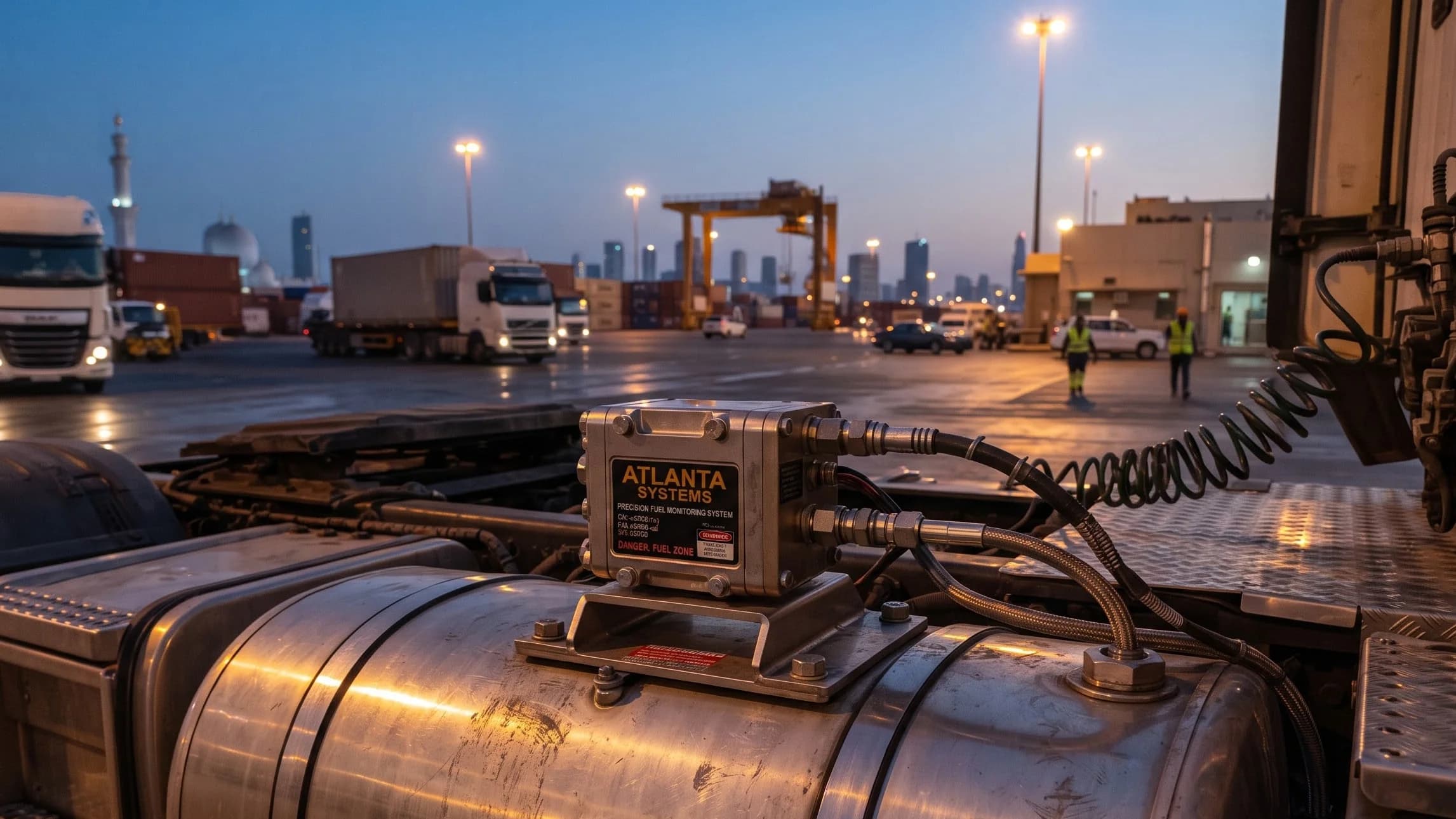
Table of Contents
- The Operational Reality: Fuel Risks in Intermodal Reefer Stacks
- Hardware Architecture: FSH-10 Flow Meter & GWC-100 Gateway
- Mechanical Integration and Telematics Architecture
- Technical Specifications: FSH-10 & GWC-100 vs. Standard Telematics
- Operational Results: Port of Houston Cold-Chain Logistics
- Conclusion & Inquiries
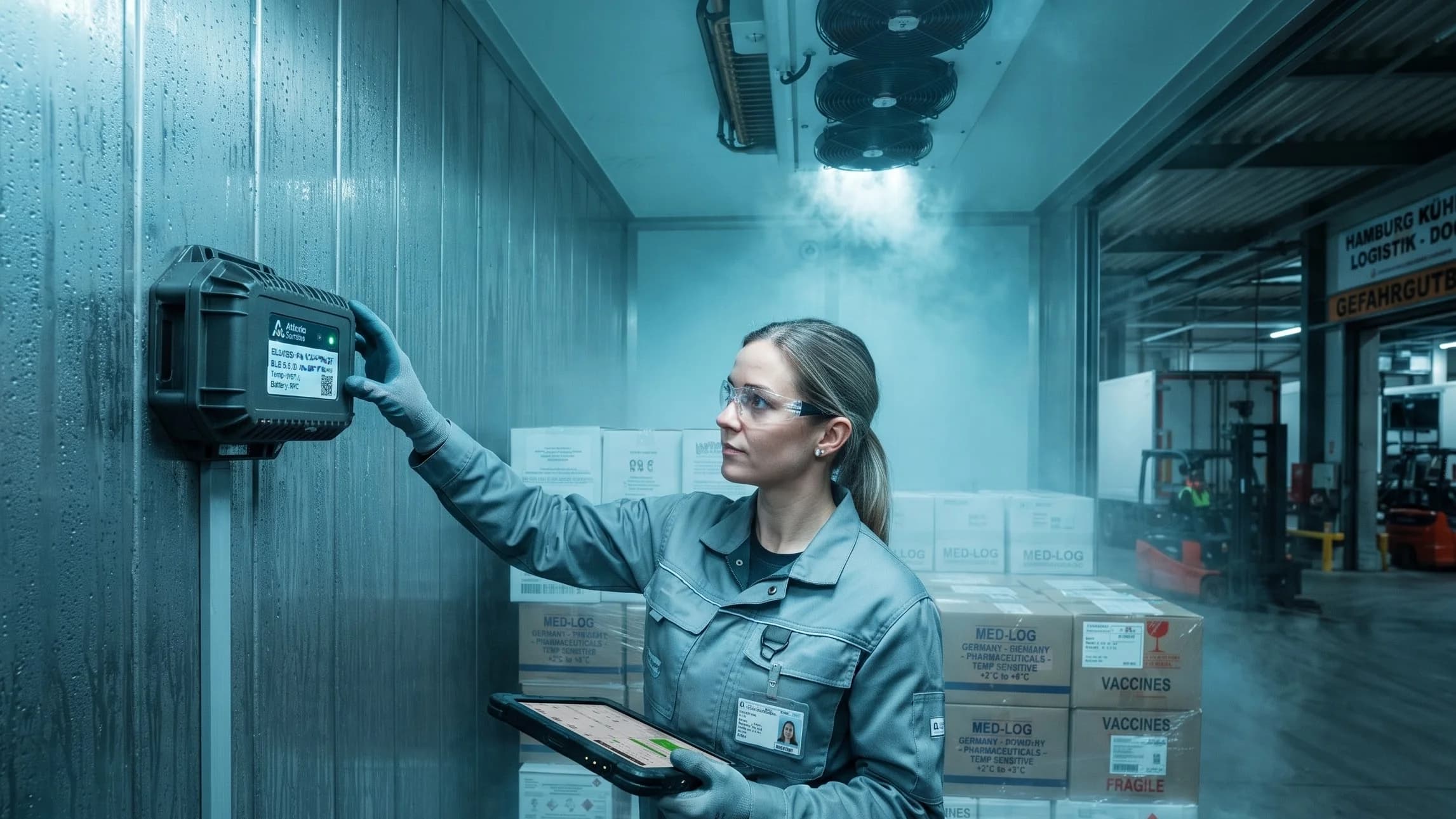
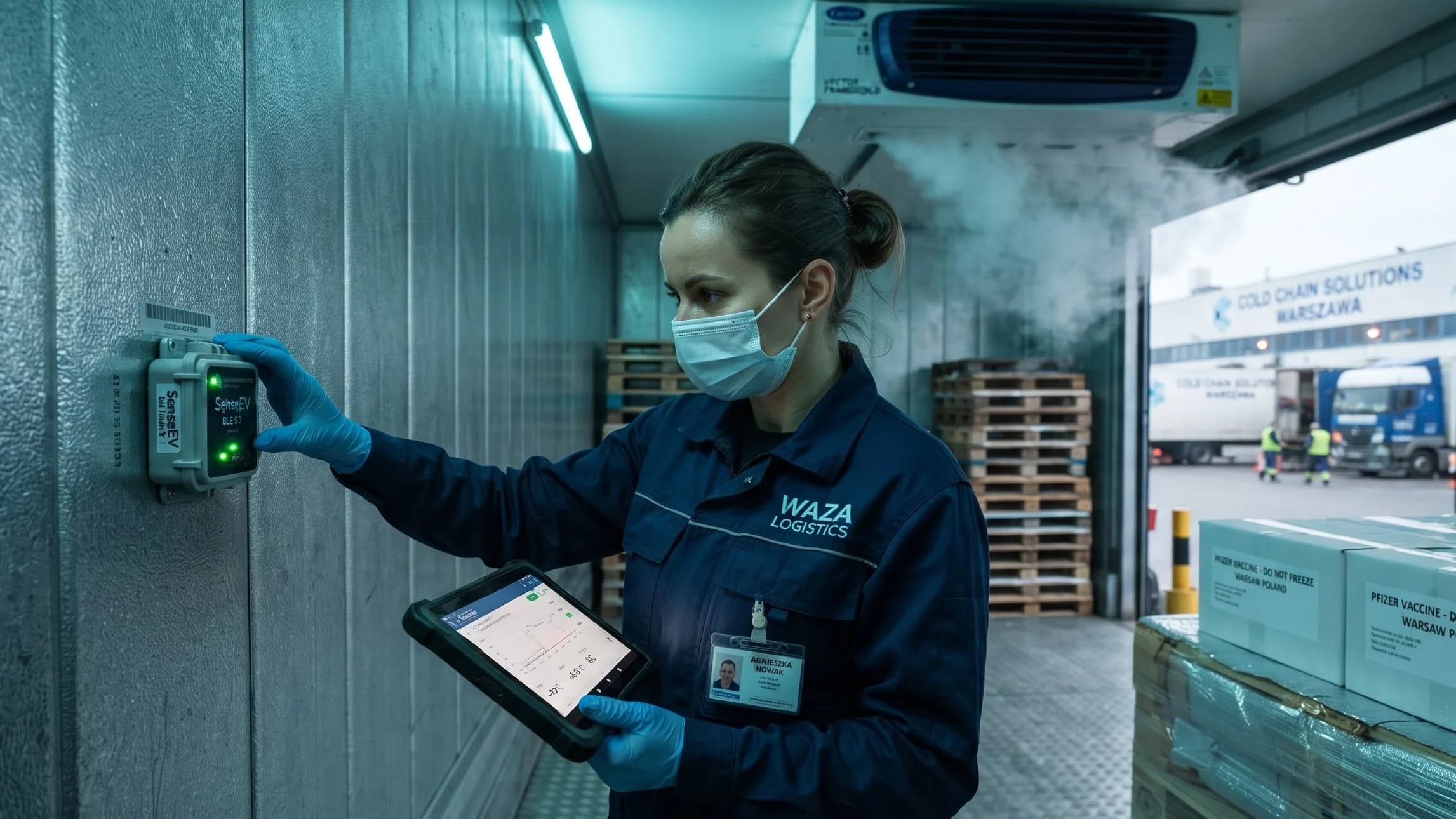
The Port of Houston—anchored by the Bayport and Barbours Cut container terminals—is one of the busiest maritime trade hubs in North America. As the premier gateway for the Gulf Coast, Houston handles massive volumes of perishable agricultural imports, frozen seafood, biomedical supplies, and petrochemical exports. Maintaining temperature integrity across thousands of refrigerated intermodal containers (reefers) and chassis-mounted diesel generator sets (gensets) is critical. If an auxiliary genset runs out of fuel while staged in container stacks or during highway drayage along the I-610 Loop and I-10 freight corridors, the resulting cargo spoilage can cause hundreds of thousands of dollars in commercial losses. Furthermore, auxiliary diesel generators operating in decentralized container yards are prime targets for fuel theft and unmetered fuel diversion. Atlanta Systems provides intermodal logistics operators and cold-chain carriers with an end-to-end reefer fuel monitoring solution, combining the FSH-10 industrial fuel flow meter, the FSK-1000 capacitive level probe, and the ruggedized GWC-100 asset telematics gateway.
The Operational Reality: Fuel Risks in Intermodal Reefer Stacks
Refrigerated transport units rely on standalone diesel engines (such as Thermo King, Carrier Transicold, or clip-on underslung gensets) operating independently of the road tractor's powertrain. This operational model introduces distinct monitoring vulnerabilities:
- Unpredictable Duty Cycles: Reefer engines cycle dynamically between high-speed cooling, low-speed temperature maintenance, and defrost modes depending on ambient heat and internal temperature setpoints. In Houston's summer climate, where ambient temperatures frequently exceed 38°C (100°F) with 90% relative humidity, reefer fuel burn spikes dramatically.
- Fuel Starvation Spoilage: Genset fuel tanks typically hold between 190 and 300 liters (50 to 80 gallons). If a container is delayed at customs or staged in an off-dock rail terminal without power plugs, a genset running dry leads to immediate temperature excursions and total cargo loss.
- Pilferage in Unsecured Stacks: Because container staging yards cover hundreds of acres, auxiliary genset fuel tanks are easily accessed by unauthorized fuel scavengers using portable siphon hoses.
Protecting these valuable assets requires continuous, real-time monitoring of both tank liquid levels and engine fuel flow rates, backed by autonomous battery-powered IoT telemetry.
Hardware Architecture: FSH-10 Flow Meter & GWC-100 Gateway
The Atlanta Systems reefer tracking architecture combines microscopic volumetric flow measurement with absolute tank volume sensing:
```
```
1. FSH-10 Positive Displacement Rotary Piston Flow Meter
Standard automotive fuel sensors cannot measure the low flow rates characteristic of auxiliary reefer engines (1.5 to 4.5 L/hr). The FSH-10 utilizes an ultra-precision positive displacement rotary piston mechanism. Each revolution of the internal measuring chamber displaces an exact volumetric quantity of diesel, passing an optical or magnetic hall-effect sensor to deliver discrete pulse outputs with ±1.0% precision, completely unaffected by fuel viscosity or vibration.
2. Dual Feed & Return Differential Measurement
Modern electronic reefer engines utilize a return fuel line that recirculates hot excess diesel from the injectors back into the fuel tank. The FSH-10 architecture integrates dual-chamber differential metering or high-speed software differential calculation, subtracting the return volume from the supply volume to derive the engine's true net diesel consumption in real time.
Mechanical Integration and Telematics Architecture
Installing the Atlanta Systems monitoring hardware onto an intermodal clip-on or underslung genset requires no disruption to the refrigeration cooling circuit:
```
```
- In-Line Flow Meter Installation: The FSH-10 is installed along the low-pressure fuel supply circuit between the primary diesel pre-filter and the injection pump, protected by an inline 25-micron strainer.
- FSK-1000 Tank Depth Sensing: Center-mounted through the top inspection plate of the genset tank, the FSK-1000 capacitive sensor provides an independent measurement of absolute fuel volume remaining.
- Autonomous Battery Operation: The GWC-100 gateway is powered directly from the genset’s 12V DC starter battery while running. When the genset is unpowered or staged in container stacks, the GWC-100 switches seamlessly to its internal 5200 mAh backup battery, transmitting periodic heartbeats and instant anti-theft wake-up alarms.
- Predictive Run-Out Hours Calculation: The cloud platform cross-analyzes real-time tank level ($L_{ ext{remaining}}$) with the current hourly burn rate ($F_{ ext{burn}}$) to compute Estimated Engine Hours Remaining:
$$H_{ ext{remaining}} = rac{L_{ ext{remaining}}}{F_{ ext{burn}}}$$
When $H_{ ext{remaining}}$ falls below a critical threshold (e.g., 8 hours), an automated dispatch ticket is sent to the yard refuelling contractor.
Technical Specifications: FSH-10 & GWC-100 vs. Standard Telematics
| Parameter | Atlanta Systems FSH-10 / GWC-100 | Basic Trailer GPS Tracker |
|---|---|---|
| Measurement Type | True Direct Flow (L/hr) + Level (%) | Battery Voltage / Location Only |
| Low-Flow Sensitivity | Detects down to 0.5 L/hr | Unable to measure flow |
| Tamper & Siphon Alerts | Instant (< 10 sec on rapid tank drop) | None |
| Autonomous Operation | Up to 45 Days on Internal Li-Ion Battery | Shuts down when disconnected |
| Environmental Rating | IP67 Marine & Petrochem Grade Enclosure | Standard Automotive IP54 |
| Reefer Controller Link | RS485 / Modbus / Pulse Integration | No integration |
Operational Results: Port of Houston Cold-Chain Logistics
A major refrigerated freight logistics provider managing 220 underslung generator sets operating between Houston terminals and inland Texas distribution centers deployed the Atlanta Systems solution:
- Cargo Spoilage Prevention: Incidents of reefer engine shutdown due to fuel starvation were reduced to zero over 18 months of continuous operation.
- Theft Suppression: Real-time siphoning alerts intercepted 14 overnight fuel theft incidents in unmonitored drop yards along the I-610 corridor, saving thousands of gallons of diesel.
- Maintenance Optimization: Accurate engine run-time tracking enabled condition-based maintenance intervals, cutting routine genset servicing costs by 16%.
Conclusion & Inquiries
Preventing catastrophic cold-chain cargo loss and eliminating fuel shrinkage in intermodal container operations requires purpose-built telematics hardware. Atlanta Systems’ FSH-10 fuel flow meters, FSK-1000 level probes, and GWC-100 gateways provide fleet managers, intermodal carriers, and port terminals with the technical precision needed to ensure continuous reefer reliability.
To request product datasheets, wiring schematics, or evaluate an evaluation unit, contact Atlanta Systems' North American engineering team at sn@atlantasys.com or visit www.atlantasys.com.
Co-Founder at Atlanta Systems Pvt. Ltd., spearheading large-scale global telematics supply chains, commercial fleet compliance deployments, and OEM electronics manufacturing partnerships.