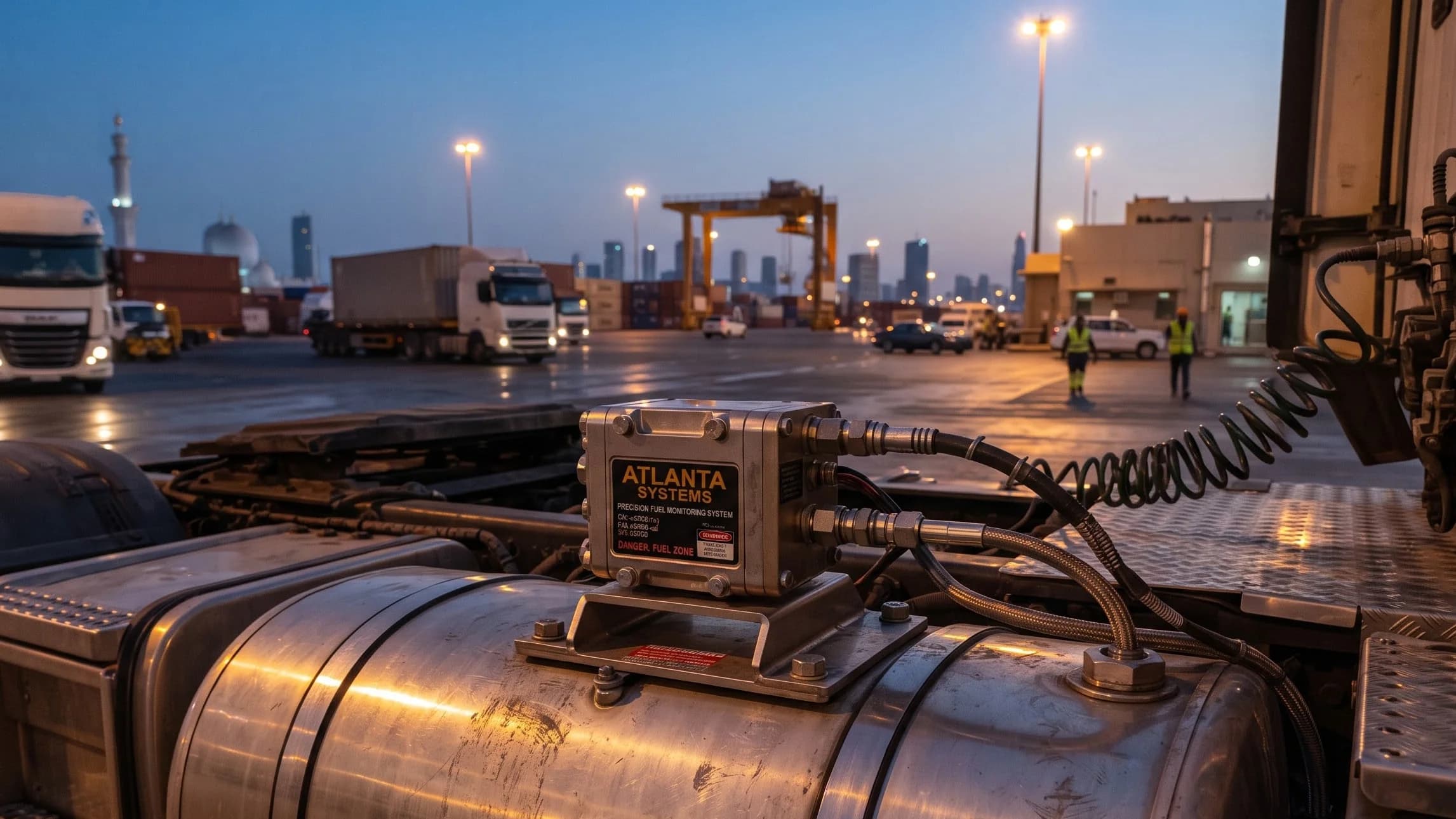
BLE 5.0 Beacons by Atlanta Systems Enabling Multi-Zone Temperature Mapping on Warsaw Pharma Routes
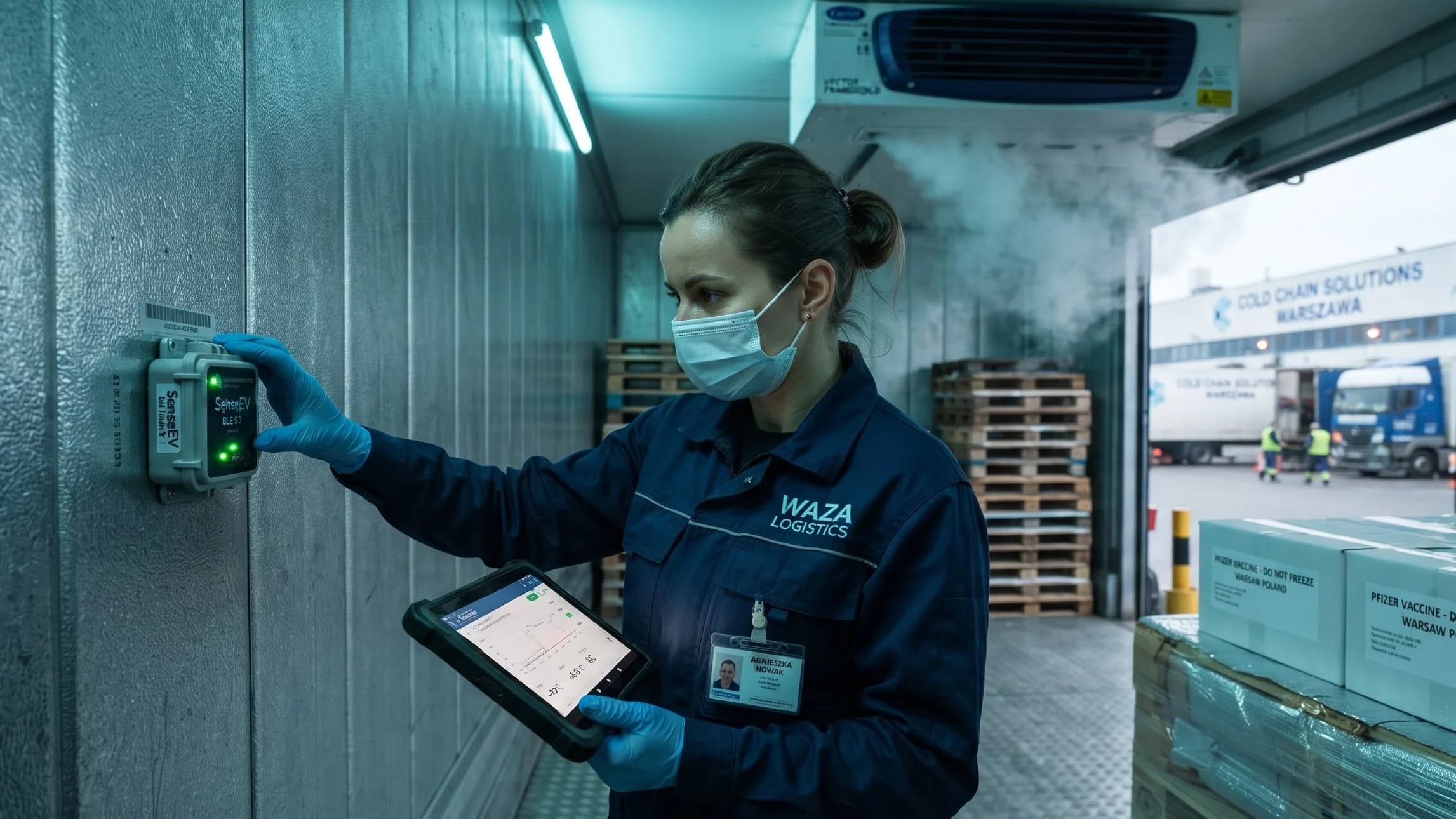
Table of Contents
- The Regulatory and Thermal Challenge on Warsaw Pharma Corridors
- Hardware Architecture: IBK-10 / IBK-20 Industrial Beacons & GWC-100 Gateway
- Multi-Zone Deployment and Network Architecture
- Technical Comparison: Atlanta Systems BLE 5.0 vs. Wired & USB Data Loggers
- Field Implementation Case Study: Warsaw–Berlin Pharma Route
- Summary & Technical Evaluation
The logistics corridor extending from the pharmaceutical manufacturing clusters around Warsaw through the A2 motorway toward Poznań, Wrocław, and the German border represents one of the most critical healthcare distribution channels in Central and Eastern Europe. Transporting temperature-sensitive pharmaceutical cargo—ranging from mRNA vaccines and biological injectables (+2°C to +8°C) to controlled ambient prescription tablets (+15°C to +25°C)—is subject to stringent European Union Good Distribution Practice (EU GDP 2013/C 343/01) regulations. Under these statutory standards, transport operators must verify that every cubic meter of cargo space maintains thermal compliance throughout transit. Traditional hardwired temperature probes installed exclusively near the refrigeration blower fail to detect micro-climates, cold drafts near floor runners, or hot spots near rear loading doors. Atlanta Systems solves this operational challenge with its multi-zone wireless monitoring suite, utilizing IBK-10 and IBK-20 industrial Bluetooth Low Energy (BLE 5.0) temperature and humidity beacons paired with the GWC-100 cold-chain telematics gateway.
The Regulatory and Thermal Challenge on Warsaw Pharma Corridors
Traversing the Polish motorway network during seasonal weather extremes presents significant cold-chain risks. Sub-zero winter conditions reaching -20°C alternate with continental summer heatwaves exceeding 35°C. When a 13.6-meter tri-axle refrigerated semi-trailer operates in these environments:
- Thermal Stratification: Air circulating through a packed trailer develops significant thermal gradients. The temperature near the ceiling discharge chute can be up to 4°C colder than the cargo loaded against the rear door seals.
- Multi-Temperature Compartment Integrity: Modern pharmaceutical distribution relies on dual-temperature trailers with movable longitudinal or transverse bulkheads, segregating frozen (-20°C) and chilled (+4°C) goods. A leaky bulkhead seal can compromise adjacent shipments within minutes.
- EU GDP Audit Requirements: Regulatory auditors require complete, unalterable historical temperature logs mapped to validated sensor locations throughout the trailer, including door-opening events and thermal recovery curves.
Hardwiring 6 to 12 individual sensor probes throughout a multi-compartment trailer involves high installation costs, complex cable conduits, and recurring damage from pallet forklifts. Wireless BLE 5.0 beacons eliminate these mechanical vulnerabilities.
Hardware Architecture: IBK-10 / IBK-20 Industrial Beacons & GWC-100 Gateway
The Atlanta Systems pharmaceutical tracking suite integrates ultra-low-power radio engineering with certified laboratory-grade temperature sensing:
```
```
1. High-Precision Digital Sensor Matrix
The IBK-10 beacon incorporates a calibrated digital CMOSens temperature and humidity core. Each unit is individually calibrated against reference standards conforming to EN 12830 and ISO/IEC 17025, ensuring measurement accuracy within ±0.2°C across the critical +2°C to +8°C and +15°C to +25°C pharma ranges.
2. BLE 5.0 Long-Range Penetration
Operating on the 2.4 GHz ISM band with BLE 5.0 Long-Range modulation, the IBK-10 delivers robust radio penetration through densely packed pallet loads, metallic cargo decks, and insulated polyurethane trailer walls over distances up to 100 meters, ensuring consistent packet delivery to the central gateway without dead spots.
Multi-Zone Deployment and Network Architecture
Deploying multi-zone temperature mapping across a standard 33-pallet pharmaceutical semi-trailer involves positioning sensors according to validated thermal mapping profiles:
```
```
- Strategic Node Placement: Beacons are mounted using cleanroom-grade magnetic mounts or tamper-evident brackets at predefined thermal test points: discharge air, return air, front floor, middle core, and rear door seals.
- Autonomous Offline Logging: In addition to broadcasting live telemetry every 5 seconds, each IBK-10 beacon maintains an internal circular flash memory buffer logging 4,000 temperature readings. If the central gateway is disconnected during ferry crossings or maintenance, no historical data points are lost.
- Gateway Aggregation & Edge Evaluation: The GWC-100 gateway aggregates data from up to 24 individual beacons in real time. If any single zone deviates from the prescribed temperature corridor for more than a calibrated excursion window (e.g., 3 consecutive minutes above +8.0°C), the gateway immediately dispatches an urgent priority alert over 4G LTE.
Technical Comparison: Atlanta Systems BLE 5.0 vs. Wired & USB Data Loggers
| Parameter | Atlanta Systems IBK-10 / GWC-100 | Hardwired Probe Harnesses | Passive USB Data Loggers |
|---|---|---|---|
| Real-Time Visibility | Live 24/7 Cloud Streaming | Live (if connected to modem) | Zero (Post-trip review only) |
| Installation Time | < 10 Minutes (Wireless) | 4 to 8 Hours (Conduit routing) | Zero (Placed in box) |
| Maintenance & Damage Risk | Ultra-Low (No physical wires) | High (Cables torn by forklifts) | High loss/theft rate |
| Sensor Density | Up to 24 Zones per Gateway | Limited to 2 or 4 Probes | Manual per-box placement |
| GDP Audit Compliance | Automated EN 12830 PDF Reports | Manual data aggregation | Labor-intensive manual upload |
| Battery Life | 3 to 5 Years Continuous | Powered from vehicle chassis | 15 to 90 Days Single-Use |
Field Implementation Case Study: Warsaw–Berlin Pharma Route
A certified European pharmaceutical logistics provider operating 60 refrigerated trailers out of Ożarów Mazowiecki near Warsaw deployed the Atlanta Systems IBK-10 and GWC-100 solution:
- Thermal Excursion Mitigation: Real-time multi-zone alerts intercepted 9 critical temperature deviations caused by faulty reefer defrost cycles, saving over €450,000 in perishable biologics.
- Audit Efficiency: Automated, digitally signed PDF temperature certificates compliant with EU GDP Chapter 9 were instantly generated at receiver loading docks, reducing trailer release turnaround times by 45 minutes per shipment.
- Zero Wire Failures: Over 12 months of operations on the A2 motorway, zero sensor outages occurred, completely eliminating the recurring maintenance costs of hardwired sensor harnesses.
Summary & Technical Evaluation
Achieving complete EU GDP compliance across Central and Eastern European freight corridors requires robust, wireless multi-zone temperature telemetry. Atlanta Systems' IBK-10 BLE 5.0 beacons and GWC-100 cold-chain gateways provide pharmaceutical transporters, 3PL providers, and life-science distributors with laboratory-grade accuracy, effortless deployment, and real-time operational assurance.
To download EN 12830 validation certificates, request mechanical 3D models, or order an enterprise evaluation kit, contact our European technical desk at sn@atlantasys.com or visit www.atlantasys.com.
Co-Founder at Atlanta Systems Pvt. Ltd., spearheading large-scale global telematics supply chains, commercial fleet compliance deployments, and OEM electronics manufacturing partnerships.