AI Dash Cam for Fleets: What It Does and How to Choose One
Table of Contents
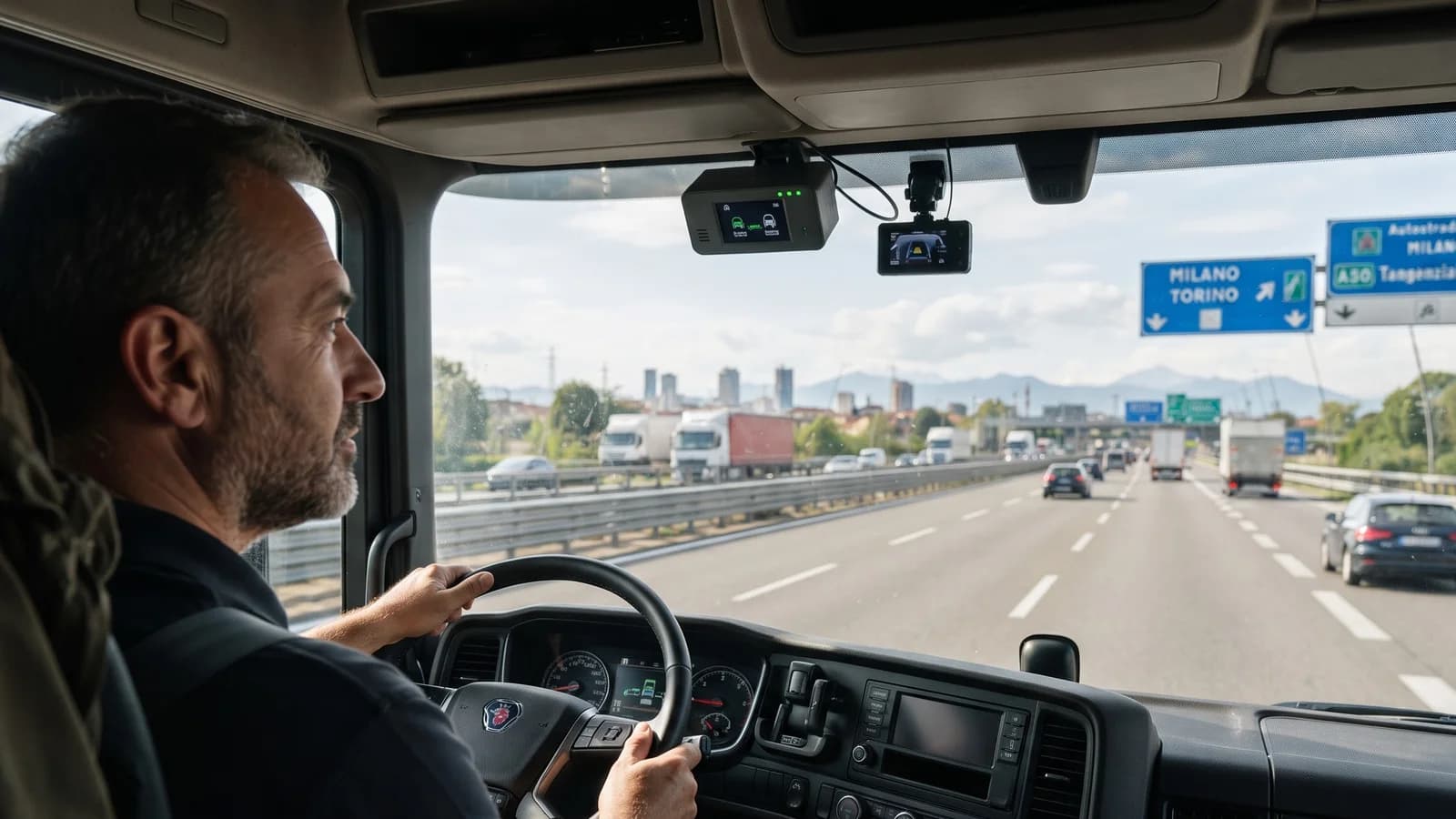
A basic dash cam records what happens. An AI dash cam works out what is happening and warns the driver in time to prevent it. For fleets, that difference means fewer accidents, faster claim settlements and evidence that protects good drivers.
What makes a dash cam “AI”?
The camera runs computer vision models on the device itself (edge AI), so it can react in milliseconds without waiting for the cloud. It watches two directions:
- Road-facing (ADAS): forward collision warning, lane departure warning and following-distance alerts
Driver-facing (DMS): drowsiness (microsleep), distraction, phone use and looking away from the road
When a risky event happens, the camera sounds an in-cab alert, saves the video clip with GPS location and speed, and sends it to the fleet office over 4G.
Introducing the AVD-201
The AVD-201 is Atlanta’s 3-channel HD AI video telematics camera:
- 2 built-in 1080p cameras (road and cabin) plus 1 extra camera input
ADAS forward collision and lane departure warnings
DMS microsleep and distraction detection
4G LTE, Wi-Fi and GNSS (GPS, BeiDou, GLONASS) for live streaming and location tagging
H.265 compression, which uses about half the storage and data of H.264
Built-in microphone and 2 W speaker for alerts
9–32 V power and an operating range of –20 °C to +70 °C
Remote firmware upgrades and tamper-evident event recording
7 features to check before buying a fleet dash cam
Number of channels: road only, road and cabin, or extra side and rear cameras
Edge AI, not cloud AI: alerts must work without network coverage
Connectivity: 4G for live view and remote clip download; Wi-Fi for bulk upload at the depot
Video compression: H.265 lowers data costs
Storage: the size of the SD card and how it overwrites old footage
Heat tolerance: windshields get very hot, so check the operating temperature range
Integration: can events and video appear in the same platform as GPS tracking?
The business case
Fewer accidents: real-time alerts prompt drivers to brake or refocus.
Faster, fairer claims: video shows who was at fault and protects drivers from false claims.
Lower insurance costs: some insurers offer better terms to fleets with video telematics.
Better coaching: real clips make coaching sessions concrete (see driver behaviour monitoring).
Which Atlanta video device fits?
| Need | Device |
|---|---|
| Full AI camera with ADAS and DMS in one unit | AVD-201 |
| Road-video monitoring with ADAS support, more alarm inputs, dual SD cards | AVD-100 |
| Compact driver-facing camera to add to an existing system | ATL-DSM-V1 |
| 4+ cameras for buses and coaches | HD-04G series MDVR (see MDVR guide) |
Frequently Asked Questions (FAQs)
Does an AI dash cam record all the time? It can record continuously to the SD card and also flag and upload event clips. Both modes can be configured.
How much mobile data does it use? It depends on how often you stream live video. With H.265 and event-based uploads, data use stays modest. Live streaming uses the most.
Do drivers accept cabin cameras? Acceptance is much higher when the camera is used to protect drivers (exoneration video) and to coach rather than punish.
Can the AI dash cam work with my existing GPS tracker? Yes. Video events can be combined with tracker data in your fleet platform. Ask us about integration.
Next step: see the AVD-201 specifications or request a demo.
Related reading: ADAS for commercial vehicles · Driver fatigue monitoring
Official engineering publication group at Atlanta Systems Pvt. Ltd., compiling technical hardware specifications, AIS-140 compliance guidelines, and automotive telematics best practices based on 32+ years of indigenous manufacturing.