Driver Fatigue Monitoring System (DMS): How AI Cameras Prevent Drowsy Driving
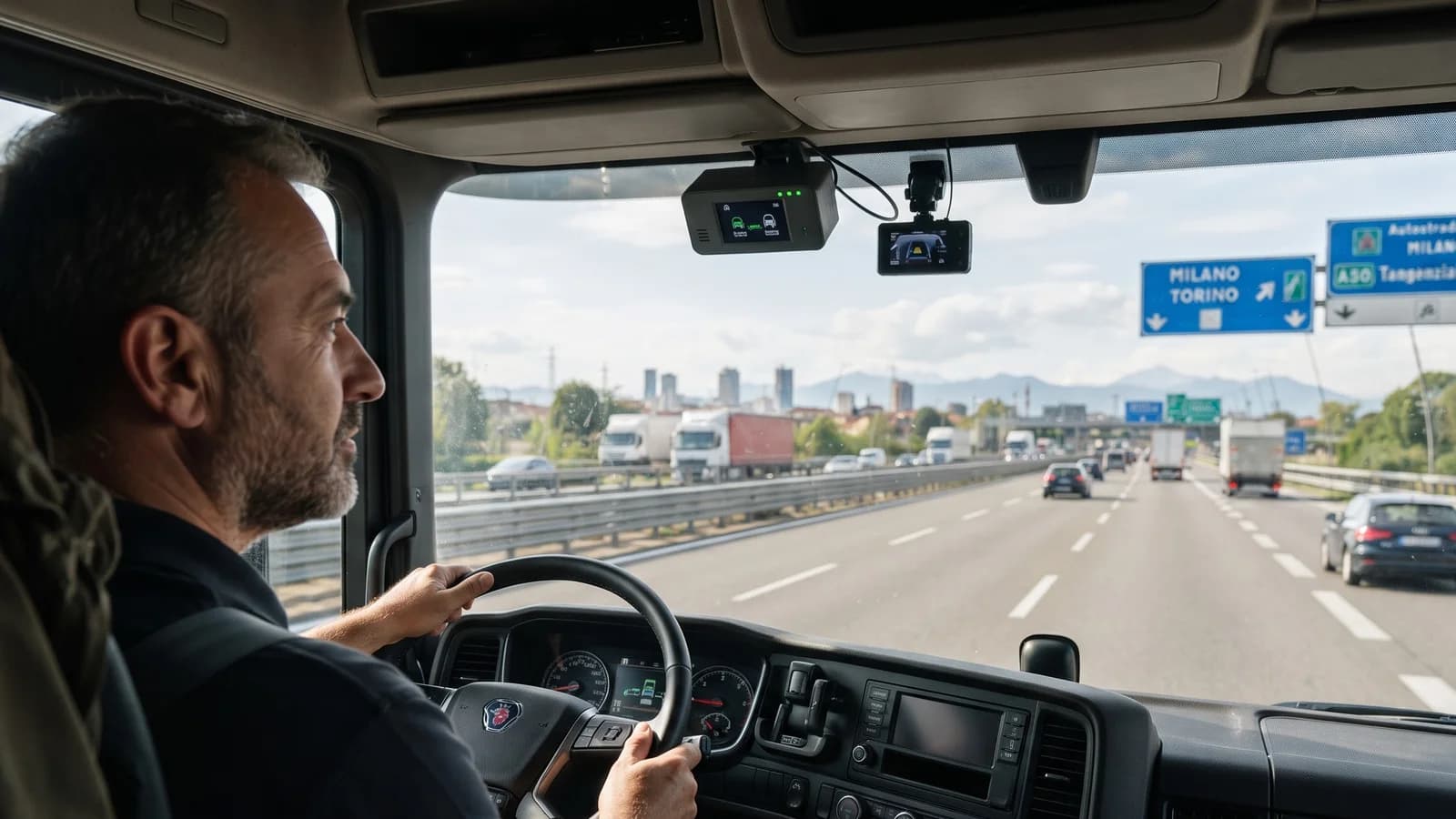
Table of Contents
Fatigue is one of the leading causes of serious crashes involving trucks and buses, especially on long night runs. A drowsy driver can have a microsleep, a few seconds with eyes closed, and at highway speed the vehicle travels the length of a football field in that time. A Driver Monitoring System (DMS) detects these warning signs and wakes the driver before it’s too late. What a DMS detects
| Event | How it’s detected |
|---|---|
| Drowsiness and microsleep | Eye closure duration, blink rate, head nodding |
| Yawning | Mouth movement patterns |
| Distraction | Looking away from the road for too long |
| Phone use | Detects a phone held at the ear or in hand |
| Smoking | Detects cigarettes (where the policy prohibits smoking) |
| Driver absent or camera blocked | Tampering alert |
How it works
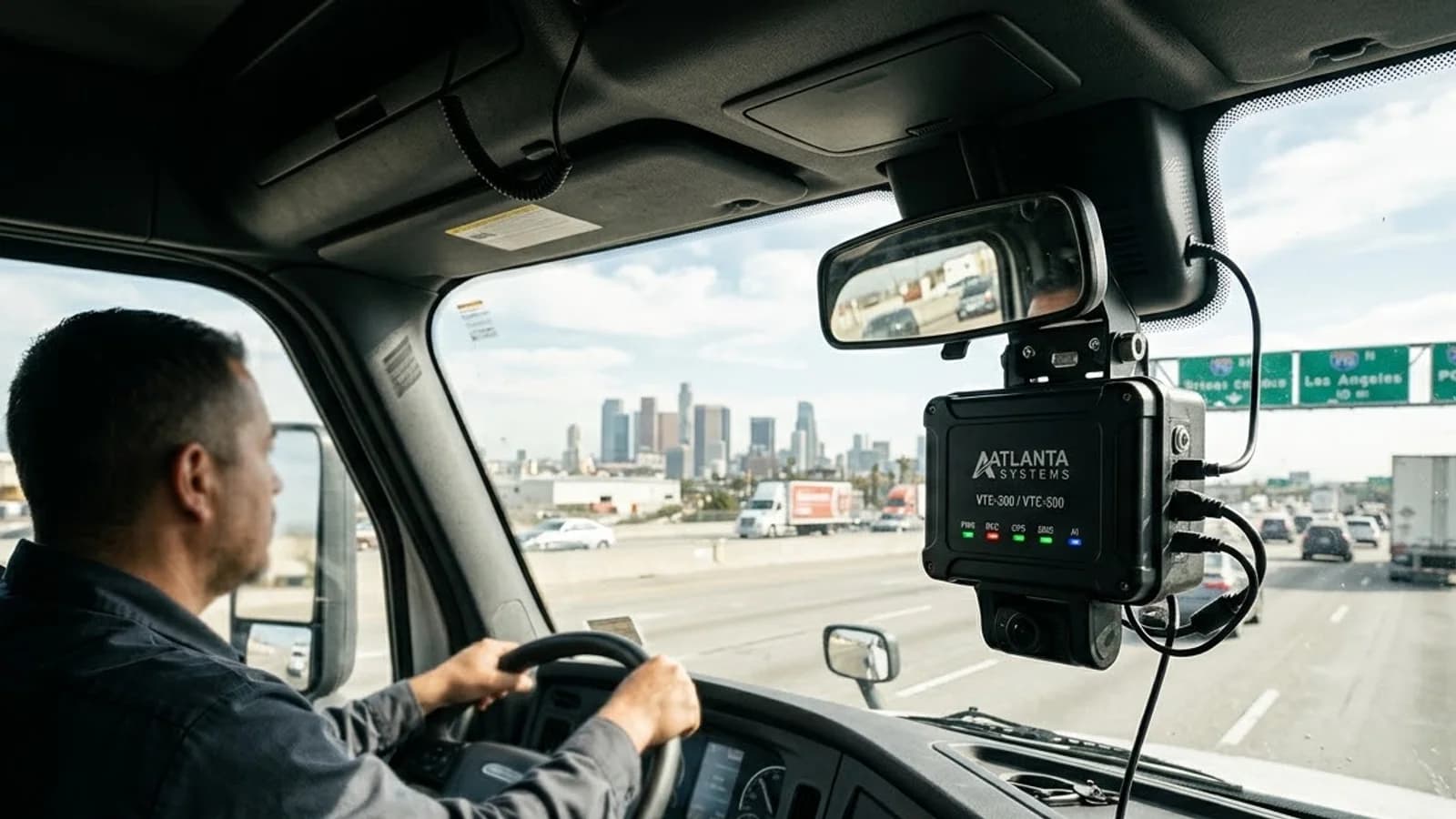
An infrared camera facing the driver works day and night, even through most sunglasses. AI on the device analyses the driver’s face in real time. When it detects a risk, it:
- Sounds an in-cab audio alert immediately
Records a video clip of the event
Sends an alert with location and speed to the fleet office
For repeated fatigue alerts, the control room can call the driver and arrange a rest stop.
Atlanta DMS options
ATL-DSM-V1: compact driver-facing camera with H.265 recording, 85° diagonal field of view and a –25 °C to +75 °C operating range. It adds DMS to an existing video or tracking system.
AVD-201: all-in-one 3-channel AI camera with DMS microsleep and distraction detection, plus road-facing ADAS, 4G and GPS.
Rolling out DMS successfully
Explain the purpose to drivers first. DMS is a safety system, not a surveillance tool.
Review alerts with context. Combine DMS events with hours driven and time of day to find fatigue patterns.
Fix the cause, not just the symptom. Repeated fatigue alerts on a route often point to unrealistic schedules.
Link DMS to hours-of-service rules where they apply (see ELD and HOS).
Frequently Asked Questions (FAQs)
Does DMS work at night? Yes. Infrared illumination lets the camera see the driver’s face in darkness.
Does it work if the driver wears glasses? It works with normal glasses and most sunglasses. Test with your drivers during the pilot.
Is a DMS camera recording all the time? It analyses video continuously, but typically uploads only event clips. Recording policy can be configured.
What’s the difference between DMS and ADAS? DMS monitors the driver; ADAS monitors the road. Using both gives the most complete safety coverage.
Next step: see the ATL-DSM-V1 and AVD-201, or contact us for a pilot.
Related reading: ADAS for commercial vehicles · AI dash cams for fleets
Official engineering publication group at Atlanta Systems Pvt. Ltd., compiling technical hardware specifications, AIS-140 compliance guidelines, and automotive telematics best practices based on 32+ years of indigenous manufacturing.