Regulatory Compliance

How Atlanta Systems' AIS 140 ATL-140 GPS Trackers Solve Real-Time Compliance on India's National Highways
By Sujeet Narula (Founder & Chief Hardware Architect)• 2026-10-26• 6 min read• Global Hub (Global)
How Atlanta Systems' AIS 140 ATL-140 GPS Trackers Solve Real-Time Compliance on India's National Highways
Executive Summary & Operational ContextCommercial fleet transportation across India's interstate freight corridors is governed by stringent vehicle safety and location tracking regulations. Under...

Table of Contents

  1. The Regulatory Framework: What AIS-140 Mandates in Practice
  2. Hardware Architecture: Built for Indian Commercial Fleets
  3. Installation Best Practices for Transport Fleets

Commercial fleet transportation across India's interstate freight corridors is governed by stringent vehicle safety and location tracking regulations. Under the Ministry of Road Transport and Highways (MoRTH) mandate, every commercial transport vehicle—ranging from multi-axle freight carriers operating on National Highway 48 to interstate passenger buses and hazardous chemical tankers—must be equipped with an AIS-140 certified Vehicle Location Tracking Device (VLTD) coupled with integrated emergency panic buttons. Meeting these statutory mandates requires telematics hardware engineered to withstand severe voltage fluctuations, extreme tropical ambient heat exceeding 48°C, and prolonged cellular dead zones in rural terrain. Atlanta Systems' ATL-140 (2G GSM) and ATL-440 (4G LTE Cat-1 with 2G fallback) VLTD terminals provide enterprise fleet operators and system integrators with certified, ruggedized hardware designed specifically for the rigorous demands of Indian highway operations.

The Regulatory Framework: What AIS-140 Mandates in Practice

Automotive Industry Standard 140 (AIS-140) was introduced to establish standardized vehicle location tracking and passenger emergency alerting across public transport and commercial goods vehicles. Compliance is mandatory for fitness certification, national permit renewals, and seamless integration with the central VAHAN database and state-level Command and Control Centers (CCC).

To achieve full statutory compliance, the installed tracking hardware must fulfill strict functional criteria:

  1. Multi-Constellation GNSS with NavIC (IRNSS): The tracking unit must acquire positional fixes not only from standard GPS and GLONASS satellites, but also from India’s indigenous Indian Regional Navigation Satellite System (NavIC / IRNSS), ensuring sub-2.5 meter positioning accuracy even under dense urban flyovers or mountainous terrains.
  2. Dedicated Emergency Panic Buttons: Discrete, backlit emergency buttons wired throughout the cabin or passenger compartment that trigger high-priority SOS alert packets transmitted immediately to state emergency servers.
  3. Internal Battery Backup: A minimum 4-hour internal rechargeable battery (1000 mAh Li-Po) that sustains full telemetry reporting even if the vehicle's primary battery is disconnected or tampered with.
  4. Non-Volatile Offline Storage: The capacity to log a minimum of 40,000 to 60,000 positional packets in on-board flash memory during cellular network outages across isolated ghat roads, automatically burst-uploading the historical trail once connectivity restores.

Hardware Architecture: Built for Indian Commercial Fleets

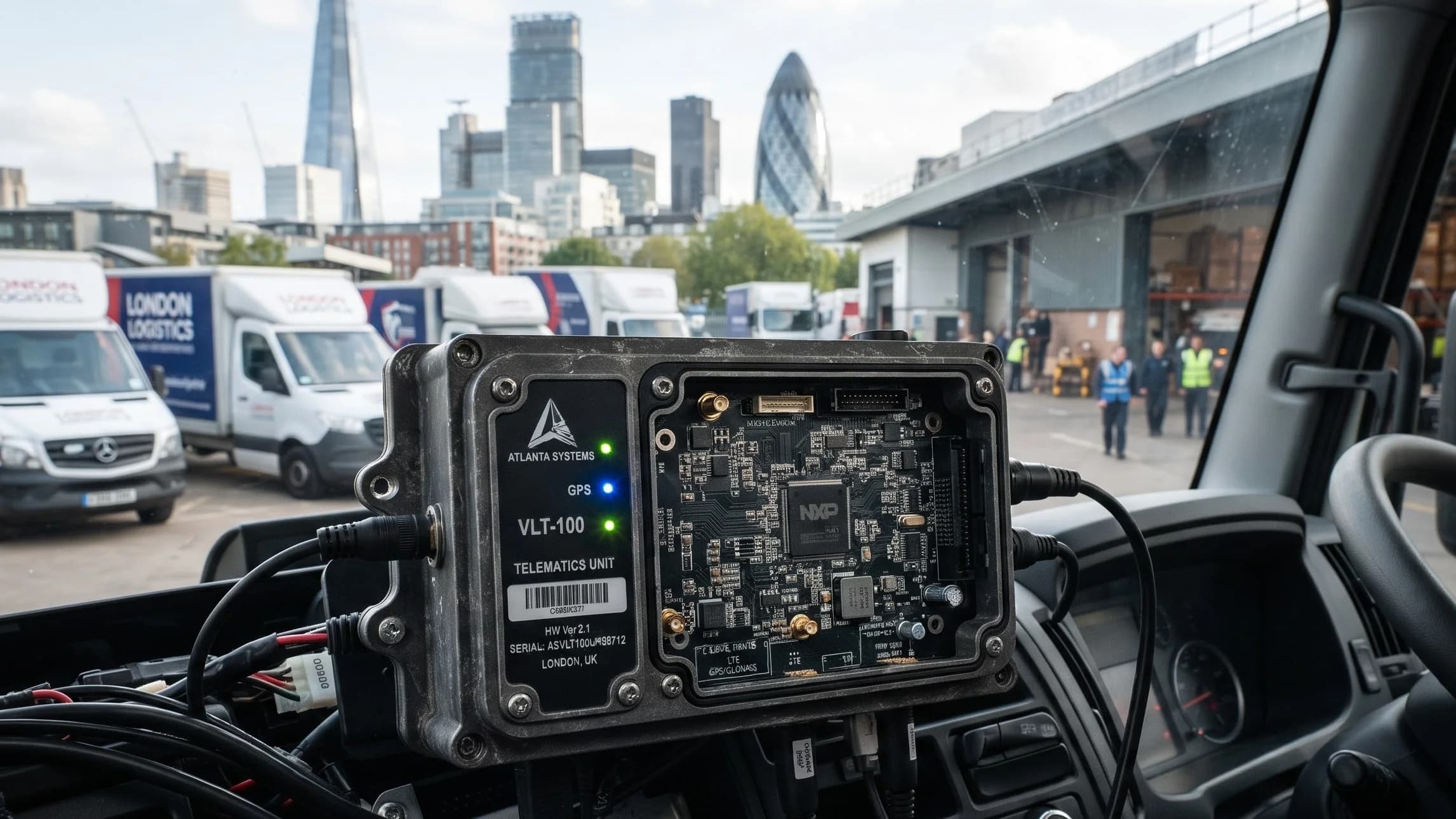
Unlike low-cost consumer trackers that fail under demanding commercial conditions, the ATL-140 and ATL-440 are manufactured directly on Atlanta Systems' SMT electronics production lines in New Delhi, featuring industrial-grade component selections:

```

Hardware Architecture & Data Flow Pipeline
SYSTEM SCHEMATIC
+-------------------------------------------------------------------+
|               Atlanta Systems ATL-140 / ATL-440 VLTD              |
+-------------------------------------------------------------------+
|  Power Input: 8V to 36V DC (ISO 7637-2 Surge & Load Dump Rated)   |
|  GNSS Engine: Concurrent GPS + GLONASS + NavIC (IRNSS)            |
|  Cellular: 4G LTE Cat-1 (ATL-440) / 2G Quad-Band (ATL-140)        |
|  I/O: 4 Digital Inputs (Ignition, SOS, AC, Door) + 2 Digital Out  |
|  Serial / Sensor Ports: RS232 + CAN 2.0B Hardware Port             |
|  Enclosure: Flame-retardant ABS Polycarbonate (IP65 Casing)       |
+-------------------------------------------------------------------+

```

1. Robust Power Supply & Electrical Surge Protection

Commercial commercial vehicles in India frequently experience intense electrical voltage spikes caused by faulty alternators, battery jump-starts, and starter motor inductive kickback. The ATL-140 incorporates an automotive-grade wide-input switch-mode power supply operating reliably between 8V and 36V DC, with built-in transient suppression diodes that withstand voltage surges up to 100V conforming to ISO 7637-2 pulse standards.

2. Embedded eSIM & Dual Network Redundancy

Network reliability is the backbone of compliance. The ATL-140/440 architecture features an embedded M2M eSIM alongside a physical micro-SIM slot, enabling automated operator switching between Tier-1 Indian telecom providers (BSNL, Airtel, Vi) whenever a carrier drops below acceptable signal-to-noise thresholds.

3. Integrated 3-Axis Gyroscope & Accelerometer

Driver behavior monitoring is essential for fleet safety on busy freight highways. The device features an ultra-low-noise 3D accelerometer capable of sampling at 100 Hz to detect harsh braking, aggressive cornering, jackrabbit acceleration, and vehicle rollover events, generating instant telematics alerts before structural or cargo damage occurs.


Installation Best Practices for Transport Fleets

Proper physical installation is critical to prevent field failures, tamper citations during RTO inspections, and intermittent connectivity issues.

```

Hardware Architecture & Data Flow Pipeline
SYSTEM SCHEMATIC
+---------------------------------------------+
       |           Vehicle Fuse Box (Ignition)       |
       +----------------------+----------------------+
                              | Positive 12V/24V (Fused 3A)
                              v
                   +---------------------+
                   |   ATL-140 VLTD      | <==== Internal NavIC Antenna
                   +----------+----------+       Facing Upward (Sky View)
                              |
     +------------------------+------------------------+
     |                        |                        |
     v                        v                        v
[Ignition Sense]       [Panic Buttons]          [Fuel Probe RS232]
Pin 3 (White)          Wired in Parallel        Capacitive FSK-1000
```

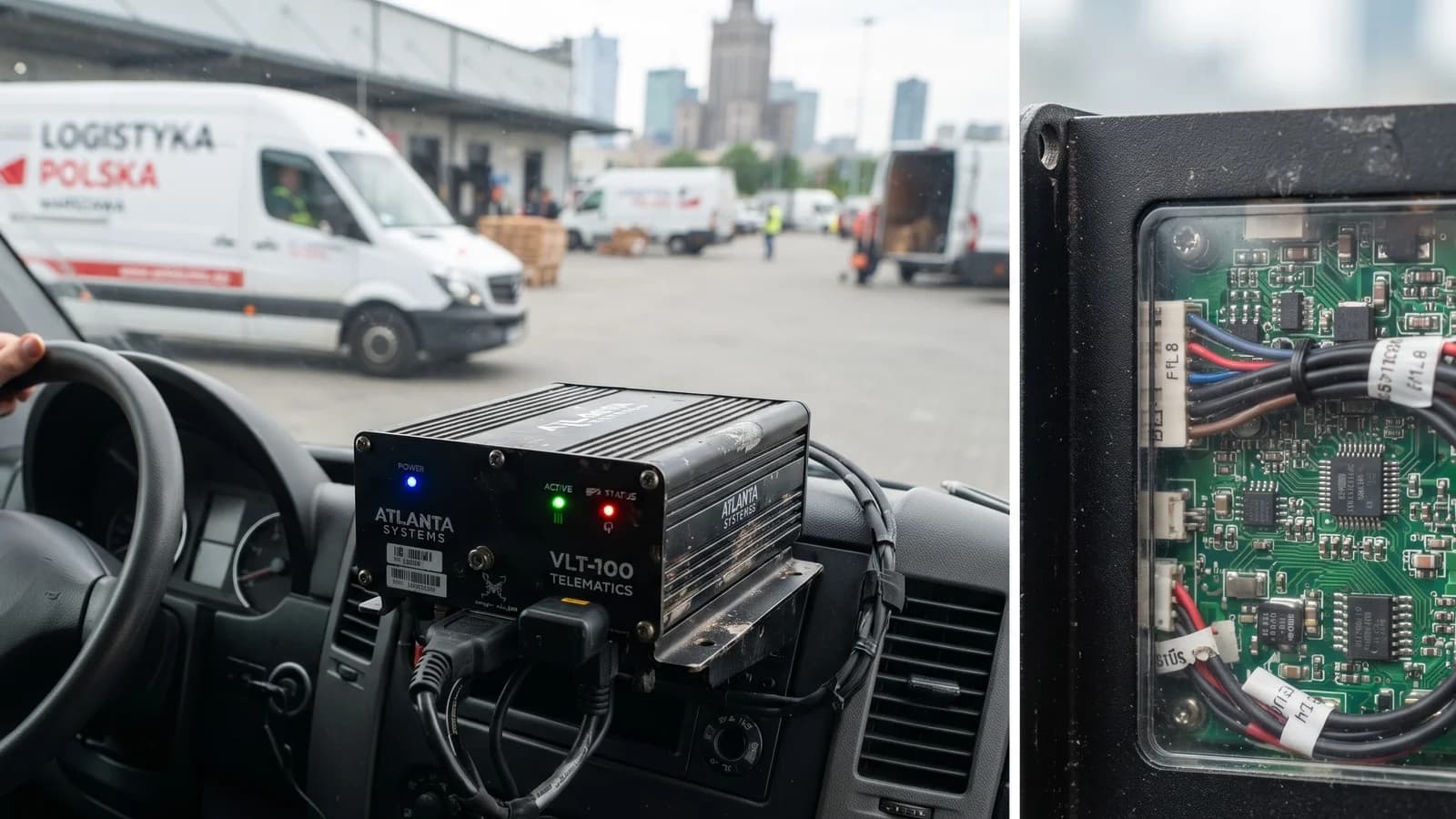
1. **Antenna Placement:** For models with integrated antennas, the terminal must be mounted beneath the fiberglass or plastic dashboard area with the internal ceramic patch antenna facing directly toward the sky, away from metallic structural pillars.
2. **Permanent Power Sourcing:** Power taps must be made directly to the primary battery distribution block through a dedicated inline 3A fuse, avoiding shared connections with high-draw accessories such as aftermarket air horns or auxiliary lights.
3. **Tamper Prevention:** The ATL-140 features internal enclosure tamper detection microswitches and power disconnect monitoring. Any unauthorized attempt to unseat the device or cut the primary harness immediately triggers an automated emergency SMS and backend alert packet to the fleet supervisor.

---

## 2G vs 4G: Future-Proofing Fleet Investments

While 2G networks remain operational in India, major telecom carriers are gradually refarming 2G spectrum to expand 4G and 5G bandwidth. For fleet operators investing in new long-haul transport assets intended for a 5- to 10-year operational lifecycle, transitioning to the **ATL-440 4G AIS-140 VLTD** provides critical long-term operational assurance:

| Engineering Parameter | ATL-140 (Standard 2G) | ATL-440 (Advanced 4G) |
| :--- | :--- | :--- |
| **Cellular Bands** | GSM Quad-Band 850/900/1800/1900 MHz | LTE-FDD B1/B3/B5/B8 + 2G Fallback |
| **Data Latency** | 1.5 – 3.0 seconds typical | < 350 milliseconds |
| **IRNSS / NavIC** | Supported (ICAT / ARAI Certified) | Supported (ICAT / ARAI Certified) |
| **FOTA Updates** | Supported via GPRS | High-speed over 4G Web-FOTA |
| **CAN Bus Interface** | Standard CAN 2.0B | High-speed CAN 2.0B / J1939 |
| **Recommended Fleet Type**| Intra-city cabs, light logistics | Long-haul trucks, interstate trailers, tankers |

---

## Conclusion: Compliance That Delivers Operational Value

Statutory AIS-140 compliance does not have to be merely an administrative expense. When deployed using robust, indigenous telematics hardware like Atlanta Systems' ATL-140 and ATL-440, the device transforms into an operational command center. Transport managers gain real-time visibility over fuel consumption, engine operating hours, driver rest cycles, and precise cargo arrival times, converting regulatory adherence into direct fleet profitability.
S
Sujeet NarulaFounder & Chief Hardware Architect

Founder of Atlanta Systems Pvt. Ltd. with 32+ years of embedded hardware and SMT engineering leadership, pioneering indigenous AIS-140 GPS trackers and automotive telematics across 27+ countries.

LinkedIn Profile →📡 Atlanta Systems OEM Technical Publication
B2B Telematics OEM & Manufacturing

Accelerate Your Fleet Operations or Channel Distribution

32+ years of indigenous SMT manufacturing. Choose your partnership path below for priority dispatch and factory-direct access:

Enterprise FleetsDirect Deployment

Request a Fleet Pilot & Trial Units

Test Atlanta VTC 110, VTC 500, or AIS-140 trackers on your own trucks. Non-invasive installation, warranty-safe magnetic CAN clamps, and live dashboard demonstration.

Dealers & IntegratorsWholesale OEM

Become an Atlanta Certified Hardware Partner

Unlock 30%+ profit margins, bulk factory OEM hardware pricing, custom firmware compilation, and dedicated tier-3 engineering support for your regional market.

Join Partner Program →⚡ Instant Tier Evaluation • Zero Application Fee
🛡️ 32+ Years Indigenous SMT OEM📡 1,000,000+ Assets Powered🌍 27+ Countries Deployed✅ ISO 9001, CE, AIS-140 Certified

Related Telematics Engineering Guides

Regulatory Compliance

ELD, HOS and IFTA Compliance: A Hardware Guide for US Trucking Fleets

In the United States, most commercial truck drivers who must keep records of duty status must do so with an electronic logging device (ELD). Fleets that...

Regulatory Compliance

WASAL and TAMEEM Integration by Atlanta Systems for Real-Time Reporting Across Dammam Petrochemical Routes

Saudi Arabia's Eastern Province is the energy engine of the Middle East. Stretching along Highway 613 from the Dammam metropolitan area to the industrial...

Regulatory Compliance

Fleet Telematics Compliance by Country: India, Gulf, US, Mexico and Europe

Many countries now require commercial vehicles to send tracking data to a government platform or keep electronic driver records. For fleets and distributors...