Fuel Level Sensor Guide: Capacitive vs Ultrasonic vs Flow Meter
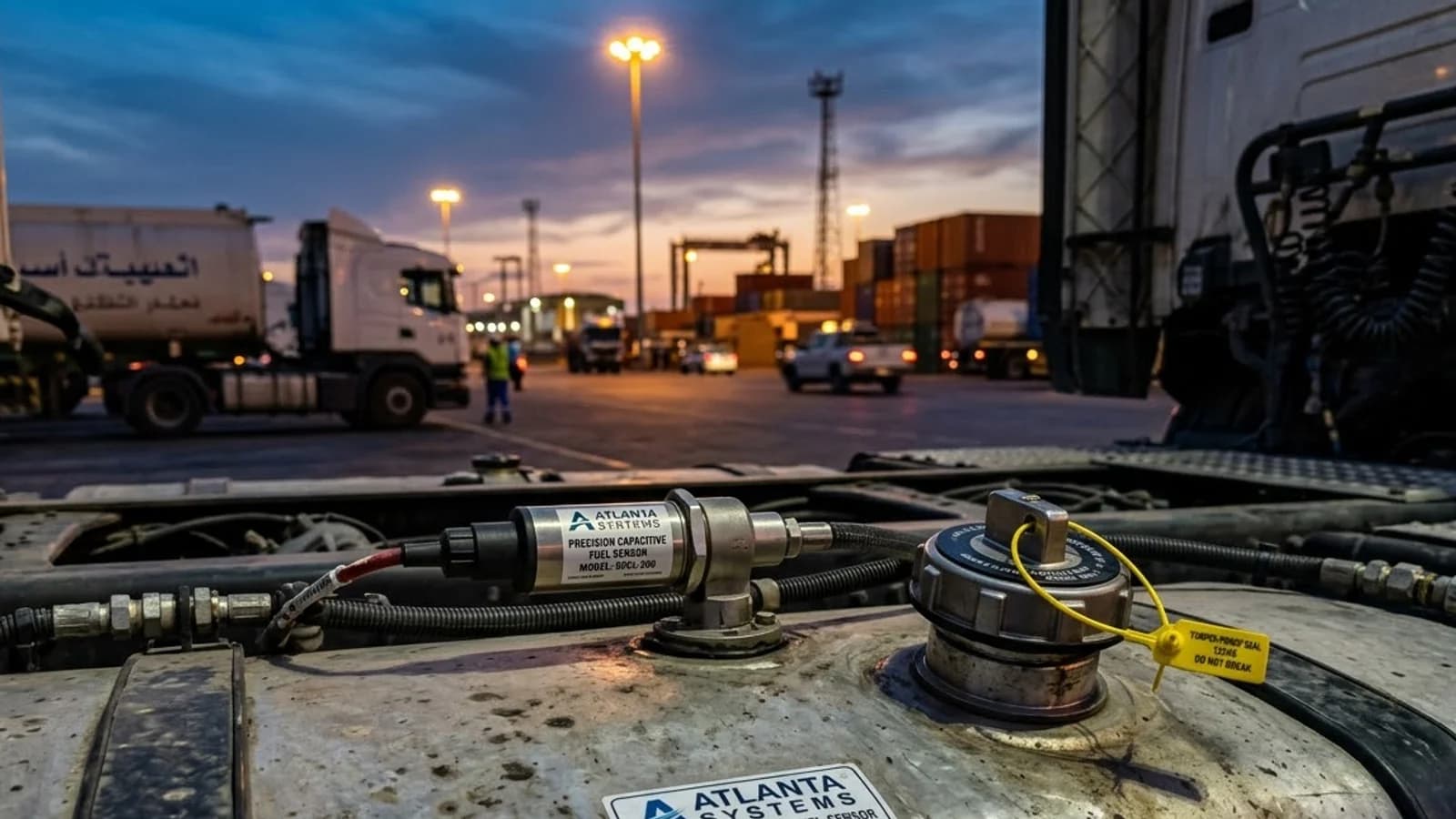
Table of Contents
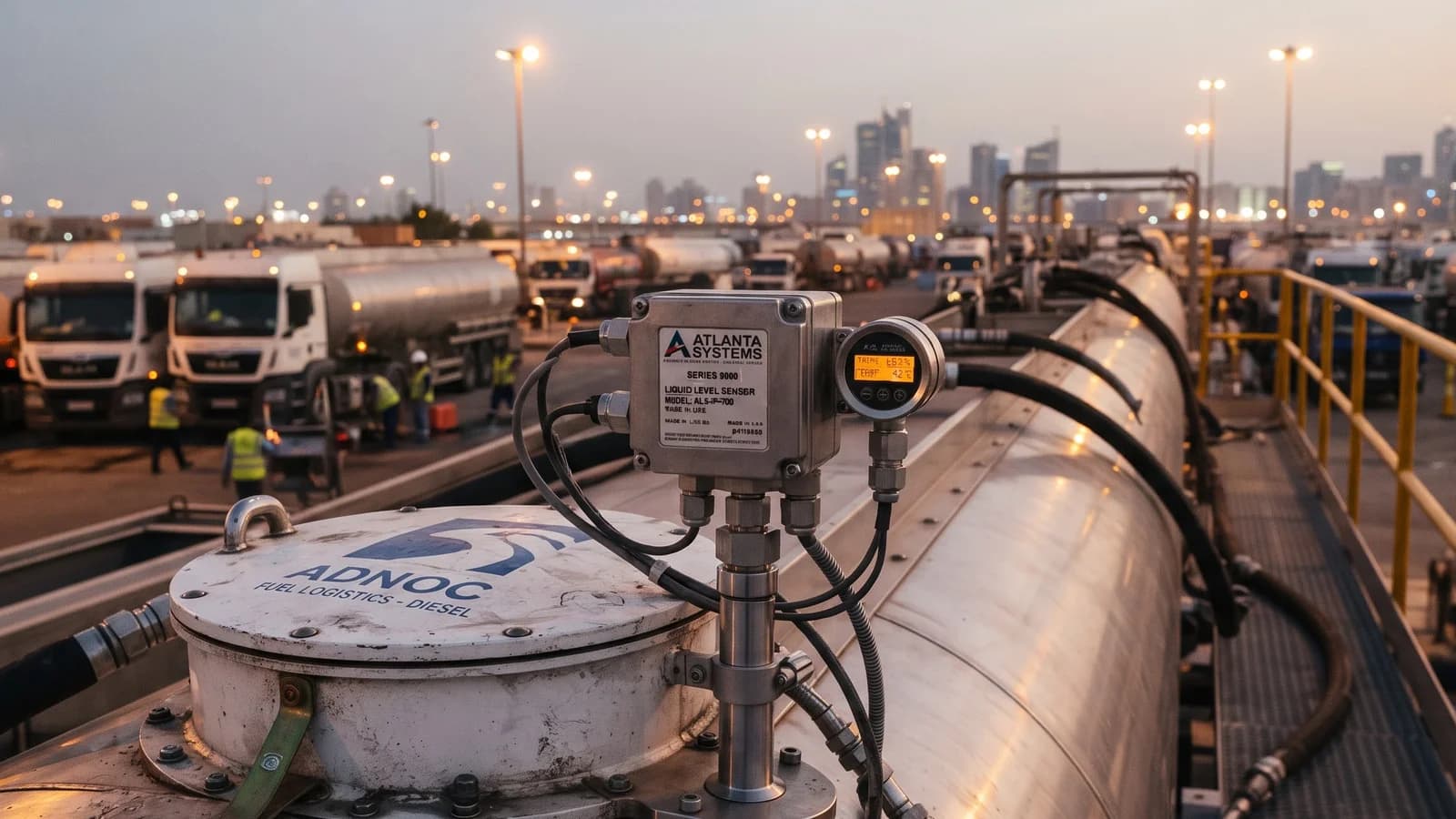
Fuel is usually a fleet’s biggest running cost after salaries. Yet many fleets still rely on fuel receipts and the dashboard gauge, which can’t tell you how much fuel is really in the tank. A fuel level sensor connected to your GPS tracker measures fuel accurately, records every refill and drop, and makes theft visible. Three ways to measure fuel
| Capacitive probe | Ultrasonic sensor | Fuel flow meter | |
|---|---|---|---|
| Measures | Fuel level inside the tank | Fuel level from under the tank | Fuel passing to the engine |
| Installation | Hole drilled in the tank top | No drilling: mounted under the tank | Fitted in the fuel line |
| Typical accuracy | High (±1%) | High (99.5%) | High (±1%) |
| Detects theft from tank | Yes | Yes | No (only measures consumption) |
| Best for | Trucks, buses, gensets | Hazardous tanks, leased vehicles, tanks that can’t be drilled | Engines, machines, boats where consumption matters |
| Atlanta model | FSK-1000 | USQ-1000 | FSH-10 |
FSK-1000: wireless capacitive fuel sensor Capacitive measurement with ±1% relative error Bluetooth BLE: no cable to the tracker, so installation is faster and there’s no wire to cut Up to 5 years of battery life IP67, –40 °C to +85 °C Modular electrodes that can be cut or extended to fit the tank depth The sensor head can be replaced without recalibrating the tank Configured and calibrated from a smartphone app USQ-1000: ultrasonic, no-drill fuel sensor Mounted on the outside bottom of the tank, so the tank is never opened 0.1 mm resolution, 99.5% accuracy, measuring range 3–250 cm Works with diesel, petrol, water and other liquids IP68 and explosion-proof (Exd II CT5), suited to hazardous tanks Outputs: BLE 5.0, RS232/RS485 and analog (0–5 V); 9–80 V supply FSH-10: fuel flow meter Measures actual consumption with ±1% accuracy, up to 500 L/h Outputs: pulse, RS232, RS485, K-Line, CAN IP67, –40 °C to +85 °C Ideal for construction machines, generators, agricultural equipment and marine engines Tank calibration: why it matters Most tanks aren’t simple boxes. They have curves, baffles and odd shapes, so a 1 cm drop in level doesn’t always mean the same number of litres. Calibration (filling the tank in measured steps and recording the sensor reading at each step) creates a table that converts sensor readings into accurate litres. Single tank: calibrate once per tank type, then copy the table to identical vehicles. Multiple tanks: each tank needs its own sensor and calibration. The platform adds them together for the total. Reefer and genset tanks: monitor separately from the main tank to see refrigeration fuel use. Atlanta’s field engineering team offers on-site tank calibration. [EDITOR: confirm this service and link to the /services page.]
Which tracker do the sensors connect to?
Atlanta’s TC-400, ATL-140 and ATL-440 trackers support fuel level sensors over BLE and analog; the ATL-440 and ATL-140 also over RS232. The GWC-100 gateway supports BLE sensors.
Frequently Asked Questions (FAQs)
Which fuel sensor is most accurate? Capacitive and ultrasonic sensors are both highly accurate when installed and calibrated correctly. Calibration matters as much as the sensor.
Can I install a fuel sensor without drilling the tank? Yes. The USQ-1000 ultrasonic sensor mounts under the tank with no drilling.
Does a fuel sensor work on generators and machines? Yes. Capacitive and ultrasonic sensors work on any fuel tank. For engine consumption, use the FSH-10 flow meter.
How long does installation take? A trained technician can usually install and calibrate a sensor in a few hours, depending on the tank. Wireless BLE sensors save wiring time.
Next step: see the FSK-1000 and USQ-1000, or contact us to plan a calibration visit.
Related reading: Fuel theft detection · Cold chain monitoring
Official engineering publication group at Atlanta Systems Pvt. Ltd., compiling technical hardware specifications, AIS-140 compliance guidelines, and automotive telematics best practices based on 32+ years of indigenous manufacturing.