Capacitive Fuel Probes from Atlanta Systems Stopping Siphoning on Riyadh Ring Road Overnight Stops

Table of Contents
- The Operational Reality: Fuel Siphoning Along Riyadh Freight Corridors
- Hardware Architecture: Atlanta Systems FSK-1000 Capacitive Sensor
- Installation, Multi-Drop RS485 Topology, and Calibration
- Performance Comparison: FSK-1000 vs. Legacy Float Sensors
- Operational Results: Riyadh–Dammam Fleet Deployment
- Summary & Enterprise Consultation
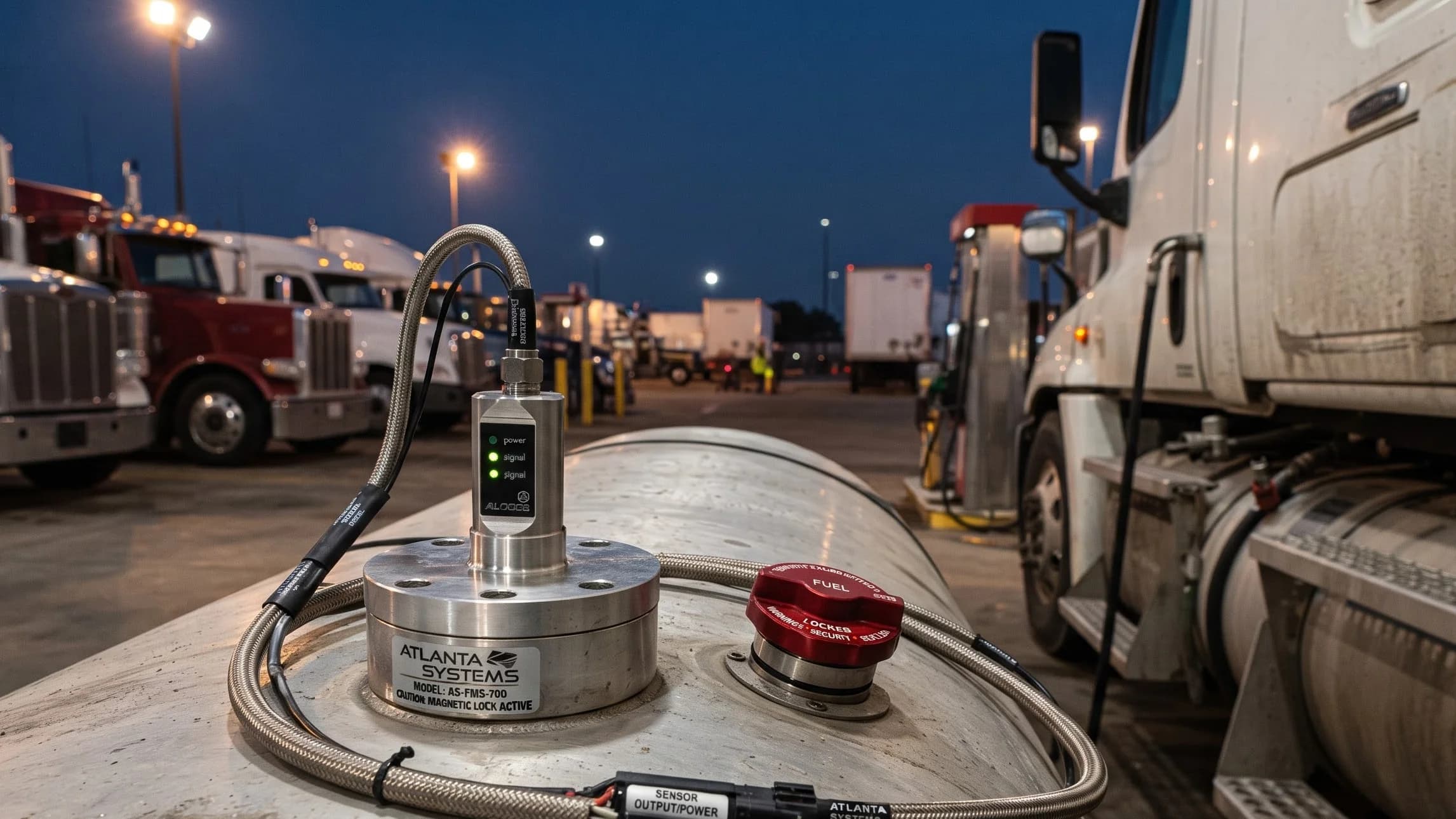
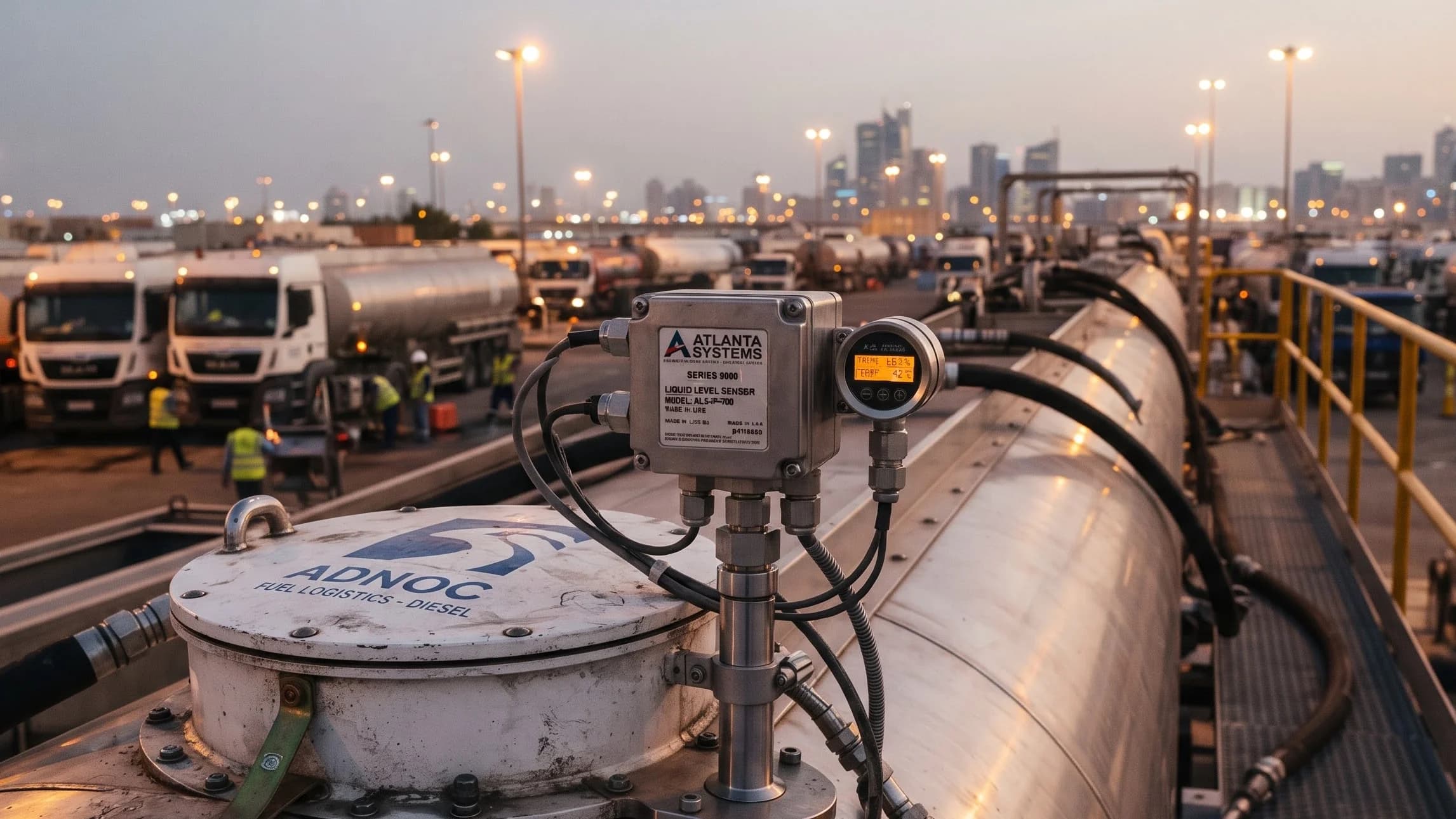
Commercial road transport across the Kingdom of Saudi Arabia forms the vital conduit connecting the industrial ports of Dammam and Jubail on the Arabian Gulf with Riyadh's sprawling logistics hubs and onward destinations in the Western Province. As articulated tractor-trailers, bulk fuel carriers, and refrigerated haulers stage overnight along the Riyadh Northern and Southern Ring Roads, Al Kharj highway rest stops, and dry-port marshalling yards, diesel fuel theft and illicit siphoning represent major operational losses. Standard vehicle float-arm sensors integrated into OEM fuel tanks are notoriously inaccurate, featuring dead zones at both top and bottom tank volumes, vulnerability to mechanical sticking, and coarse resolution unable to detect slow-drain fuel theft. Atlanta Systems addresses this vulnerability with the FSK-1000 high-precision capacitive fuel level sensor paired with the ATL-440 4G telematics gateway, delivering continuous fuel volume measurements with 99.5% accuracy and instant anti-siphoning alerts under extreme GCC desert operating conditions.
The Operational Reality: Fuel Siphoning Along Riyadh Freight Corridors
The logistics staging areas bordering Riyadh’s ring-road network experience extreme thermal variations—midday ambient temperatures frequently reach 50°C (122°F), cooling down significantly overnight. These severe temperature differentials cause significant fuel volume expansion and contraction. Illicit siphoning schemes take advantage of these dynamics:
- Slow-Bleed Siphoning: Thieves tap into auxiliary fuel lines or tank drain bungs, extracting 30 to 50 liters over a multi-hour staging period—losses commonly masked as thermal contraction or fuel evaporation on standard OEM gauges.
- Overnight Rapid Drain: Opportunistic siphoners uncap primary tanks during mandatory driver rest periods, rapidly siphoning hundreds of liters in minutes using submersible 24V battery-operated transfer pumps.
- Float-Arm Tampering: Drivers or third parties mechanically bend OEM mechanical float arms to create persistent under-reading, pocketing fuel cost discrepancies during cash-reimbursement reconciliation.
Eliminating these losses requires a solid-state sensing technology immune to mechanical wear, high-resolution capacitive measurement across the entire depth of the tank, and intelligent onboard firmware algorithms that distinguish natural thermal expansion from unauthorized extraction.
Hardware Architecture: Atlanta Systems FSK-1000 Capacitive Sensor
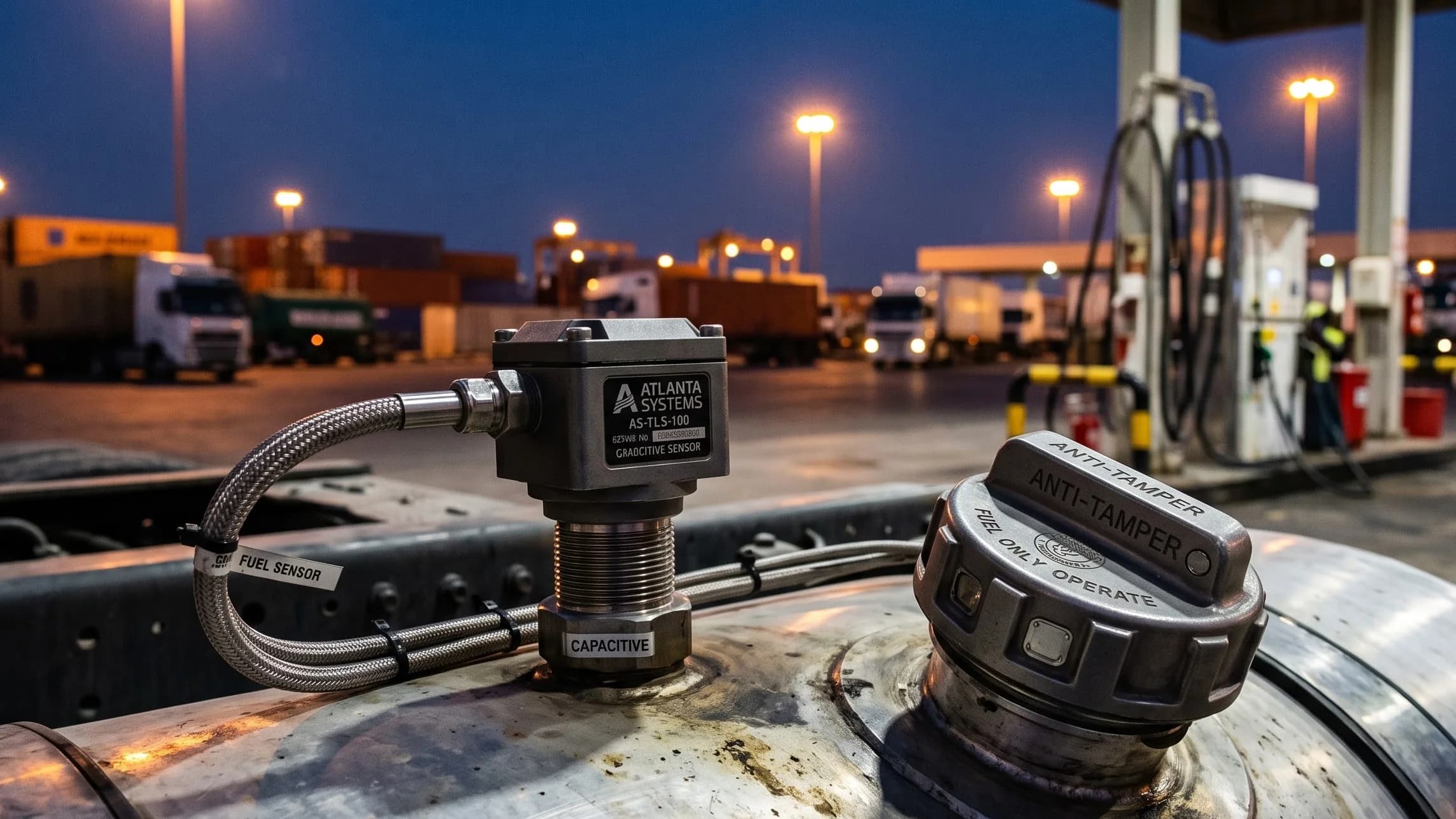
The FSK-1000 is an industrial capacitive liquid level transmitter engineered specifically for heavy commercial vehicle fuel tanks, stationary gensets, and construction machinery:
```
```
1. High-Precision Capacitive Permittivity Sensing
The FSK-1000 probe consists of two concentric extruded aluminum tubes acting as capacitor plates. As the liquid fuel rises or falls within the annular space between the tubes, the dielectric constant changes proportionately. A high-frequency excitation circuit measures this capacitance change with zero moving parts, delivering reliable 12-bit digital resolution without the mechanical failure modes of floats, springs, or potentiometers.
2. Onboard Temperature Compensation
Because diesel fuel expands by approximately 0.08% per degree Celsius, a 30°C temperature swing between day and night in the Riyadh desert will cause a 500-liter tank volume to shift by roughly 12 liters without any fuel being consumed. The FSK-1000 incorporates an embedded internal digital temperature sensor that continuously normalizes the dielectric reading back to 15°C reference volume, preventing false theft alerts caused by thermal contraction.
Installation, Multi-Drop RS485 Topology, and Calibration
Correct mechanical installation and electrical shielding are paramount to achieving ±0.5% laboratory-grade accuracy on commercial chassis:
```
```
- Center-Tank Installation: The probe must be installed as close as possible to the geometric center of the fuel tank. This center-mount orientation balances fuel slosh dynamics during acceleration, braking, and hill climbs, minimizing liquid displacement over the active measuring elements.
- Custom Cut-to-Length Flexibility: Fleet workshops can trim the aluminum probe tubes to the exact depth of any cylindrical, rectangular, or D-shaped aluminum fuel tank (from 300 mm to 1500 mm) using standard pipe-cutting tools, followed by a fast two-point (empty/full) calibration.
- Multi-Drop RS485 Connectivity: Up to four FSK-1000 probes can be daisy-chained on a single industrial RS485 Modbus bus linked to the Atlanta Systems ATL-440 telematics gateway. This architecture allows simultaneous tracking of primary, secondary, and auxiliary refrigeration tanks over a single harness.
- Bluetooth Low Energy Calibration: Field technicians configure tank profiles, damping factors, and address IDs directly from an Android smartphone via encrypted BLE 5.0, eliminating cumbersome serial laptop connections in workshop pits.
Performance Comparison: FSK-1000 vs. Legacy Float Sensors
| Parameter / Feature | Atlanta Systems FSK-1000 | OEM Mechanical Float Arm | Ultrasonic External Sensor |
|---|---|---|---|
| Accuracy | ±0.5% across full tank height | ±5% to ±10% with dead bands | ±1.5% to ±3.0% (Tank bottom) |
| Moving Parts | Zero (Solid-State Aluminum) | Plastic float, pivot rod, rheostat | Zero (Acoustic transducer) |
| Tamper Resistance | Metal-armored head, seal-wire holes | Readily bent or disconnected | External mount prone to road debris |
| Desert Temperature Resilience | -40°C to +85°C with active temp comp | Uncompensated (Prone to false read) | Acoustic velocity varies with heat |
| Siphoning Detection Speed | < 10 seconds (Digital threshold) | Sluggish or undetected | 30 to 60 seconds averaging |
| Data Protocol | RS485 Modbus RTU / BLE 5.0 | Analog Resistive (0–180 Ohm) | RS485 / Analog Voltage |
Operational Results: Riyadh–Dammam Fleet Deployment
A prominent transport operator managing 120 heavy Mercedes-Benz Actros prime movers on the Riyadh–Dammam freight route installed FSK-1000 probes and ATL-440 gateways across their fleet:
- Fuel Loss Reduction: Siphoning and unrecorded fuel leakage dropped by 94% within the first 90 days.
- Theft Interception: Over 18 illicit siphoning attempts during overnight layovers along the Northern Ring Road were flagged in real time, triggering immediate remote SMS alerts and automated horn-pulse alarms.
- Return on Investment (ROI): The entire hardware retrofitting program amortized within 3.8 months solely through fuel cost containment.
Summary & Enterprise Consultation
Ending fuel siphoning and establishing transparent fuel consumption baselines requires industrial-grade sensing hardware engineered to thrive in high-heat desert environments. The Atlanta Systems FSK-1000 capacitive fuel probe and ATL-440 telematics hub provide fleet operators across the Kingdom of Saudi Arabia and the broader GCC with the precision, durability, and automated alerting needed to protect their operating margins.
For technical datasheets, tank calibration charts, and pilot evaluation kits, contact Atlanta Systems' regional commercial engineering team at sn@atlantasys.com or visit www.atlantasys.com.
Co-Founder at Atlanta Systems Pvt. Ltd., spearheading large-scale global telematics supply chains, commercial fleet compliance deployments, and OEM electronics manufacturing partnerships.