Multi-Tank Calibration Tools by Atlanta Systems for Complex Configurations in São Paulo's Anchieta–Imigrantes Corridor
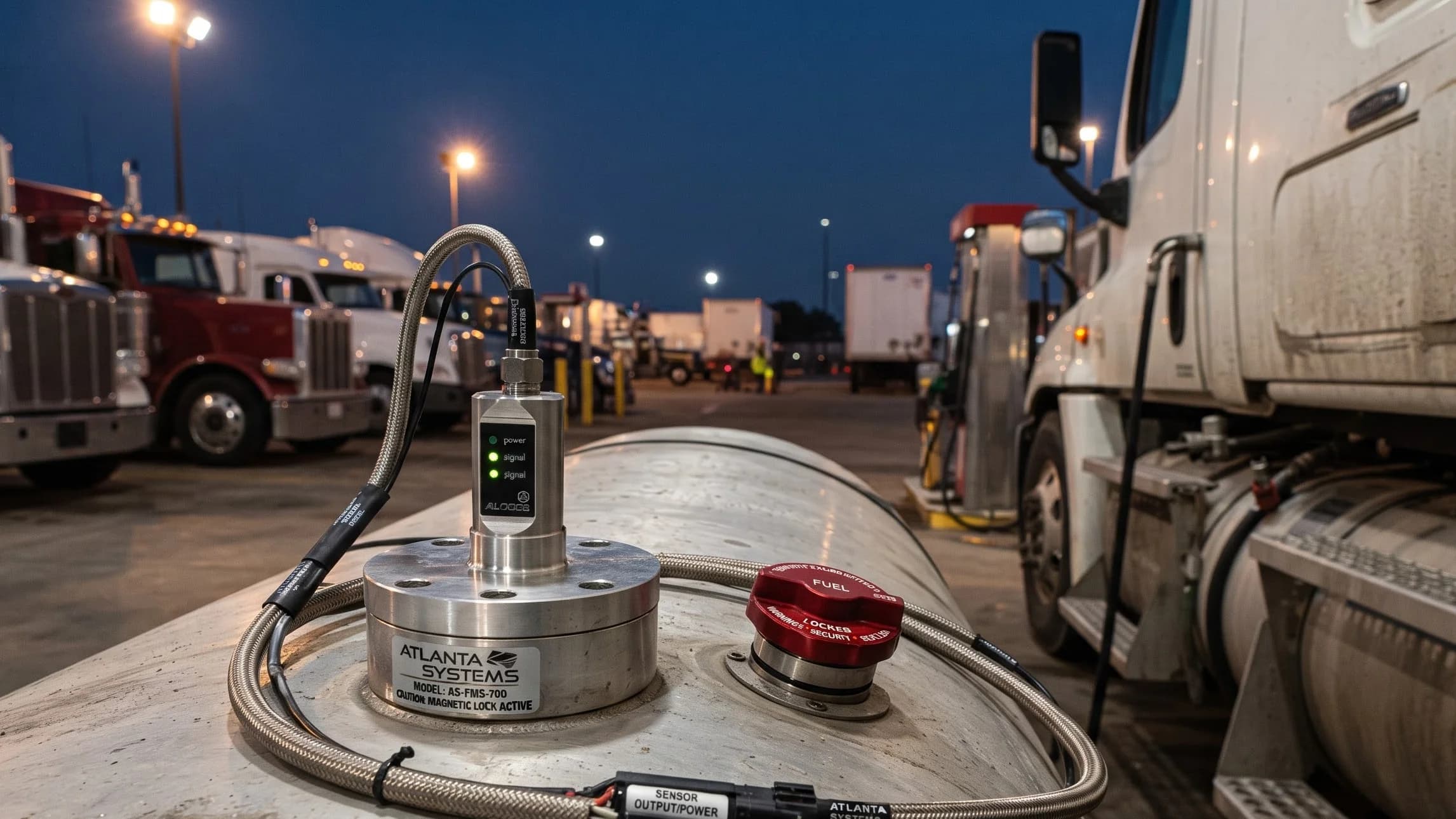
Table of Contents
- The Engineering Challenge: Multi-Tank Dynamics on Steep Highway Gradients
- Hardware Architecture: Multi-Drop RS485 Dual-Tank Array
- Multi-Tank Calibration Workflow: Step-by-Step
- Technical Comparison: Atlanta Systems Multi-Tank Solution vs. Standard Telematics
- Fleet Operational Case Study: Santos Port Rodotrem Operator
- Summary & Engineering Consultation
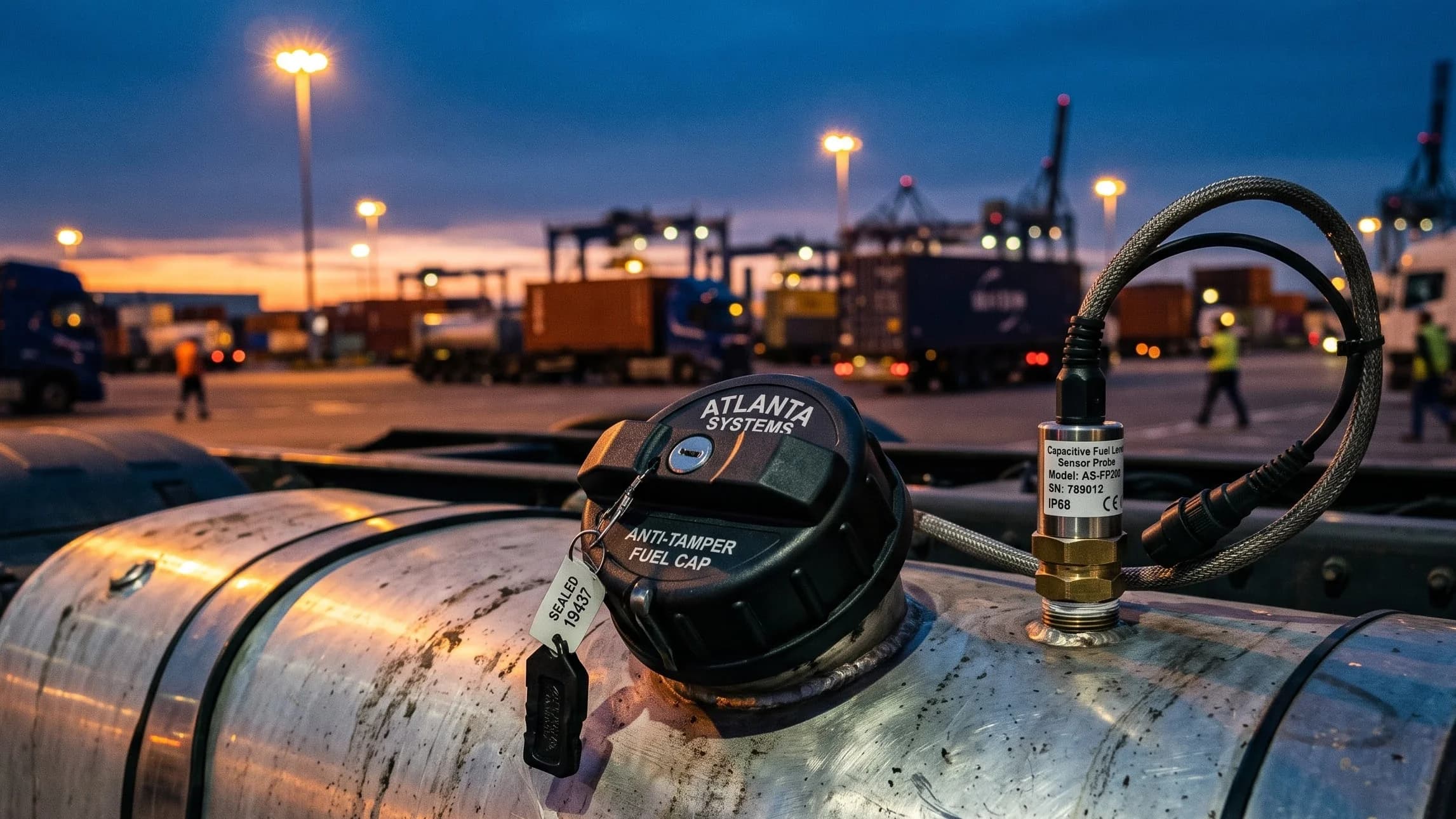
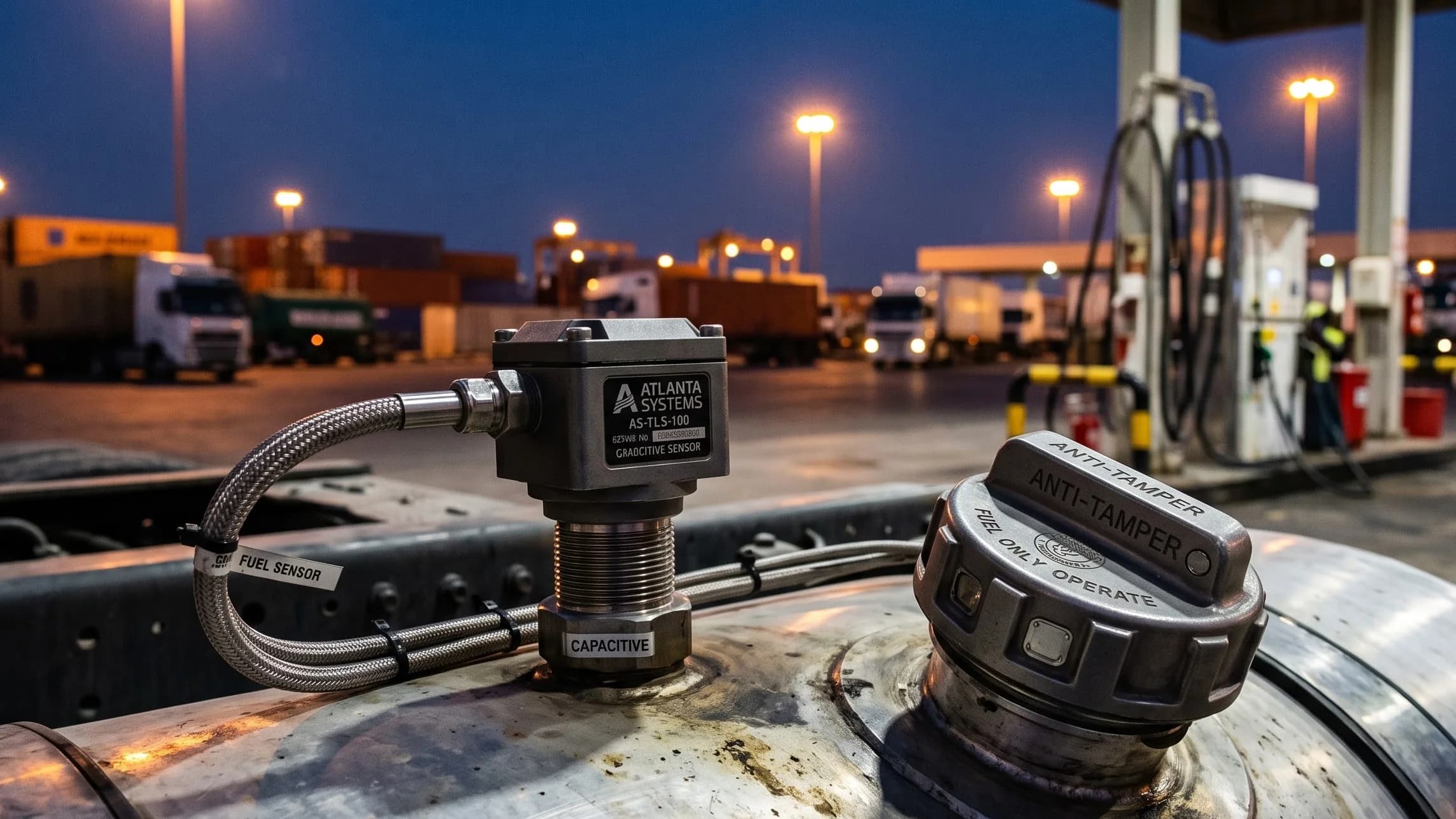
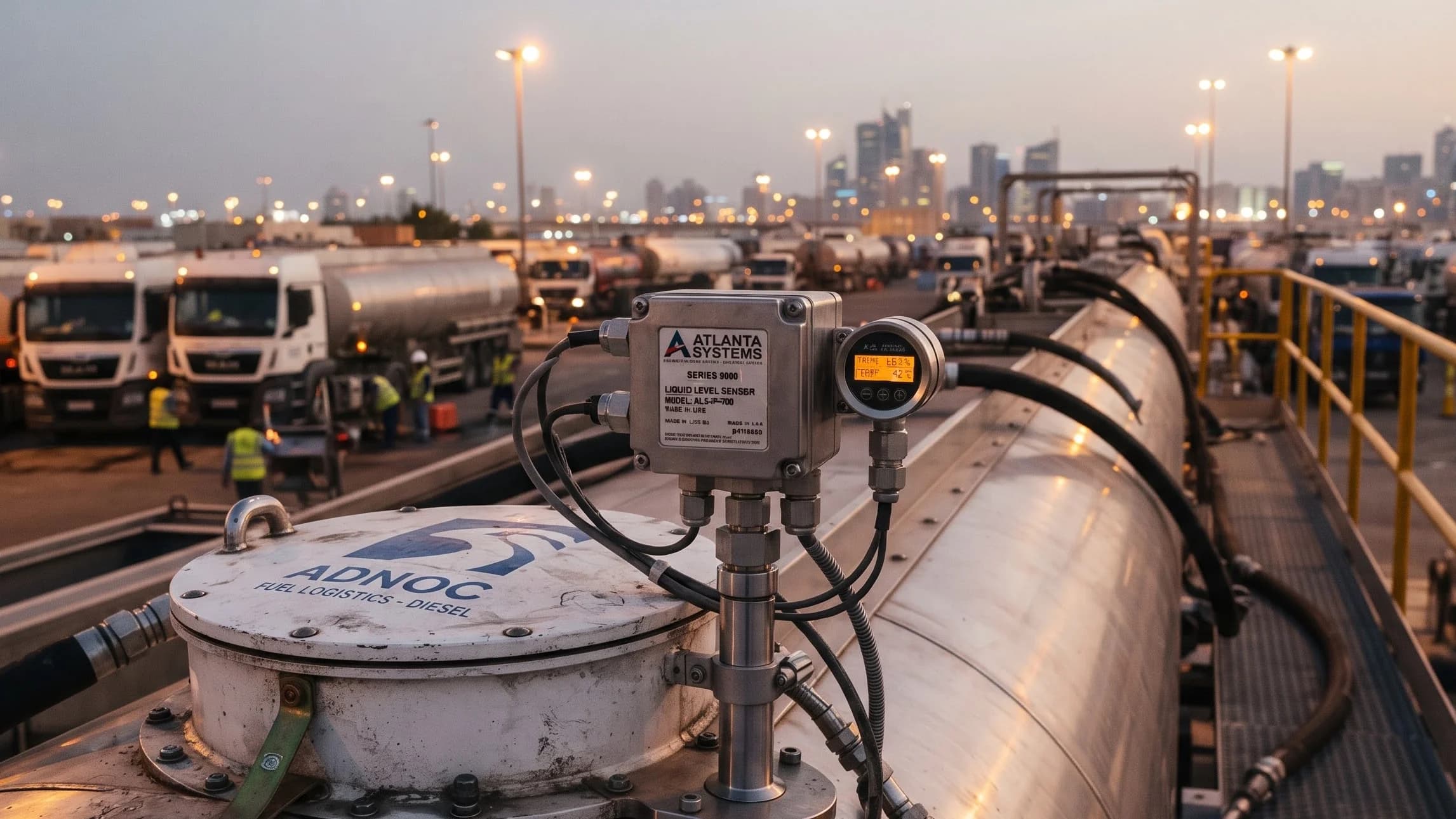
The logistics artery connecting Greater São Paulo's industrial manufacturing heartland with the Port of Santos—the largest container port in Latin America—is dominated by the Rodovia Anchieta and Rodovia dos Imigrantes highway system. Negotiating the steep descent of the Serra do Mar coastal mountain range requires specialized heavy commercial road transport, notably heavy articulated "Bitrem" (B-train) and "Rodotrem" 9-axle double-trailer combinations. To sustain long-distance cross-country hauls without refueling at premium coastal retail stations, these heavy road trains are equipped with complex multi-tank configurations totaling upwards of 1,200 to 1,800 liters of diesel. Accurately tracking fuel across asymmetrical, interconnected dual and triple fuel tanks operating on extreme highway grades represents a formidable telematics engineering challenge. Sloshing, uneven cross-siphoning between tanks, and non-linear tank geometries frequently generate misleading fuel reports. Atlanta Systems solves this challenge with its advanced multi-tank digital calibration suite, integrating FSK-1000 capacitive probes and USQ-1000 ultrasonic sensors linked over an industrial multi-drop RS485 bus to the ATL-440 telematics gateway.
The Engineering Challenge: Multi-Tank Dynamics on Steep Highway Gradients
Traversing the Anchieta–Imigrantes highway corridor involves extreme operational transitions. Vehicles descend from the São Paulo plateau at 800 meters elevation down to sea level over an aggressive 8% mountain grade, followed by protracted stop-and-go queueing at port access terminals. These operating conditions create severe multi-tank measurement anomalies:
- Asymmetrical Cross-Feeding: Dual saddle tanks connected by bottom balance hoses or active fuel return manifolds rarely drain at identical rates. Unequal backpressure, road camber, and filter resistance cause one tank to deplete faster, confusing basic single-sensor telematics.
- Severe Incline Displacement: On an 8% gradient, liquid fuel shifts significantly toward the forward or rear ends of long saddle tanks. Without multi-point mathematical calibration curves, telemetry dashboards erroneously report massive fuel spikes or sudden phantom fuel drops.
- Non-Linear Tank Geometries: Modern commercial trucks utilize D-shaped, stepped, or custom aluminum tanks designed to maximize chassis clearance around exhaust aftertreatment systems. A 10 mm rise in fuel level near the center of a D-tank represents a vastly different volume than a 10 mm rise near the top or bottom curves.
Overcoming these distortions requires dedicated multi-probe telemetry hardware and advanced multi-point volumetric lookup tables calibrated directly on the vehicle.
Hardware Architecture: Multi-Drop RS485 Dual-Tank Array
The Atlanta Systems hardware architecture employs an industrial RS485 bus topology that allows multiple digital fuel probes to report concurrently into a single telematics hub:
```
```
1. Galvanically Isolated Multi-Drop RS485 Communication
Unlike analog sensors whose voltage outputs fluctuate with chassis ground loops, the FSK-1000 communicates via differential RS485 serial communication. Up to four individual fuel probes can be connected along a single shielded twisted-pair harness across the entire length of a 30-meter Rodotrem combination, ensuring zero signal degradation or electromagnetic interference from high-power alternators and retarders.
2. Independent 32-Point Volumetric Spline Tables
The Atlanta Systems configuration software allows technicians to define an independent 32-point calibration profile for each tank. As the tank is filled incrementally during initial setup, the software maps raw millimetric liquid heights directly to verified liter volumes, generating a smooth polynomial curve that accounts for internal baffles, tank corner radii, and irregular structural indentations.
Multi-Tank Calibration Workflow: Step-by-Step
Performing high-precision calibration on complex heavy commercial fleets in São Paulo workshops is streamlined using the Atlanta Systems Mobile Calibration Tool:
```
```
- Dry Tank Initialization: The vehicle is parked on a level workshop bay. Tanks are drained, and the baseline "Zero/Empty" dielectric frequency is captured across all connected probes simultaneously.
- Automated Incremental Dosing: Fuel is metered into Tank A and Tank B in precise increments (e.g., 20 or 50 liters) via a calibrated master flow meter. At each step, the Atlanta Systems software logs the liquid height against the exact dispensed volume.
- Cross-Siphon Equilibrium Mapping: The calibration tool measures the rate of equalization across the balance pipe, establishing baseline cross-flow parameters so that temporary volume shifts during highway transit are not misidentified as fuel leaks.
- Cloud Firmware Synchronization: The finalized 32-point calibration profiles are burned into the non-volatile memory of the ATL-440 gateway and backed up to the Atlanta Systems cloud repository for automated over-the-air deployment to identical fleet vehicle types via Web-FOTA.
Technical Comparison: Atlanta Systems Multi-Tank Solution vs. Standard Telematics
| Feature / Capability | Atlanta Systems Multi-Tank Array | Standard Commercial Telematics |
|---|---|---|
| Max Connected Tanks | Up to 4 Tanks (Independent RS485 IDs) | 1 Tank Only (Analog Input limited) |
| Calibration Resolution | 32-Point Polynomial Spline Curve | 2-Point Linear (Empty / Full Only) |
| Cross-Siphon Compensation | Dynamic Software Balance Smoothing | Reports false drop in one tank |
| Grade / Incline Filtering | 3-Axis Gyroscope Angle Compensation | Reports severe errors on mountain descents |
| Field Setup Interface | Wireless BLE App / Over-the-Air FOTA | Manual DIP switches or wire cutting |
| Measurement Uncertainty | < ±0.8% Across Combined Volume | ±8% to ±15% on Complex Dual Tanks |
Fleet Operational Case Study: Santos Port Rodotrem Operator
A major bulk agribusiness and container carrier operating 110 Rodotrem combinations between Campinas, Greater São Paulo, and the Port of Santos deployed the Atlanta Systems multi-tank calibration ecosystem:
- Measurement Accuracy: Discrepancies between bulk dispatch meters and in-cabin telematics were reduced from 8.2% down to 0.65% across combined 1,400-liter dual-tank rigs.
- Elimination of False Theft Alerts: By implementing incline-aware smoothing on the Serra do Mar descents, false siphoning notifications were reduced by 99%.
- Driver Accountability: The carrier successfully identified and halted systematic unauthorized fuel transfers at unauthorized layover spots, saving an estimated $14,000 USD per month across the fleet.
Summary & Engineering Consultation
Managing heavy commercial fleets with complex, large-capacity multi-tank systems requires specialized sensing hardware and robust volumetric calibration tools. The Atlanta Systems FSK-1000 and USQ-1000 sensors, combined with multi-drop RS485 communication and the ATL-440 gateway, deliver high-precision fuel intelligence across demanding South American freight corridors.
To learn more about our multi-tank calibration kits or to schedule an on-site technical demonstration in Brazil, contact the Atlanta Systems Latin America team at sn@atlantasys.com or visit www.atlantasys.com.
Founder of Atlanta Systems Pvt. Ltd. with 32+ years of embedded hardware and SMT engineering leadership, pioneering indigenous AIS-140 GPS trackers and automotive telematics across 27+ countries.