Ultrasonic Fuel Sensors by Atlanta Systems for Multi-Tank Accuracy in Abu Dhabi's Khalifa Port Operations
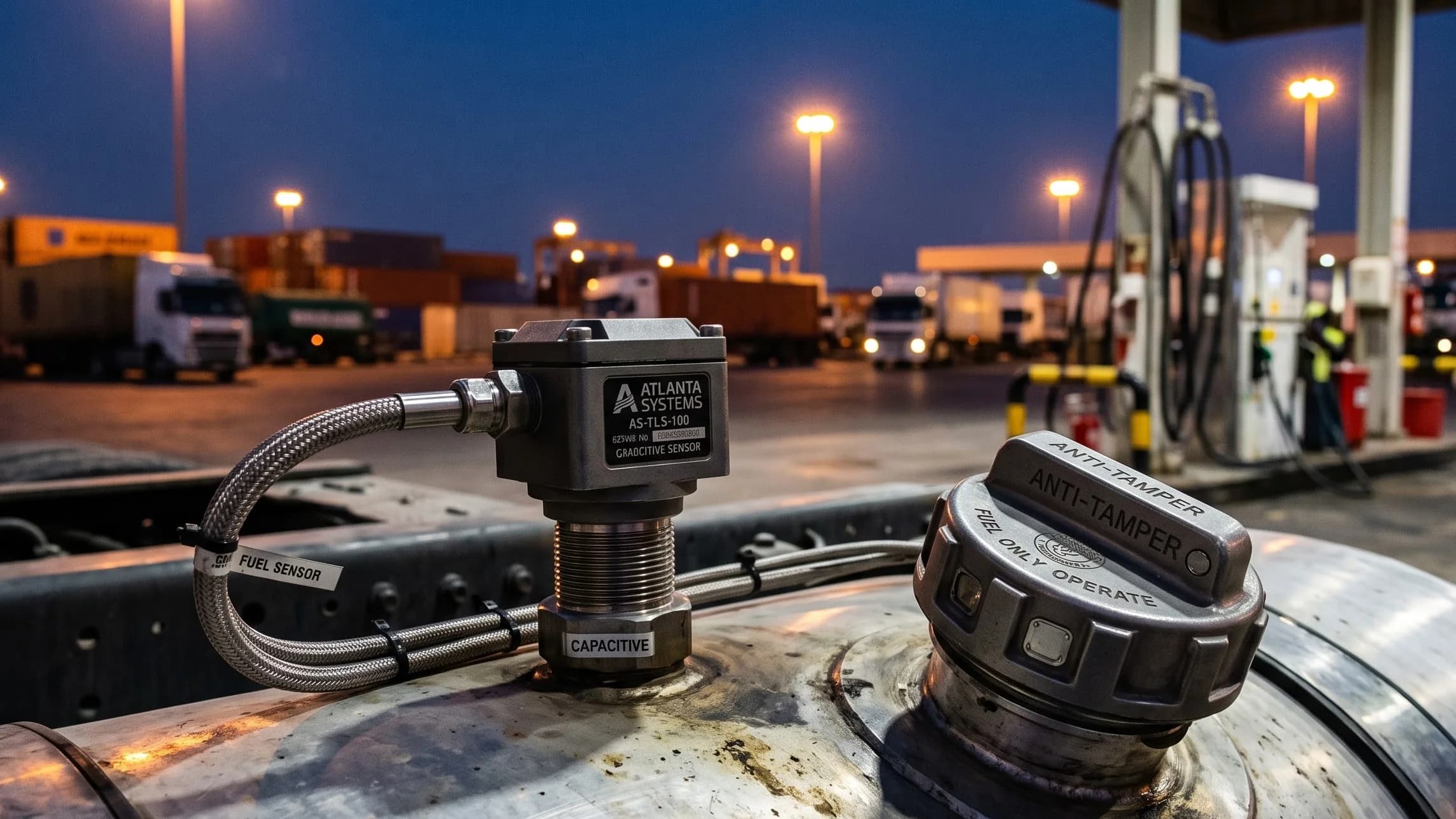
Table of Contents
- The Operational Context: Non-Invasive Sensing in Khalifa Port & KEZAD
- Hardware Architecture: USQ-1000 Non-Invasive Ultrasonic Sensor
- Installation Methodology and Multi-Tank Telematics Architecture
- Comparison: USQ-1000 vs. Invasive Capacitive & Mechanical Sensors
- Field Implementation Results: KEZAD Intermodal Fleet
- Conclusion & Engineering Consultation
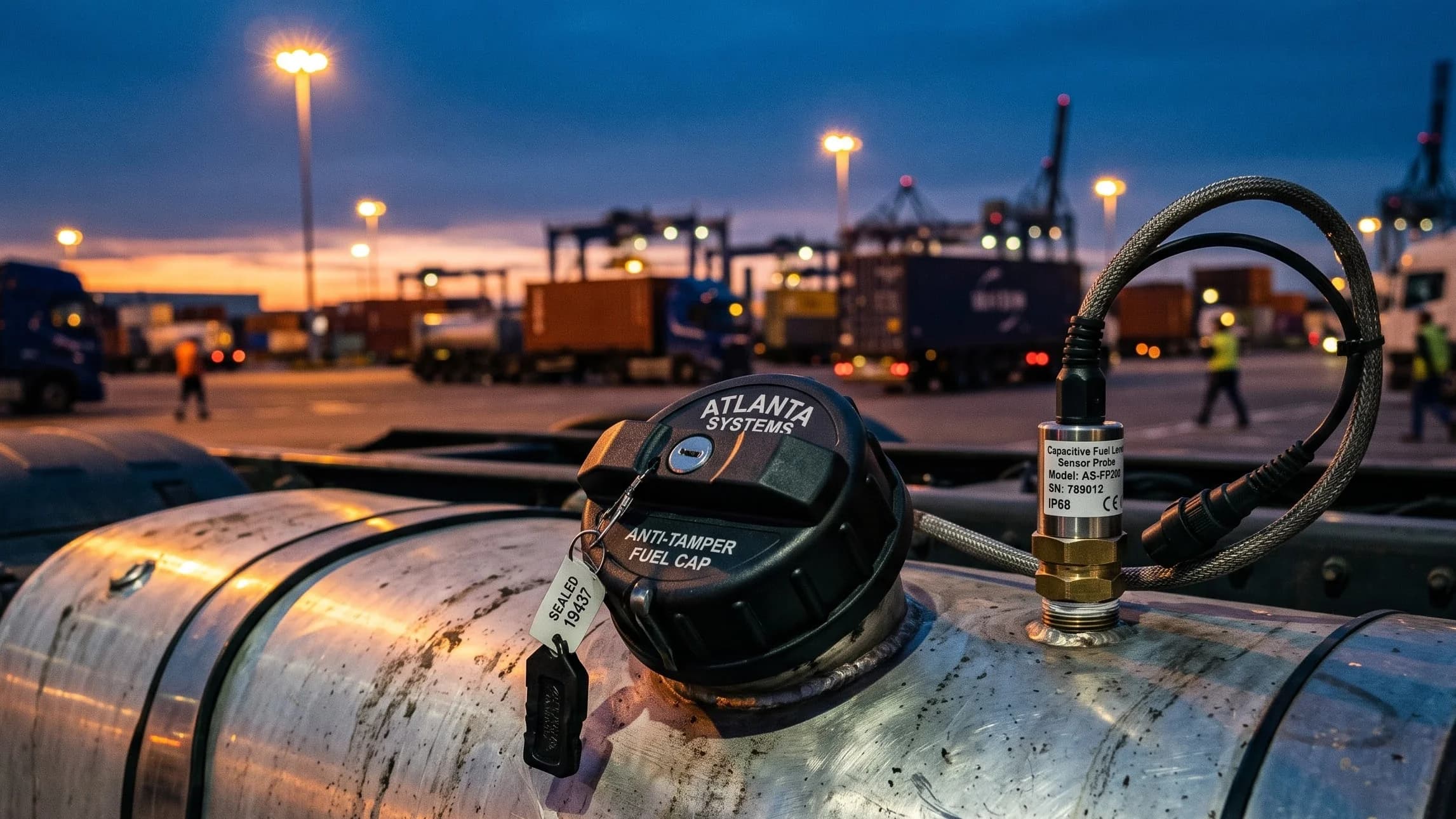
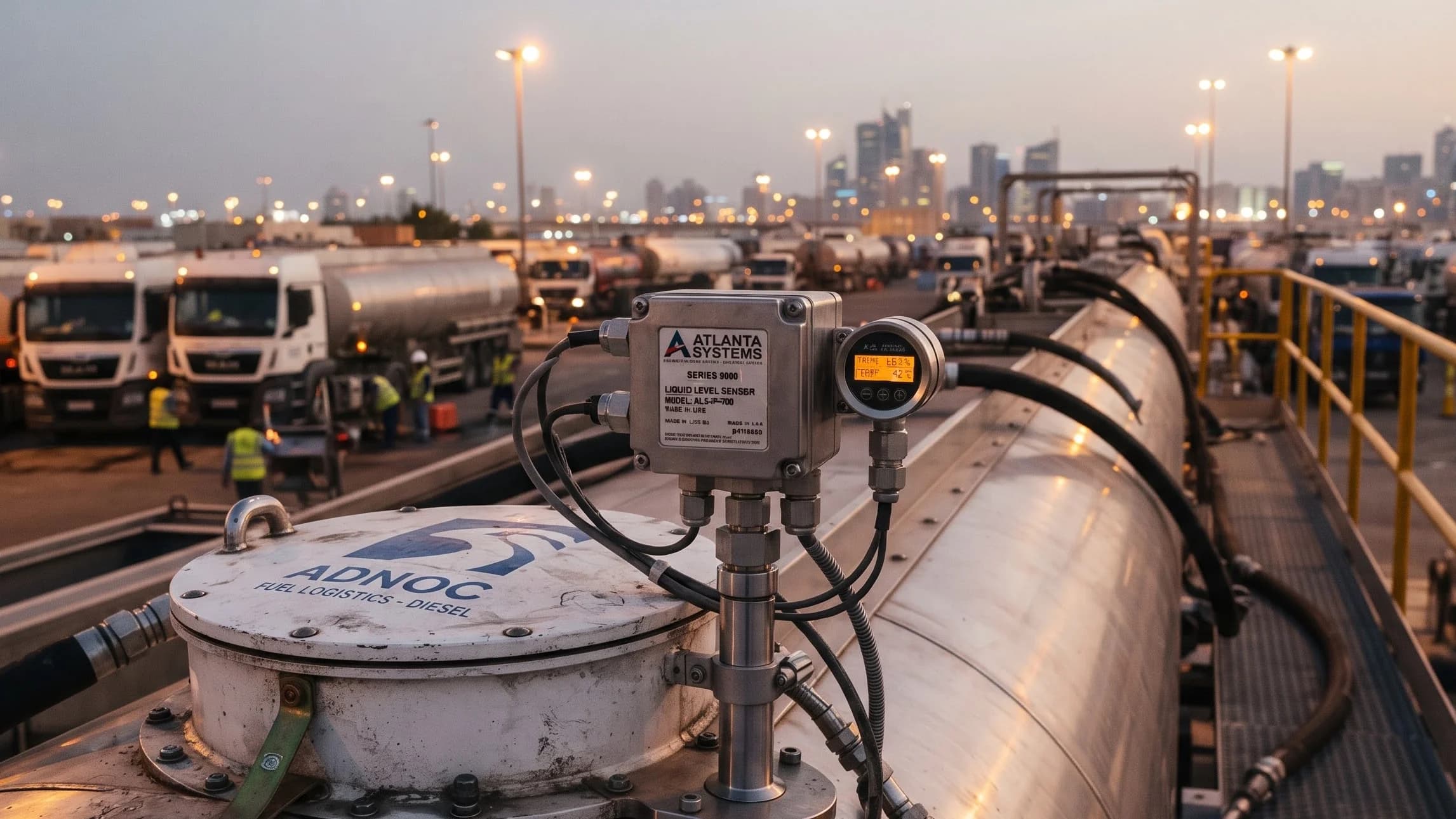
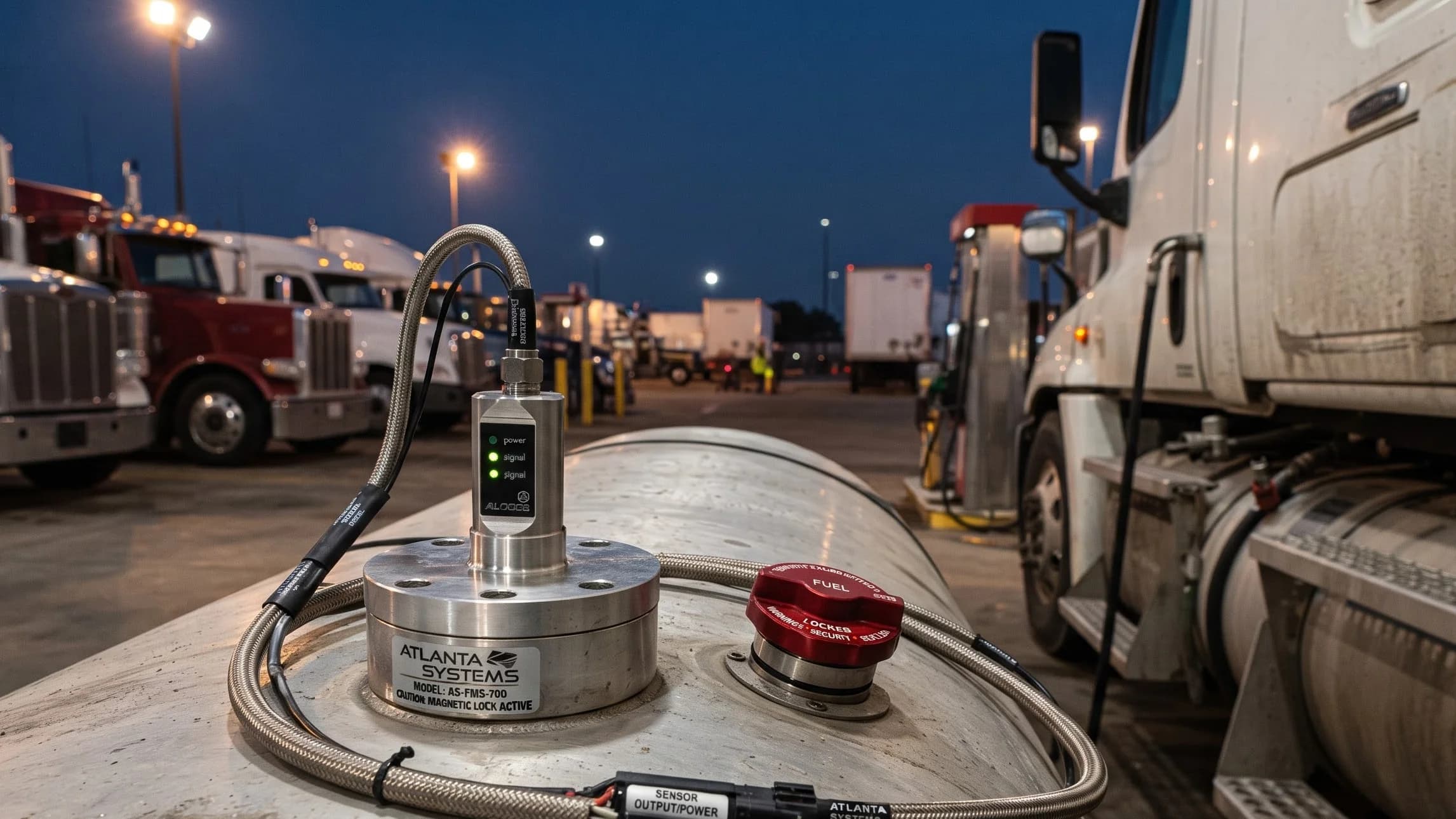
Container drayage and intermodal logistics operating out of Khalifa Port and the adjacent Khalifa Economic Zones Abu Dhabi (KEZAD) serve as crucial industrial arteries connecting the United Arab Emirates to global shipping lanes. Heavy commercial terminal tractors, multi-trailer road trains, mobile harbour cranes, and dual-tank long-haul hauliers operate continuously in maritime humidity, high salinity, and ambient temperatures exceeding 48°C. In such demanding environments, monitoring diesel inventory across complex multi-tank configurations is essential for maintaining operational uptime and preventing unrecorded fuel shrinkage. However, drilling holes into heavy fuel tanks or specialized transport units often compromises structural integrity, voids OEM warranties, and creates leak risks in hazardous cargo zones. Atlanta Systems solves this engineering dilemma with the USQ-1000 external ultrasonic liquid level sensor. Mounted non-invasively to the underside of the tank, the USQ-1000 provides high-resolution fuel volume telematics without requiring mechanical drilling, cutting, or tank decommissioning.
The Operational Context: Non-Invasive Sensing in Khalifa Port & KEZAD
Khalifa Port's logistics ecosystem involves round-the-clock container handling where equipment downtime directly impacts vessel turnaround metrics. Fleet operators manage complex assets featuring diverse tank designs:
- Dual Saddle Tanks on Articulated Tractors: Heavy hauliers operating along the E11 corridor between Abu Dhabi and Dubai feature twin interconnected aluminum saddle tanks totaling 800 to 1,200 liters, prone to fuel imbalances during cornering.
- Hazardous Cargo Regulations: Vehicles transporting petrochemicals, industrial solvents, or flammable liquids are strictly prohibited by port and municipal safety codes from introducing invasive sensor penetrations or non-explosion-proof electrical wiring into fuel storage vessels.
- Leased Asset Protection: Many logistics companies operate leased prime movers where lease agreements strictly prohibit tank drilling or mechanical modifications.
The USQ-1000 external ultrasonic sensor satisfies all port safety and operational parameters by emitting high-frequency acoustic pulses through the tank's bottom wall, measuring liquid levels purely through acoustic echo transit time.
Hardware Architecture: USQ-1000 Non-Invasive Ultrasonic Sensor
The Atlanta Systems USQ-1000 incorporates an advanced piezoelectric transducer, acoustic couplant chamber, and industrial signal processing circuitry:
```
```
1. High-Frequency Piezoelectric Transducer
The sensor transmits narrow-beam ultrasonic pulses vertically through the bottom plate of the fuel tank. When the acoustic wave reaches the boundary layer between the liquid diesel and the air pocket above it, the significant difference in acoustic impedance creates a strong reflection. The high-speed receiver captures this return echo, and the onboard DSP calculates liquid height based on the speed of sound through the liquid medium:
$$ ext{Height} = rac{v_{ ext{sound}} imes \Delta t}{2}$$
2. Auto-Adaptive Speed of Sound Compensation
The speed of sound in diesel fuel varies with temperature and fuel density. The USQ-1000 features a built-in acoustic reference target and temperature sensor within its coupling matrix. This internal benchmark dynamically recalculates the exact velocity of sound in the fuel medium every millisecond, preventing measurement drift during rapid ambient temperature shifts between night and day.
Installation Methodology and Multi-Tank Telematics Architecture
Installing the USQ-1000 on a heavy commercial vehicle takes less than 30 minutes and requires no downtime or fuel draining:
```
```
- Surface Preparation: The lowest flat area of the tank underside is cleaned and lightly degreased to remove road grime, protective coatings, or oxidation down to bare metal.
- Acoustic Couplant & Mounting: A specialized high-durability acoustic elastomer adhesive is applied to the sensor face. The unit is secured to the tank underside using an industrial stainless-steel tension strap and protective steel rock-guard bracket.
- Signal Verification via BLE: Field technicians check signal strength, acoustic wave reflection amplitude, and live liquid level readings directly on an Android smartphone via Bluetooth Low Energy before finalizing the mechanical bracket.
- Dual-Tank Daisy Chaining: For trucks with dual saddle tanks, two USQ-1000 units are configured with distinct RS485 addresses (Tank A = 0x01, Tank B = 0x02) and linked via a single armored harness to the ATL-440 or GWC-100 gateway. The onboard firmware aggregates readings, calculating both individual tank levels and gross fuel inventory in real time.
Comparison: USQ-1000 vs. Invasive Capacitive & Mechanical Sensors
| Technical Specification | USQ-1000 External Ultrasonic | Invasive Capacitive (FSK-1000) | OEM Mechanical Float |
|---|---|---|---|
| Tank Modification | Zero Drilling / Zero Modification | 1 Hole (Bored through top plate) | Factory Pre-installed |
| Installation Time | 25 – 35 Minutes | 60 – 90 Minutes | OEM Assembly Line |
| Voiding Tank Warranty | Never (Non-invasive bond) | Potential on leased chassis | None |
| Suitability for Hazmat | Full (ATEX / Safe installation) | Requires explosion-proof seals | Standard automotive |
| Accuracy Rating | ±1.0% to ±1.5% | ±0.5% | ±5.0% to ±10.0% |
| Maintenance Need | None (No contact with liquid) | Periodic check for sludge build-up | High (Mechanical wear) |
Field Implementation Results: KEZAD Intermodal Fleet
An intermodal container transport operator managing 75 heavy tractor-trailers handling daily runs between Khalifa Port and industrial zones across Abu Dhabi retrofitted their fleet with USQ-1000 ultrasonic sensors:
- Installation Efficiency: The complete 75-vehicle fleet was retrofitted during standard weekend maintenance windows without taking a single truck out of service.
- Accuracy Across Dual Tanks: The system eliminated fuel measurement discrepancies between primary and secondary saddle tanks, reducing unaccounted fuel volume variances to less than 0.8%.
- Zero Leak Incidents: After 14 months of high-mileage desert operations, zero seal failures or sensor detachments were reported across severe corrugated yard terrains.
Conclusion & Engineering Consultation
For logistics operators at Khalifa Port, KEZAD, and major logistics hubs across the GCC, the Atlanta Systems USQ-1000 ultrasonic fuel sensor provides an accurate, non-invasive fuel management solution. By eliminating tank drilling and delivering multi-tank RS485 telematics, the USQ-1000 protects fleet capital assets while delivering precise fuel tracking.
To receive engineering installation guides, CAD dimension files, or to schedule a field proof-of-concept, contact Atlanta Systems' regional solutions team at sn@atlantasys.com or visit www.atlantasys.com.
Co-Founder at Atlanta Systems Pvt. Ltd., spearheading large-scale global telematics supply chains, commercial fleet compliance deployments, and OEM electronics manufacturing partnerships.